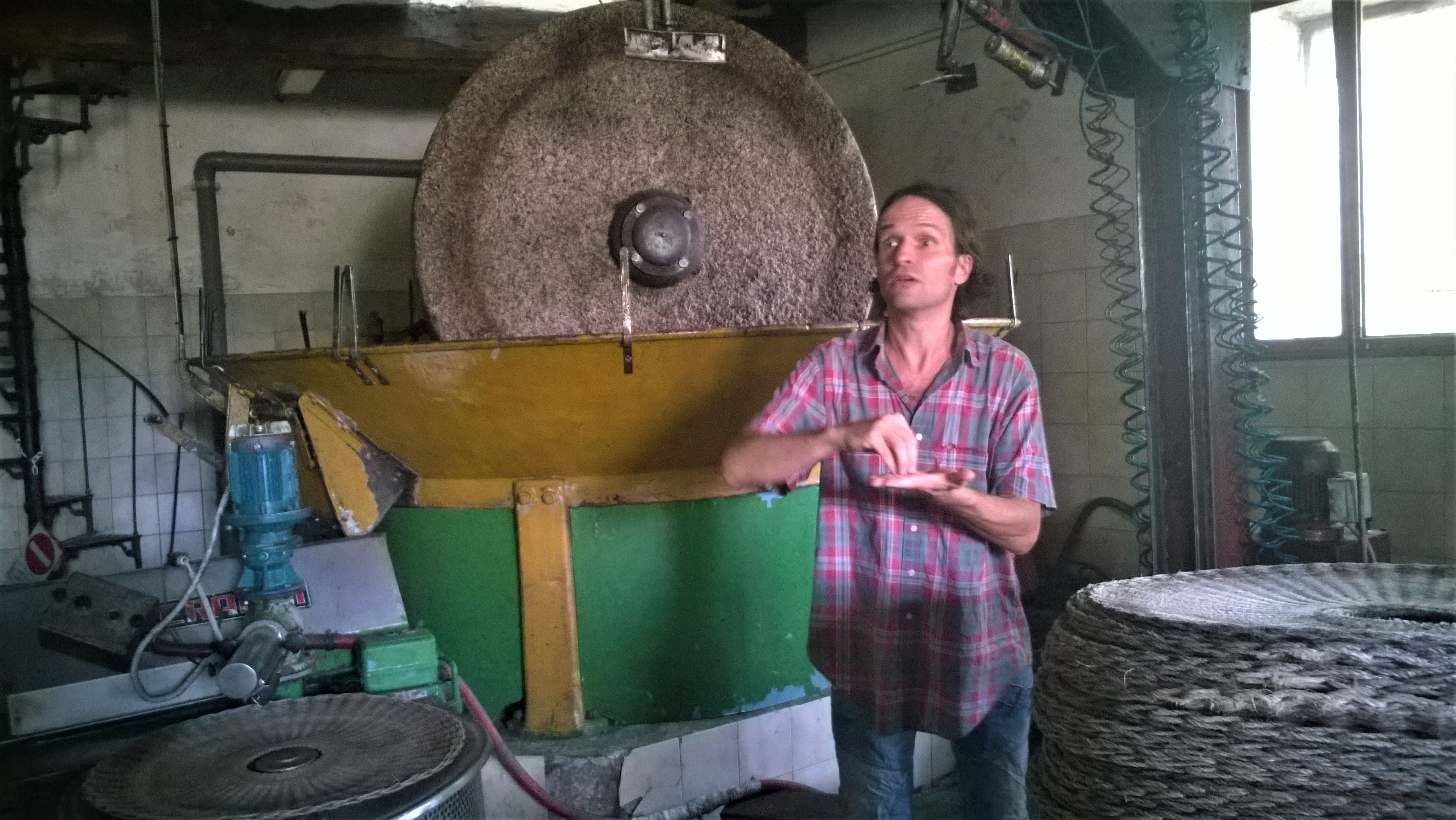
After visiting the Bussati linen factory, our next stop is the Ravagni Olive Oil factory—where the same family has been pressing olive oil on wicker discs since 1421. Definitely my favorite excursion of the week. Francesco explains the fascinating ancient process standing in front of the giant stone crusher in the mill. At Ravagni, they still use large wicker discs to press the oil, and nothing is automated. For centuries, local villagers have been bringing the olives harvested in their gardens here for pressing. In medieval days, the olive oil would be stored in earthenware jugs; today they leave with amber-colored bottles of the silky green liquid that is the basic building block of the Mediterranean diet.
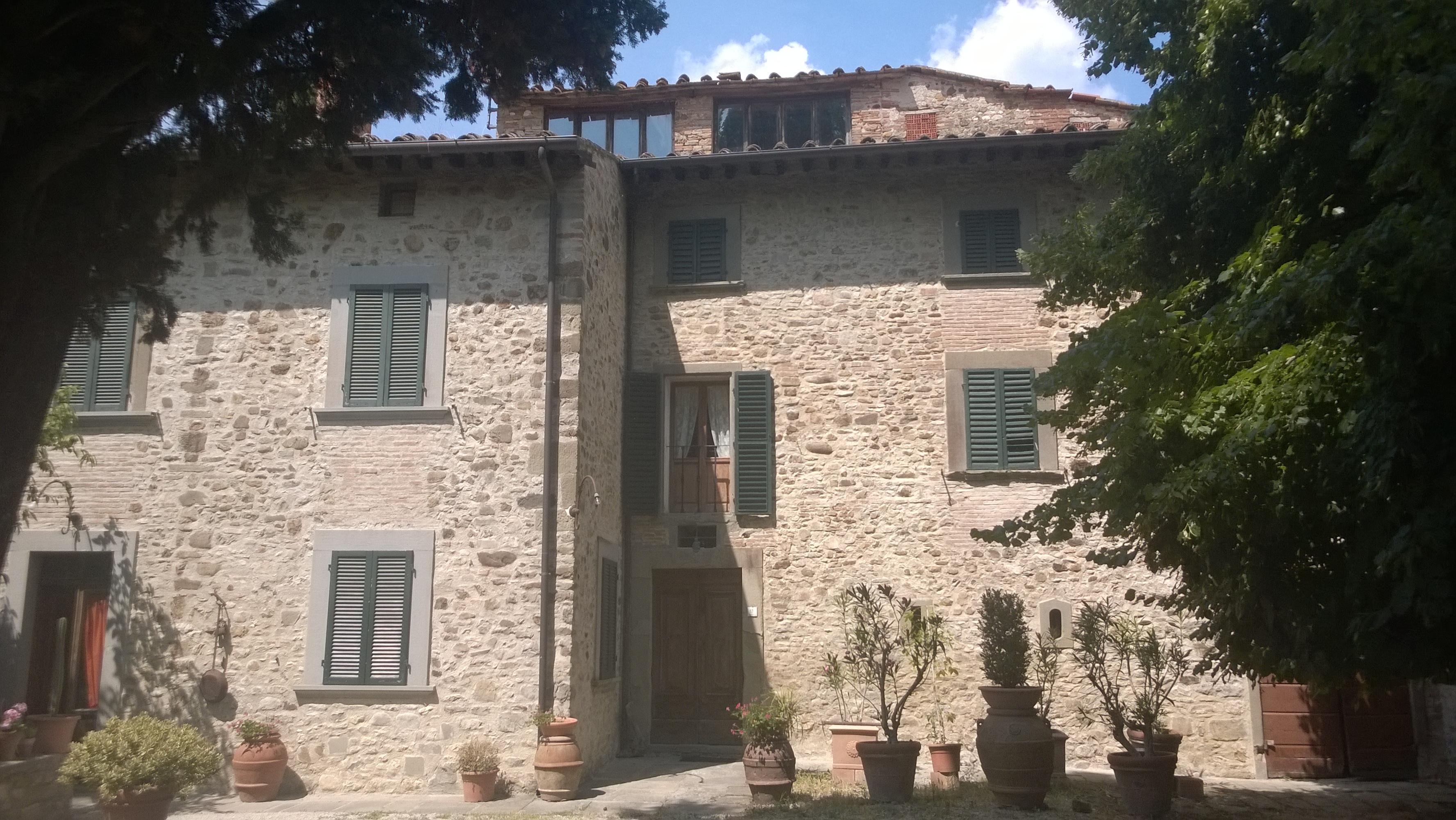
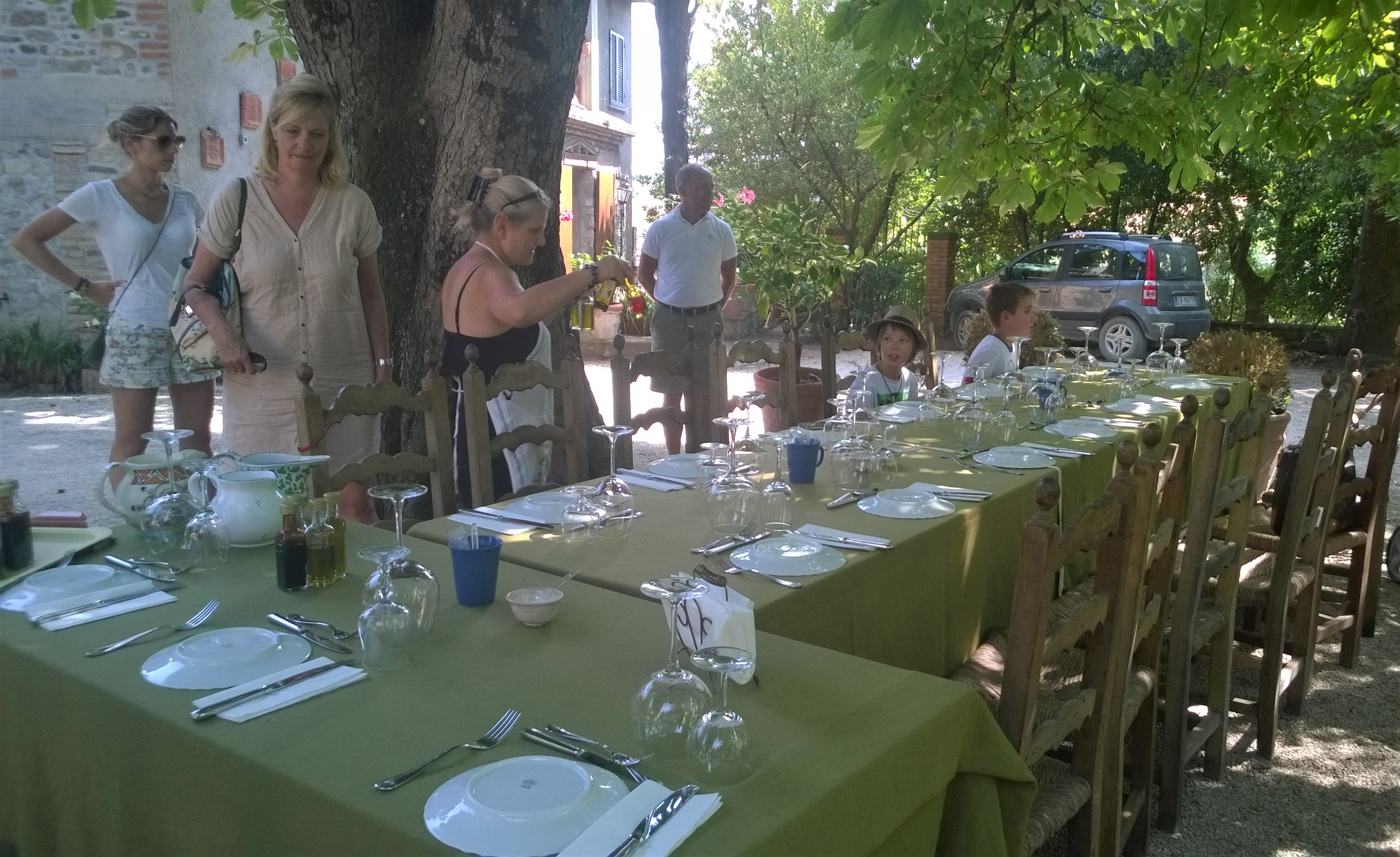
As we follow him outside and up a narrow lane, my sandals crunch on the gravel as we approach the family’s buff-colored stone house nestled among the olive groves. Two long tables with lime green tablecloths have been set for lunch under the welcome coolness of ancient trees in the courtyard.
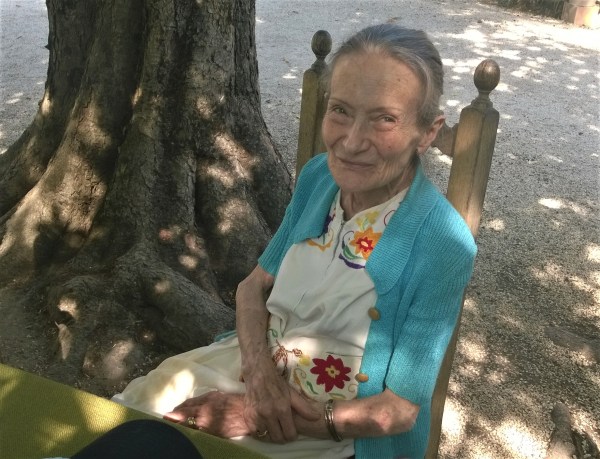
Our delectable three-course lunch has been prepared by Grandma Ravagni who wears a turquoise sweater over her sweet cotton dress on a day when the temperature is 98-degrees. In my broken Italian, I ask permission to take her picture. She sits on a wooden ladder-back chair in the shade of a giant tree and smiles sweetly at the camera. She bears such a striking resemblance to my own grandmother, down to the simple gold rings on her fingers and the way she clasps her gnarled hands on her lap.
Perhaps the setting in this country garden is similar to my grandmother’s ancestral home in Sicily. I blink back tears while taking this photograph which will become one of my favorites of the entire trip. There is something poignant about intersecting with one’s roots.
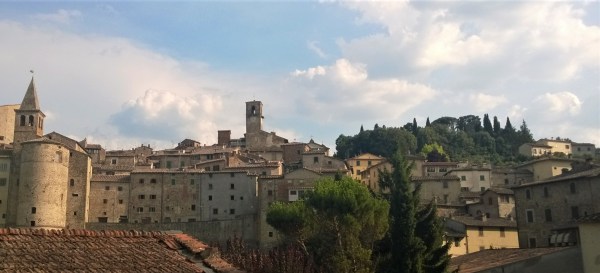
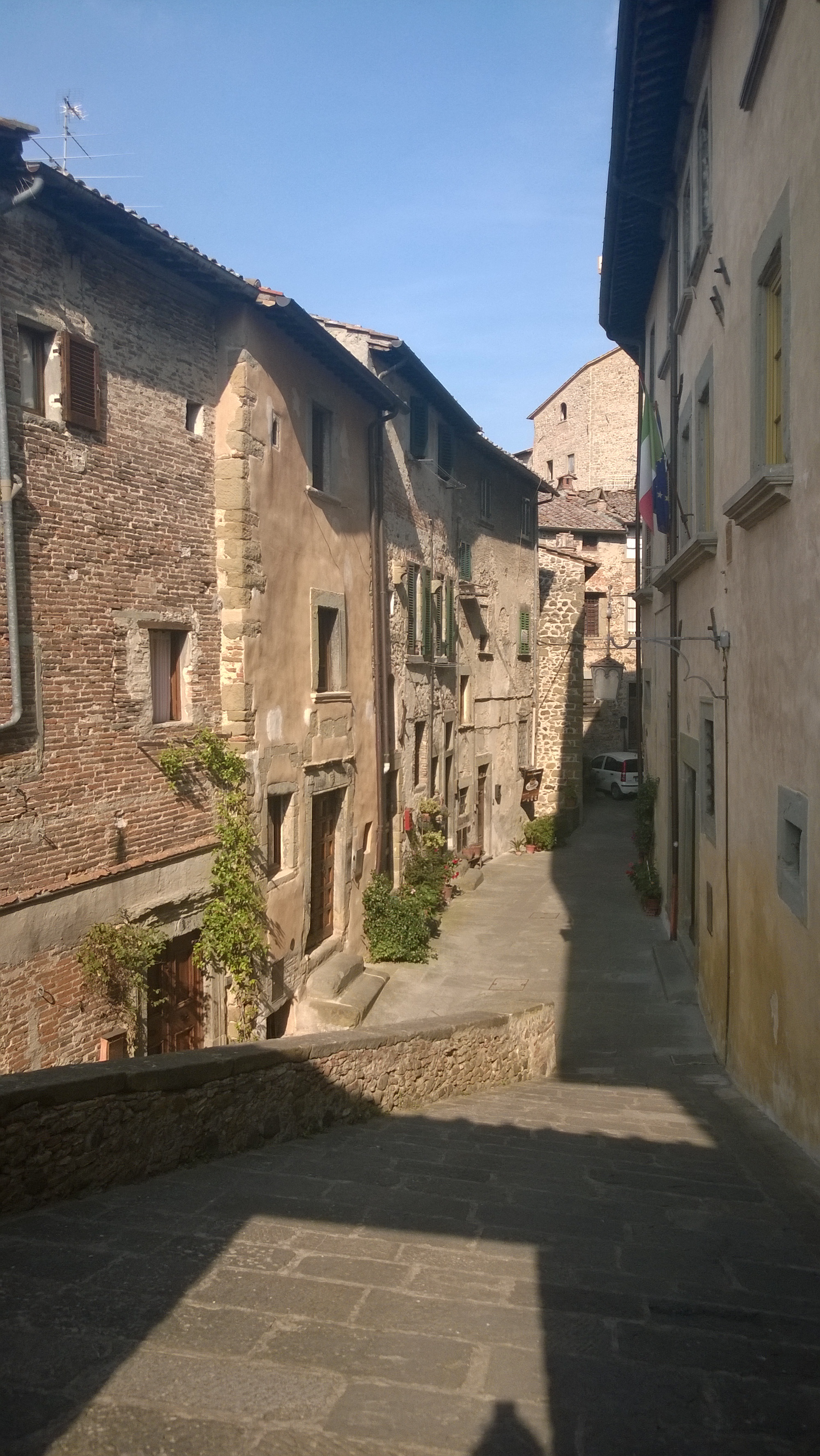
Our last Culinary Excursion takes us to the ancient town of Anghiari whose 11th Century walls are still intact.
The decisive battle here in 1440 between Florence and Milan inspired a series of famous studies for a fresco by Leonardo da Vinci. In 1504 Leonardo was given a commission and contract, signed by Niccolo Machiavelli, to decorate the Palazzo Vecchio’s famous Hall of the Five Hundred in Florence. At the same time a fresco by his rival Michelangelo, who had just finished the David statue, was commissioned for the opposite wall. This was the only time that Leonardo da Vinci and Michelangelo worked together on the same project.
Michelangelo did not stay in Florence long enough to complete the finishing touches on his fresco as he was summoned back to the Vatican by the Pope. Leonardo built an ingenious scaffold in the Hall of Five Hundred that could be raised or folded like an accordion. This painting was to be his largest and most substantial work. Since he had a bad experience with frescoes (his The Last Supper in the refectory of Santa Maria delle Grazie in Milan), Da Vinci wanted to apply oil colors directly on the wall instead of transferring them from canvas. He began to experiment with a thick undercoat (possibly mingled with wax). After he applied the color pigments, the paint began to drip. Trying to dry the painting in a hurry and save whatever he could, he hung large charcoal braziers close to the painting. Only the lower part could be saved in an intact state; the upper part couldn’t dry fast enough, and Leonardo abandoned the project.
These unfinished paintings by Michelangelo and Leonardo adorned the same room together for almost a decade (1505–1512). Tragically, in renovations to the Palace (1555-1572), remnants of famous artworks were lost including the The Battle of Cascina by Michelangelo and The Battle of Anghiari by Leonardo da Vinci. Many preparatory studies and charcoal sketchings of this great work by Leonardo still exist. The composition of the central section of the fresco is best known because of a drawing by Peter Paul Rubens in the Louvre, Paris.
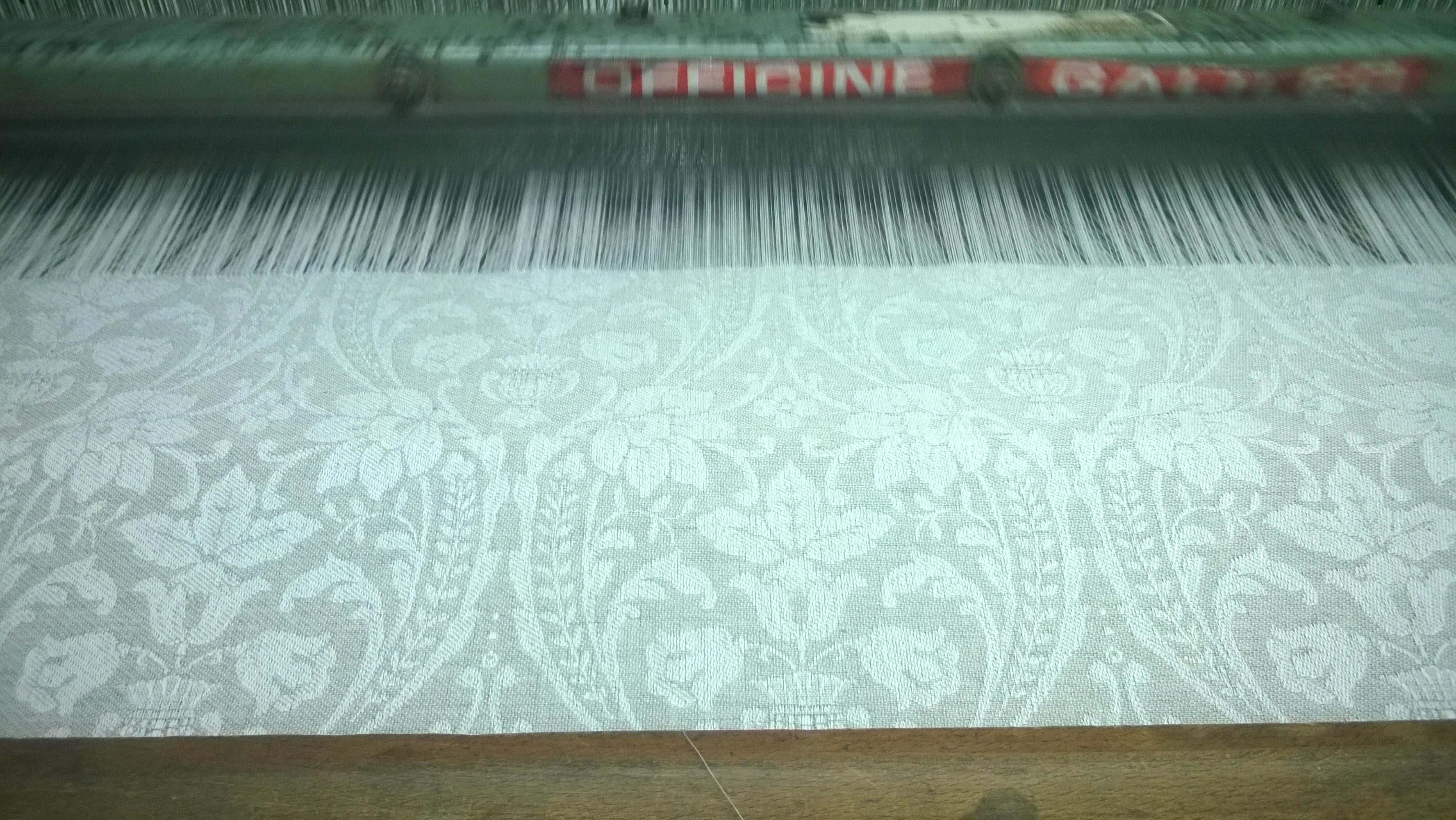
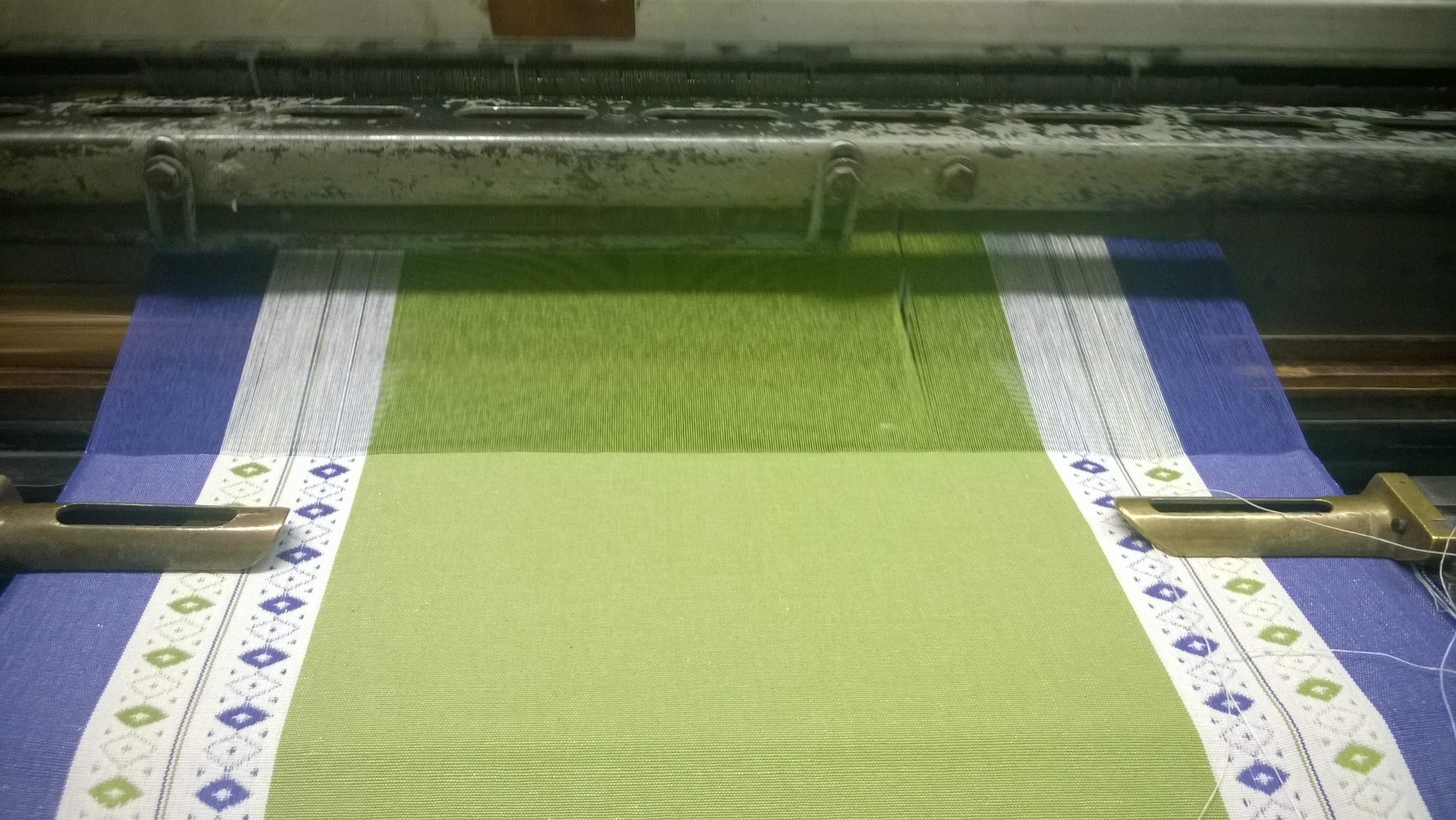
Our first stop is the Bussati factory—famous for luxury table linens and fine textiles. A real cottage industry in every sense, Giuseppe Bussati created a network of home weavers in the Tiber Valley in the 1830s, centralizing operations in Anghiari in 1842. Still located in the original building, workers “card” wool into thread and weave beautiful damasks on clacking looms that date back to the Industrial Revolution.
We watch in amazement as one of the weavers demonstrates how when patterns are changed on the looms, hundreds of threads must be painstakingly inserted by hand into the needles, a process which can take several days.
In the small shop next to the factory, a stack of white damask tablecloths harkens back to one of the most vivid memories of my childhood: Kissing my mother goodnight as she stood at the ironing board the night before Christmas, or Easter, or baby christenings, or First Communions. Always ironing tablecloths for the occasion at the last minute. Most of the world had gone the way of paper napkins and wipe-off plastic placemats, but Mom had insisted on using her collection of well-worn, freshly laundered and starched white damask tablecloths. Although she has been dead for almost 30 years, as I finger the beautiful cloth napkins, I can’t help but think what a treat it would have been to purchase some of these linens for her.
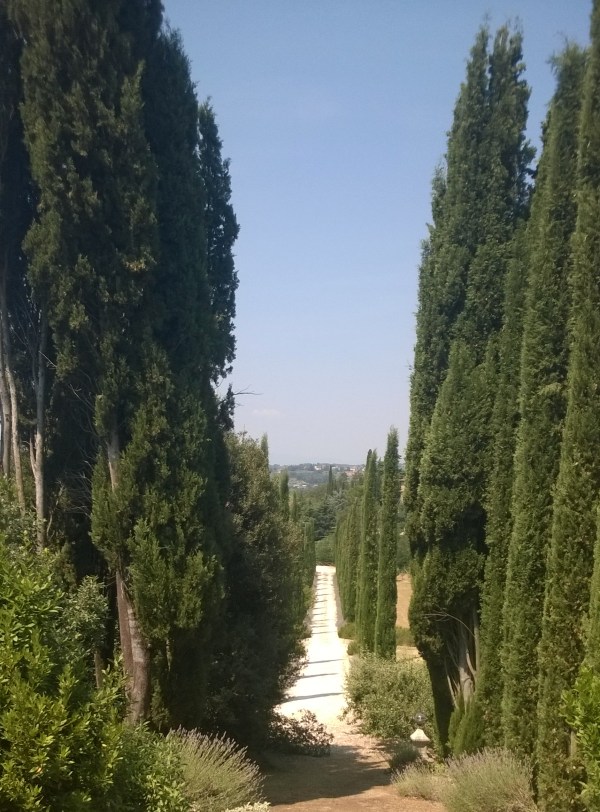
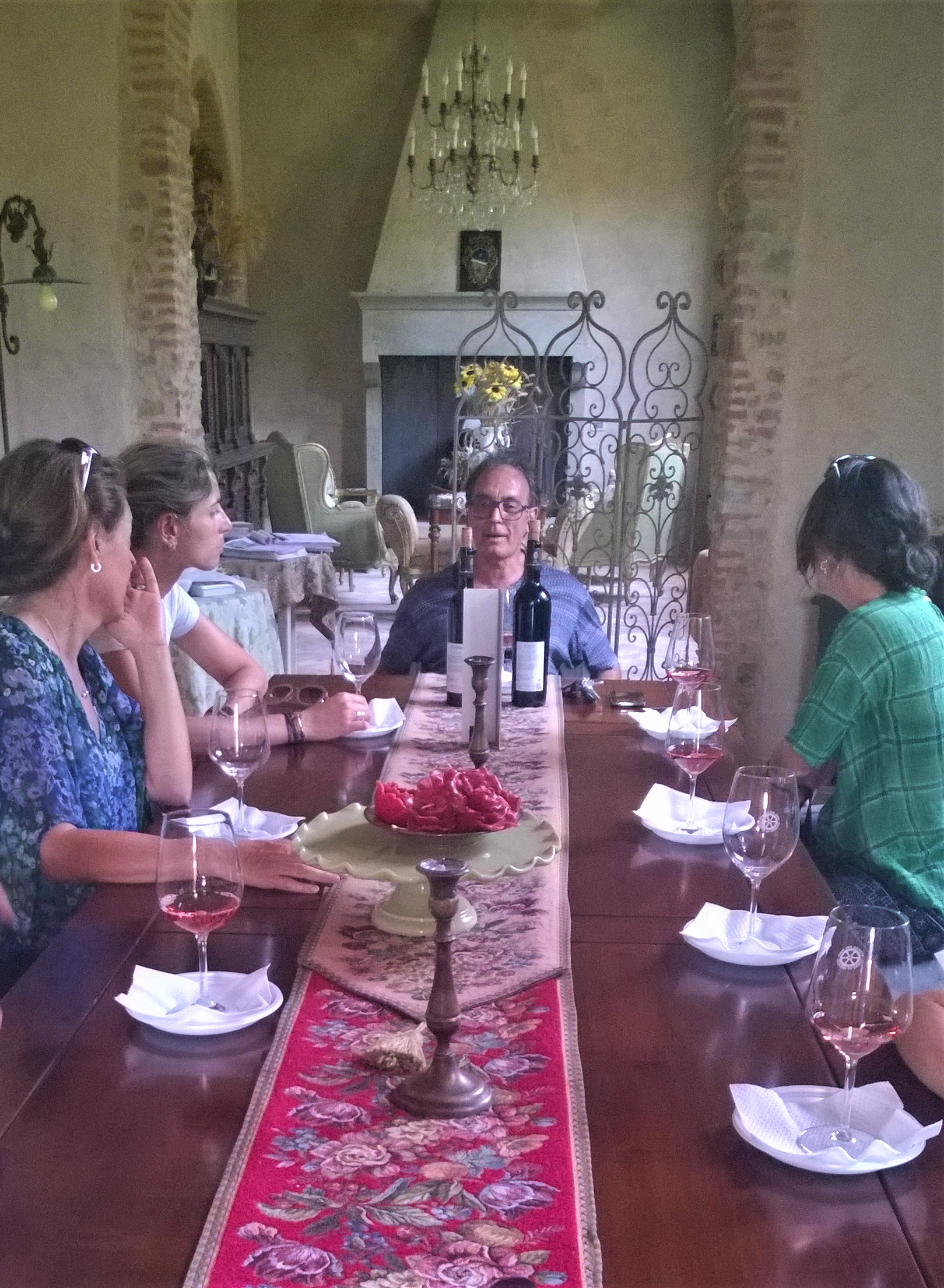
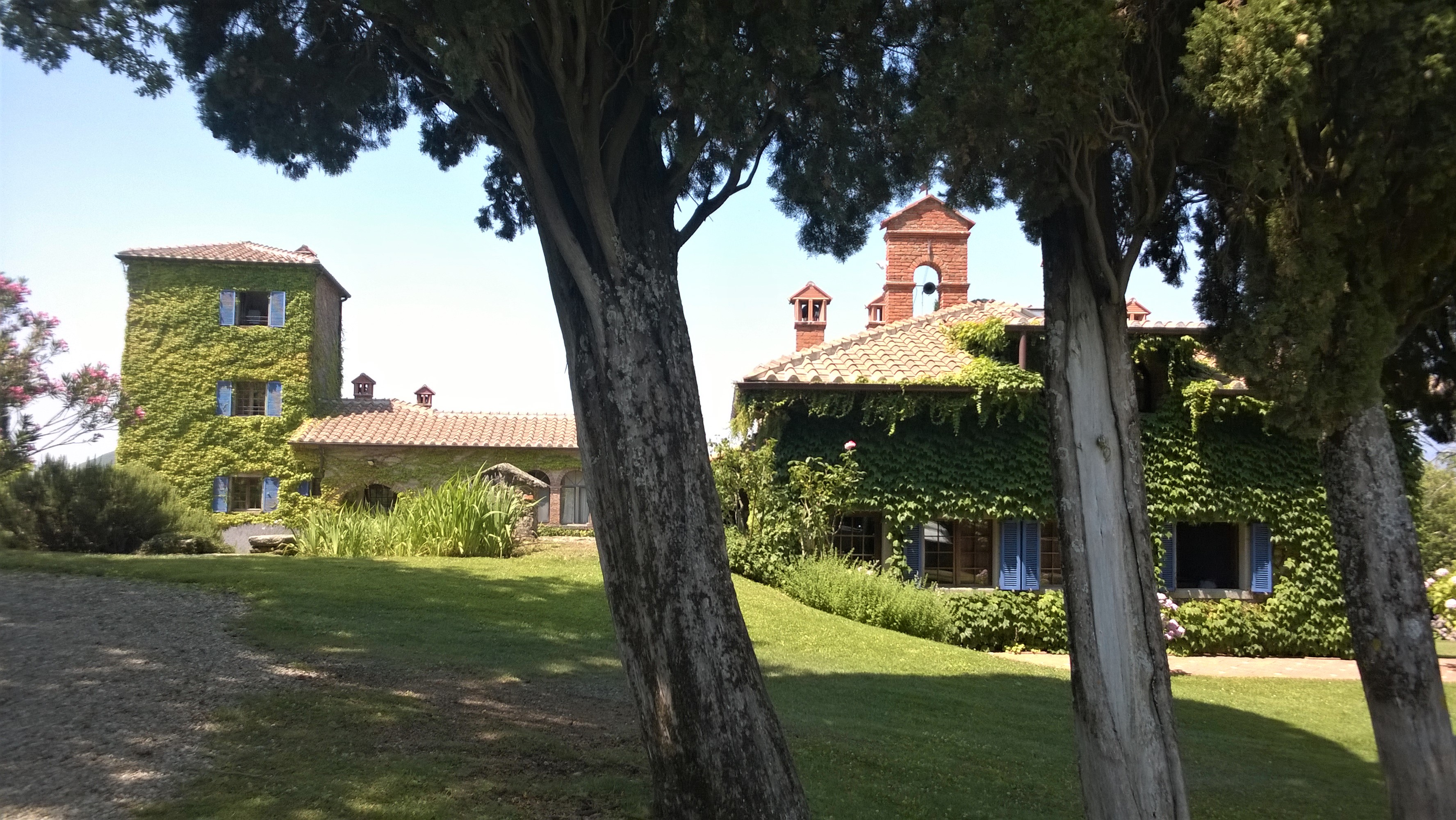
Today we visited the Villa la Ripa Winery where the “new” wing dates to 1558 while the tower (circa 1000) was built by a relative of the Medici family. Rows and rows of Sangiovese, Cabernet Sauvignon, Trebbiano, Canaiolo, Syrah, and Malvasia grapes are grown in symmetrical grids along the long drive to the Estate.
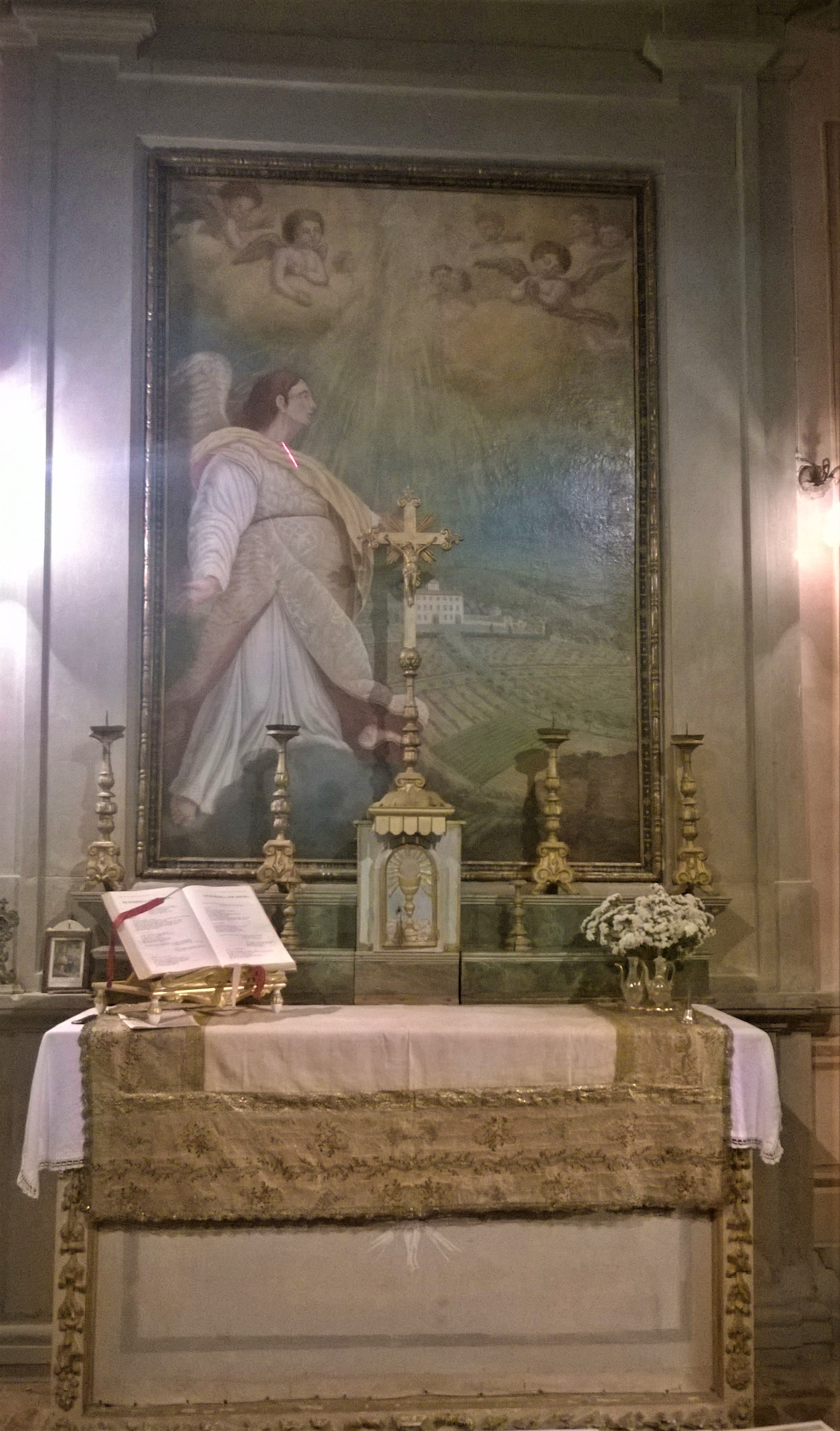
Luzzi Saverio, the delightful winemaker, is a practicing surgeon and history buff. A highlight of the tour is the villa’s chapel where a huge 16th Century painting above the altar shows angels hovering above the villa and large vineyard.
Luzzi recounts the story how this painting was hidden during World War II when Germans occupied the villa. Recently, his wife found the pastel frescoes on the walls of the chapel protected under a layer of whitewash paint. When asked how she found them, he replied, ‘The white paint simply started to dissolve when she used a sponge and plain water to clean the walls.’
I wonder about the resourceful member of the resistance who had thought to protect the frescoes. Did they survive the war as the frescoes had?
While seated at the long refectory table for wine tasting, Luzzi recounts the history of the villa. The first owner circa 200 A.D. was Marco Peconio, whose name derives for Pacho, the god of wine (more commonly known as Bacchus from the Etruscans). Even in Roman times, this region was linked to the art of cultivating the vine. Circa the year 1000, the property passed to the Ricoveri family who erected a fortified palace with an adjoining tower (the tower is a focal point on the grounds this morning).
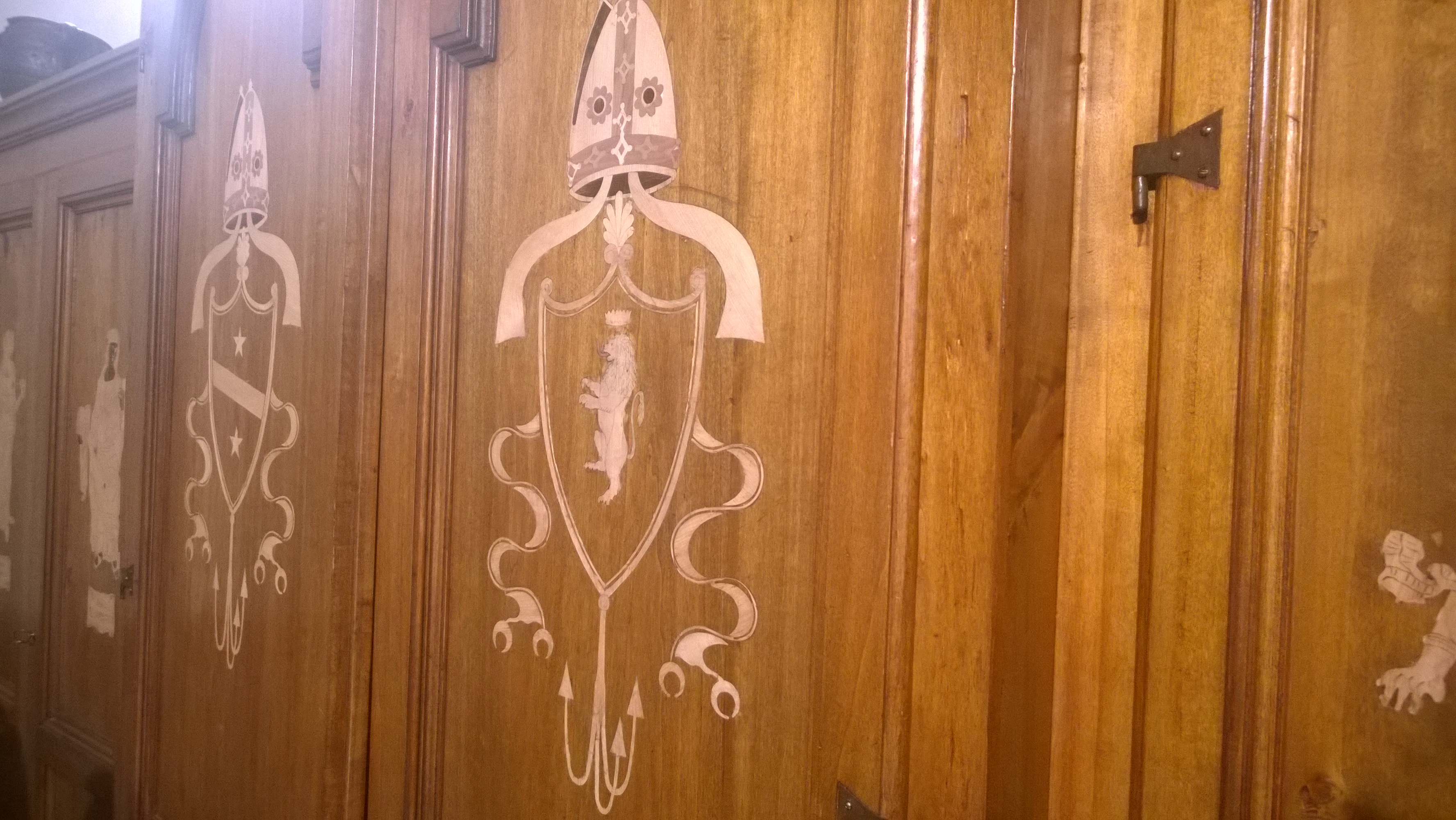
The Gualtieri, an important family of cardinals, poets and winemakers, acquired the property during the Renaissance and registered it to the Order of San Stefano, a dynastic military order founded in 1561 by Cosimo I de’ Medici, first Grand Duke of Tuscany. They erected the chapel and adjoining vestibule with intricately carved and inlaid cabinets to hold vestments of visiting Cardinals who came to say Mass in the chapel. Following the invasion of Arezzo by Napoleon in 1798, the villa was seized and auctioned. The Ubertini, a noble family from Arezzo, held the property until the early 1900s.
Luzzi is determined to faithfully restore the Estate and expand production. His daughter Claudia, a pharmacist, has developed a brand of cosmetics using organic products from their fields (wine, olive oil, and herbs). Red wine contains resveratrol, a substance known to improve circulation. Claudia’s product packaging cites a study by dermatologists at the University of Wisconsin that showed resveratrol protects the skin from damage by sun exposure and also supplies nutrients to the skin.
When some of the Estate’s vines were planted here, the territory of Wisconsin was a wilderness outpost. Another example of just how small and interconnected our planet has become.
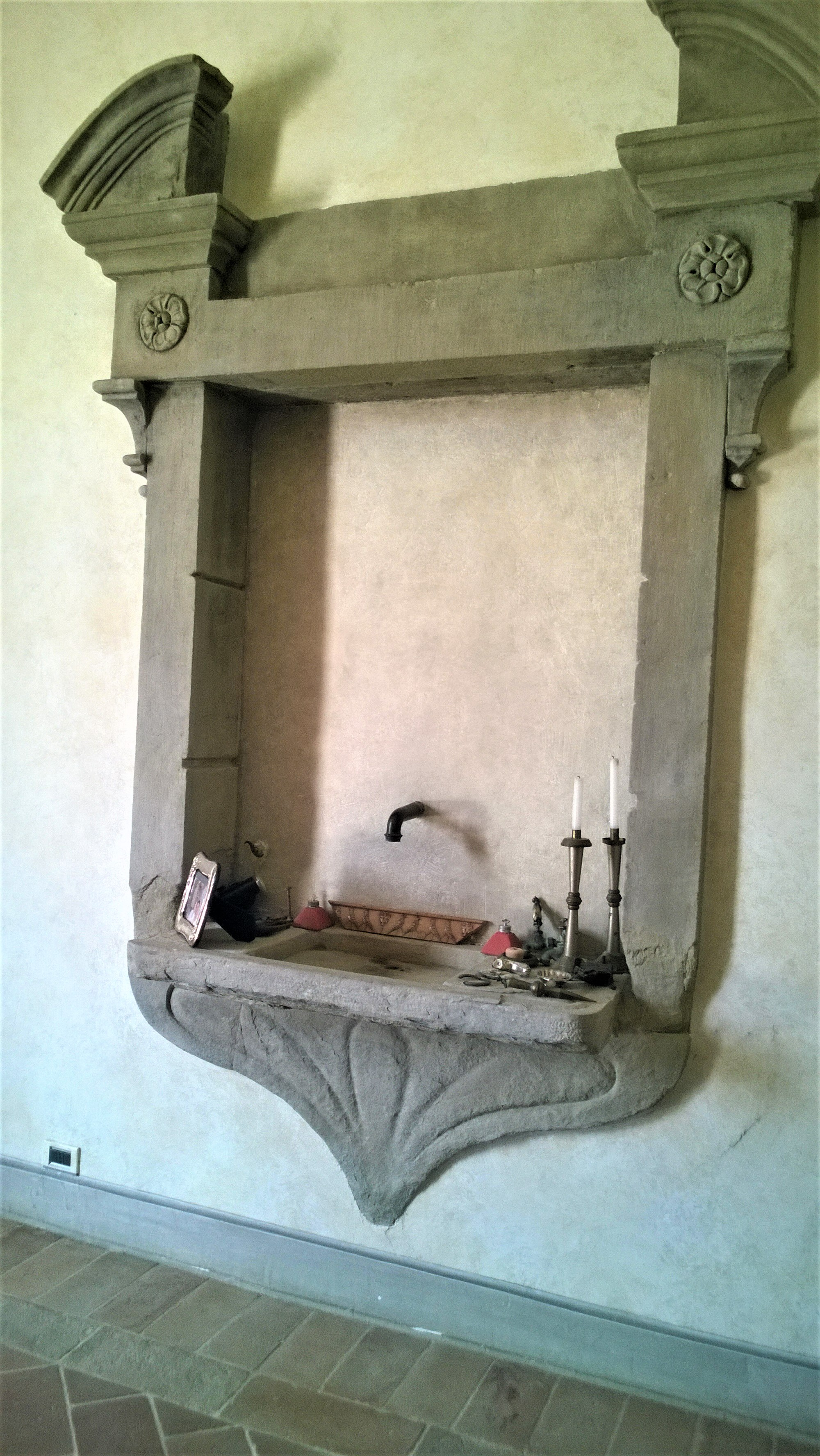
A faucet protrudes from the wall in a decorative stone niche in the hallway and reminds me of a similar dripping faucet in the movie Under the Tuscan Sun (based loosely on the Frances Mayes novel of the same name). Twelve years ago, watching that movie while trapped in a lonely and unfulfilling marriage, I could not have imagined this trip or the lightness I feel reconnecting to my true self and the joy of simple pleasures.
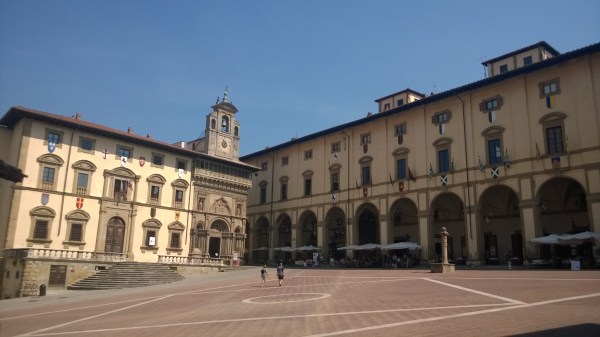
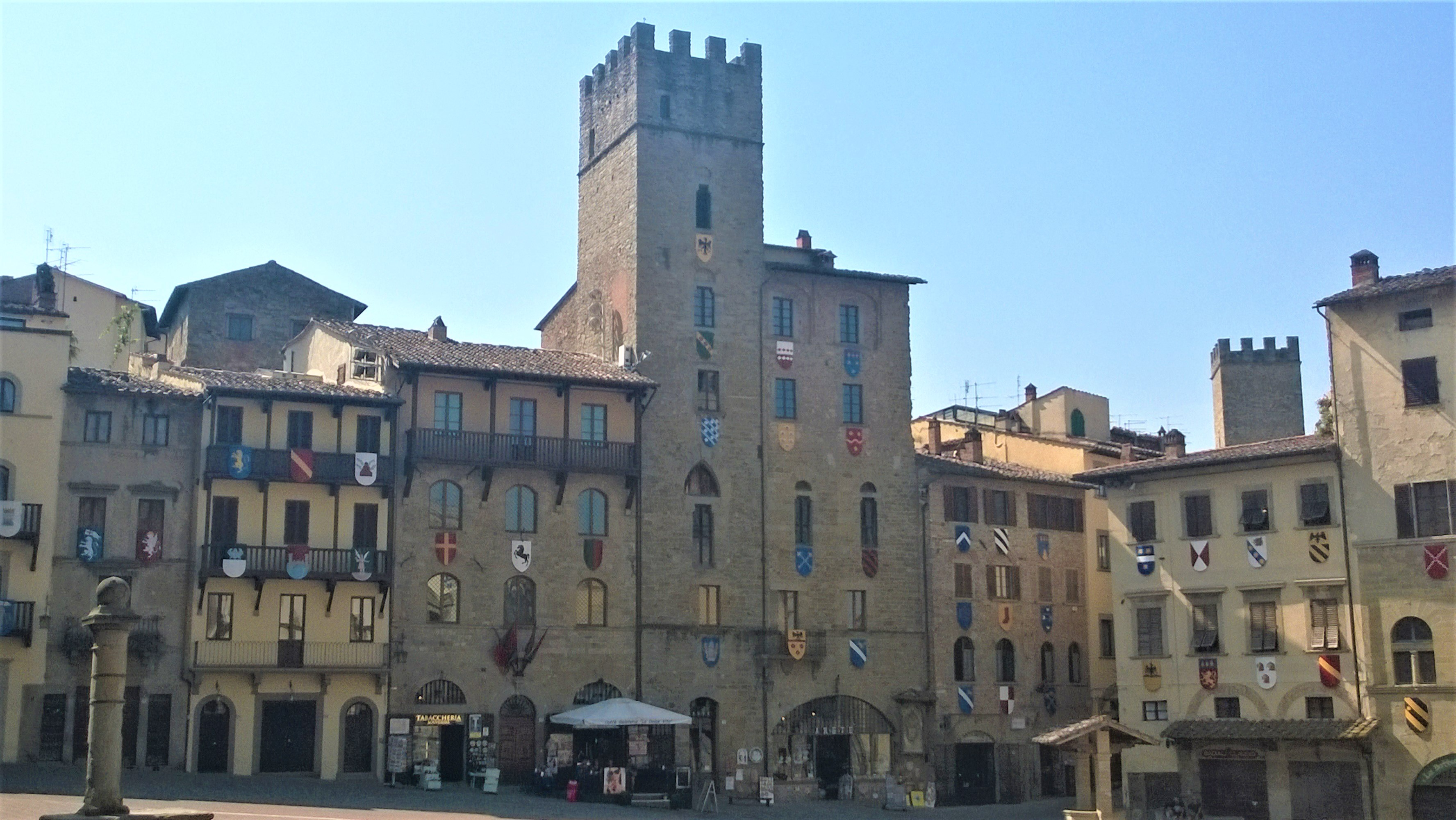
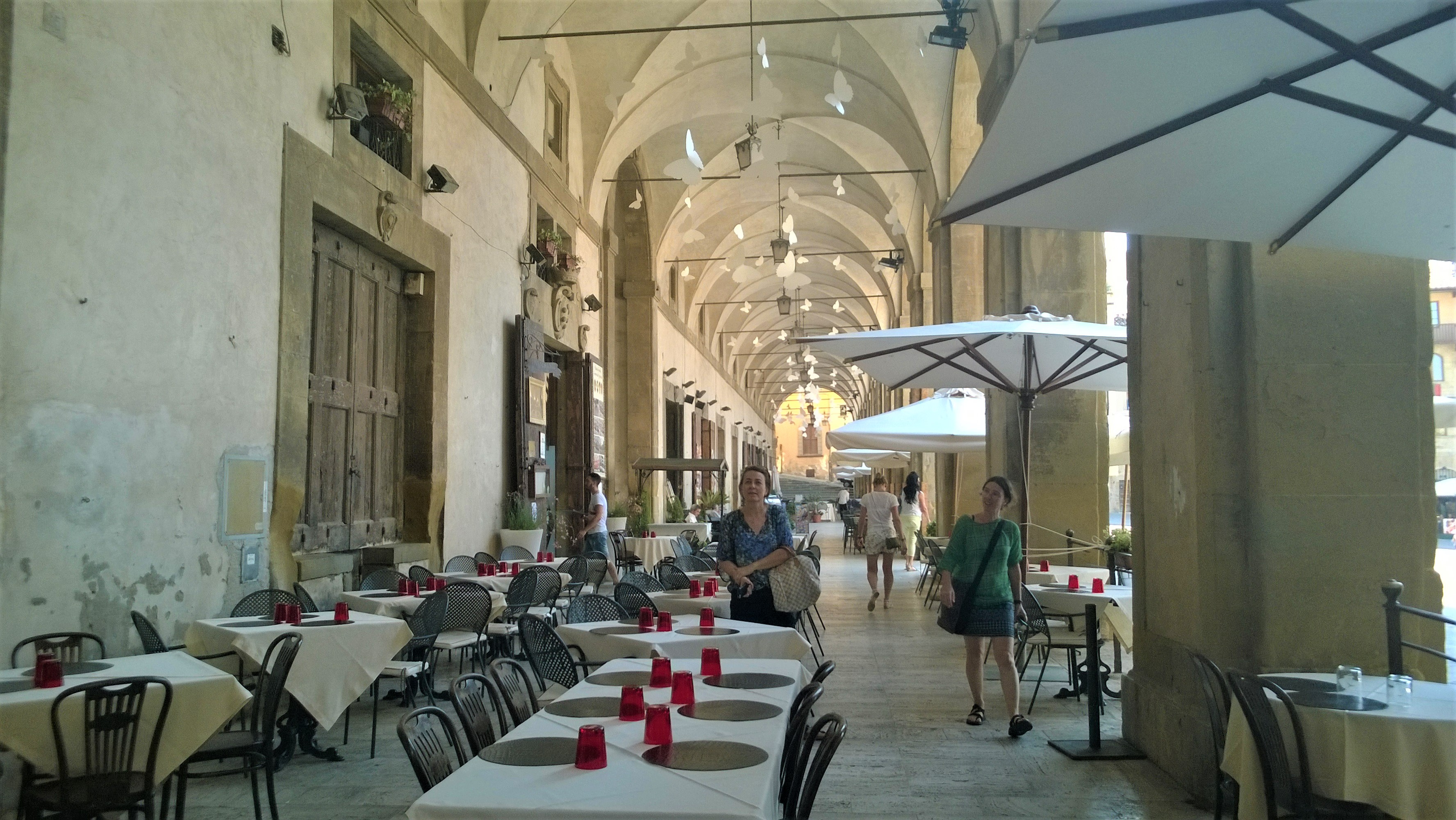
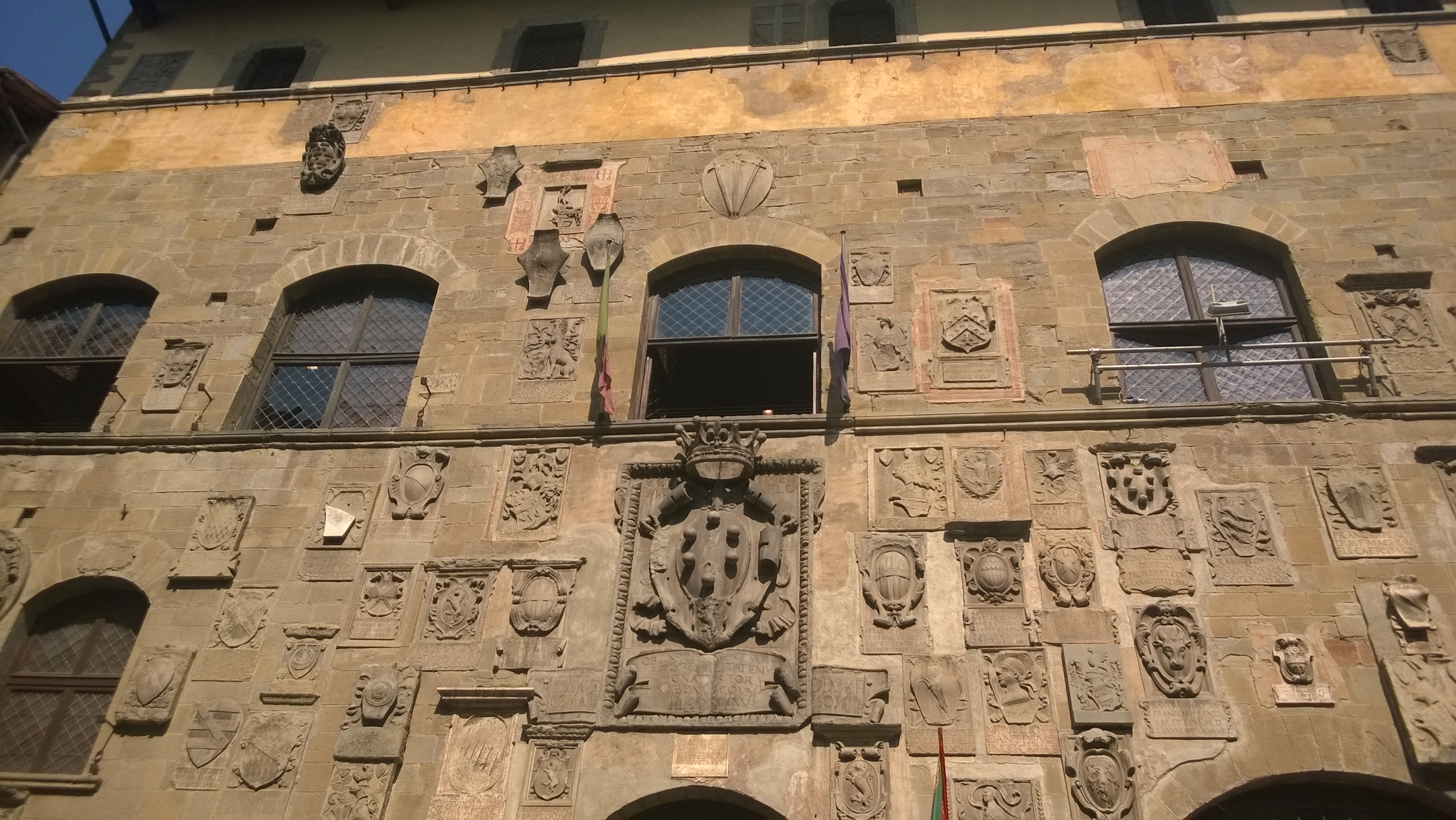
Our first culinary excursion begins in the Piazza Grande in Arezzo, forever immortalized in the 1997 Roberto Benigni film, Life is Beautiful. Considered one of the 12 important Etruscan cities, Arezzo occupies a steep hill rising from the floodplain of the River Arno. Today, tourists come to see the frescoes by Piero della Francesca inside the Basilica of San Francesco and the Medici Fortress in the upper part of town.
The Piazza Grande is also the site of the Joust of the Saracens held annually every September where the entire town dresses up in medieval costumes to cheer knights on horseback who charge a wooden Saracen king with their lances. I love how every town in Italy has their own unique “La Festa” or festival in their main square or piazza. I pick up several postcards and a booklet on the Joust for my son who is enamored with knights and medieval history.
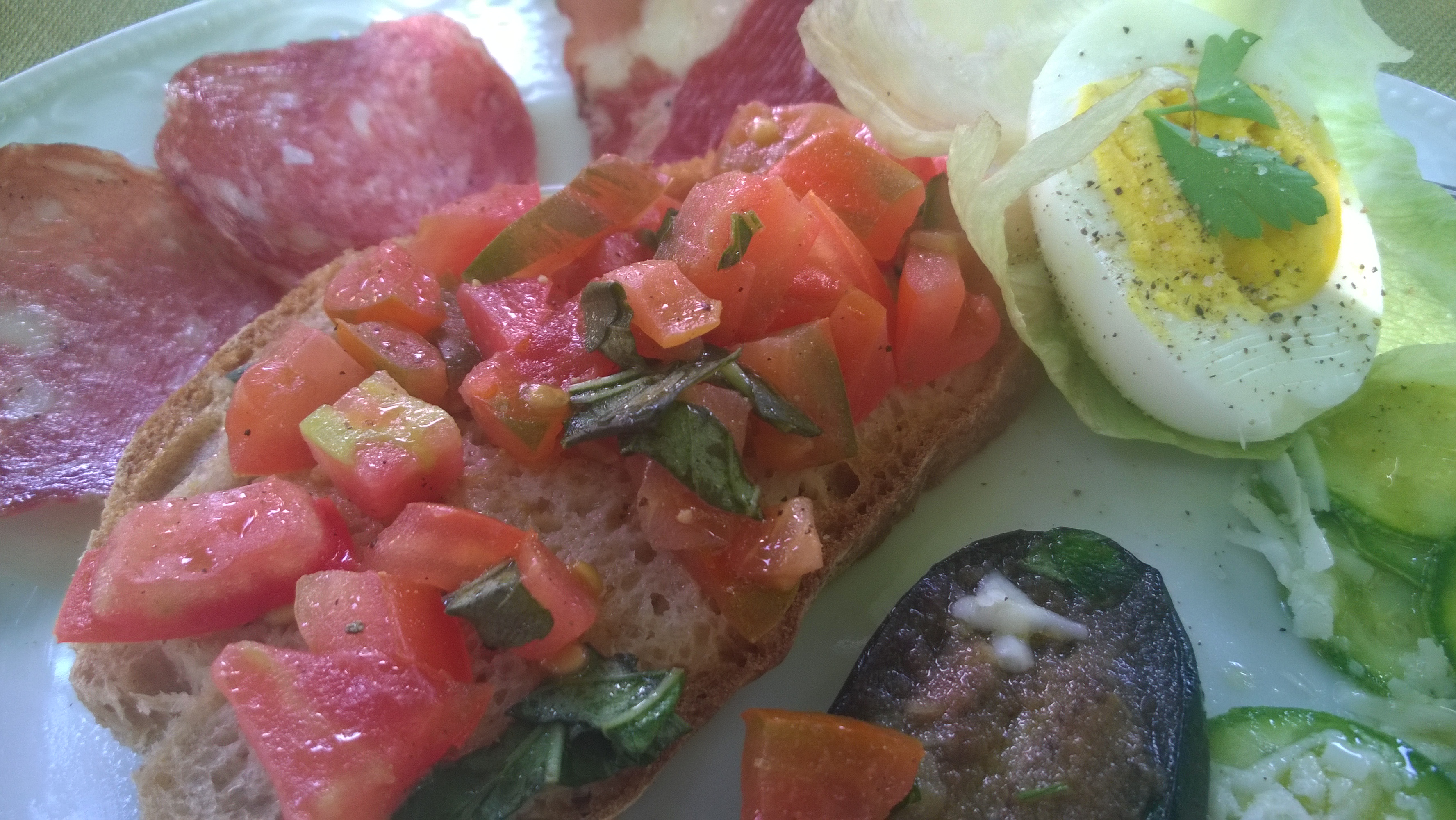
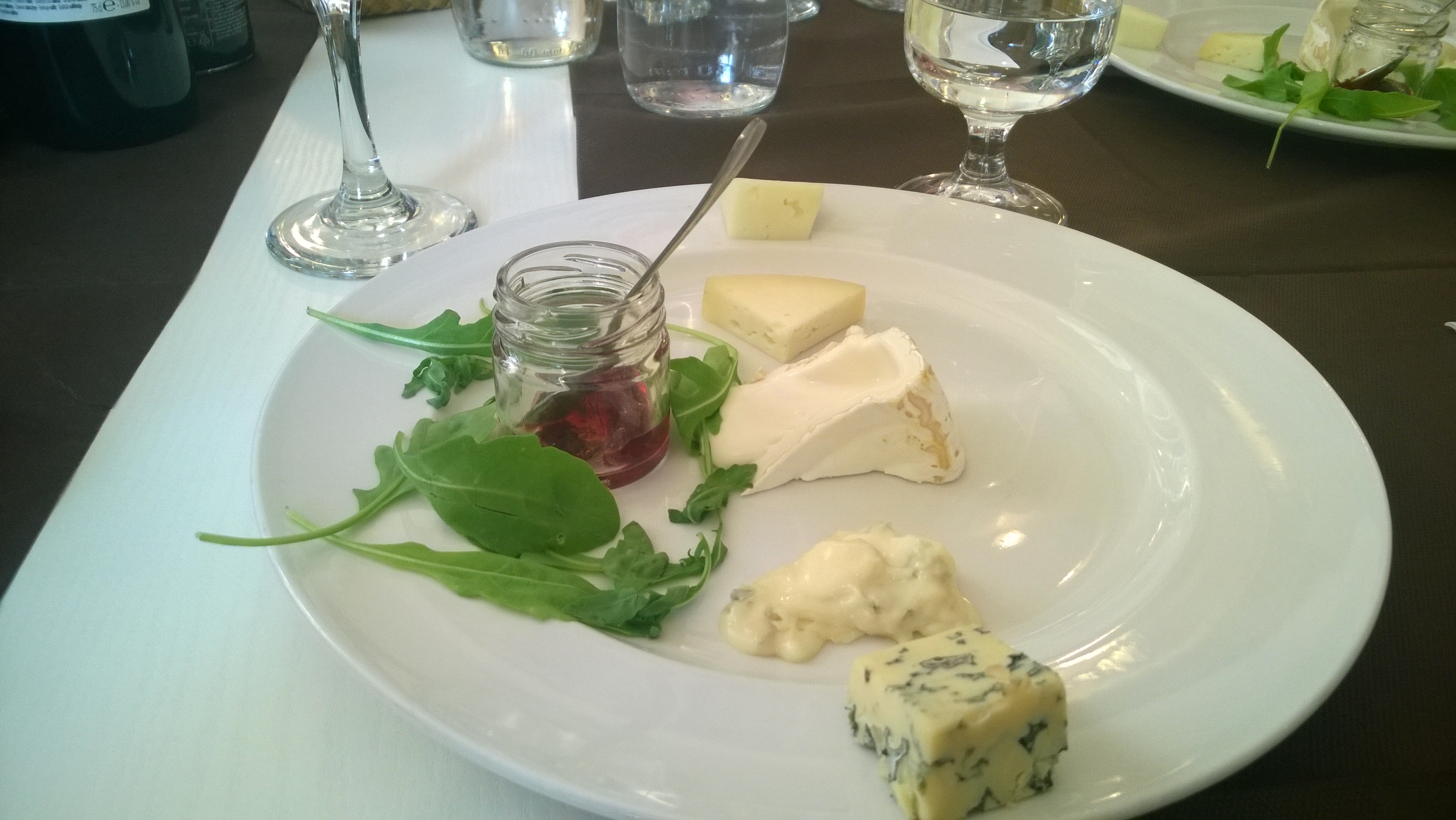
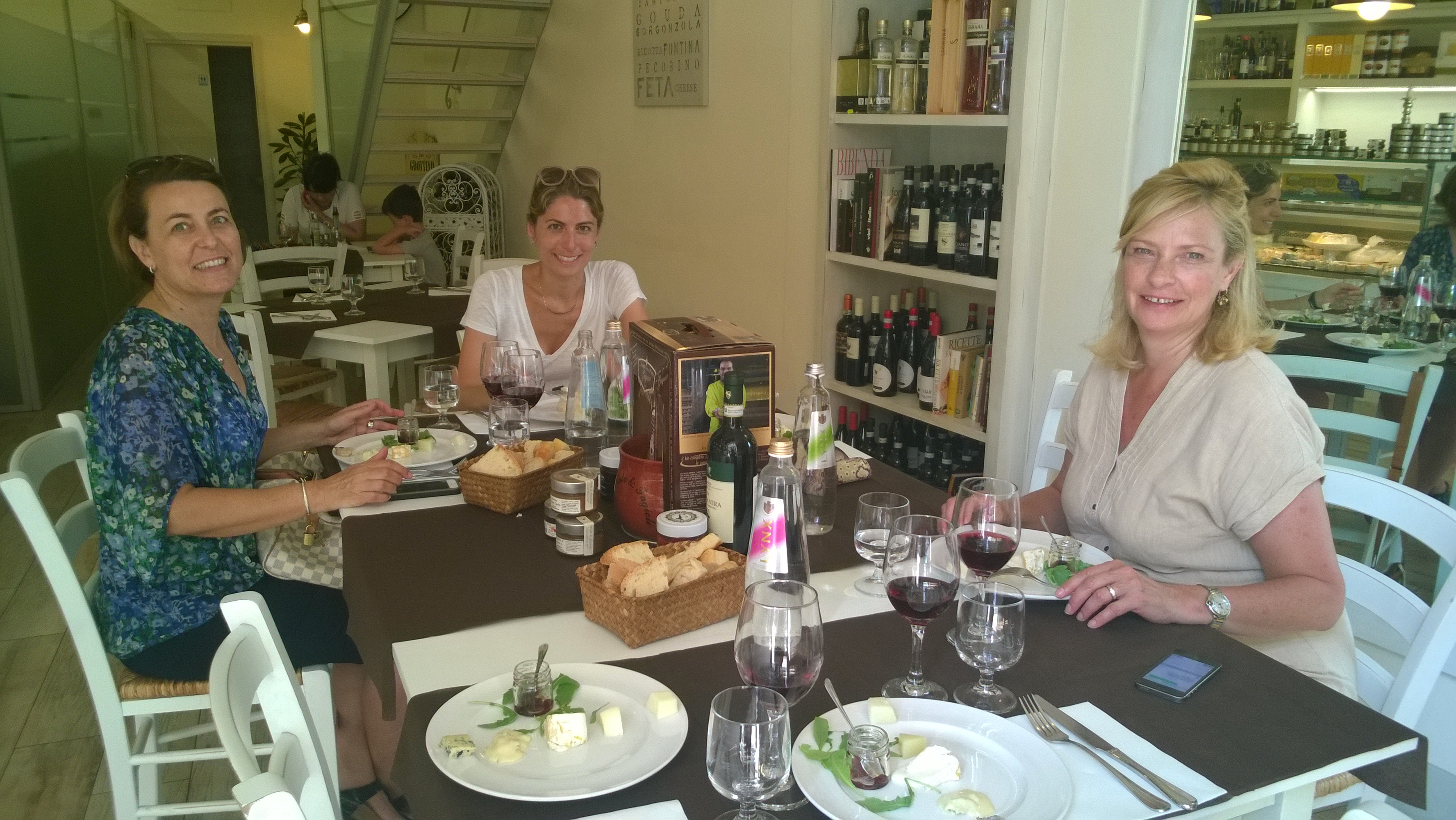
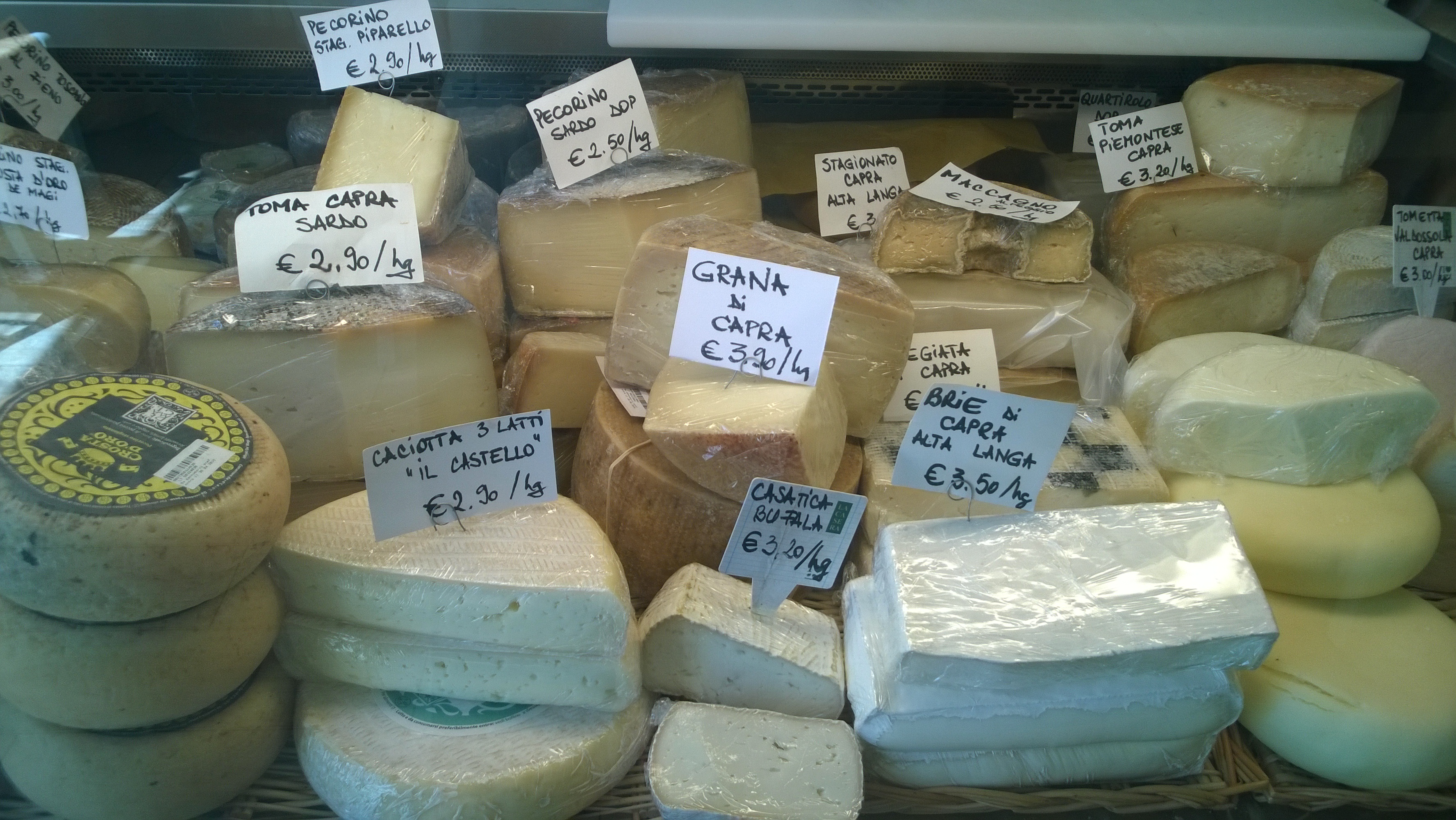
Our destination this morning is a “negozio di formaggi”— a specialty cheese shop featuring a dizzying array of cheeses made with goat milk, cow milk and water buffalo milk. When we arrive, everything is beautifully arranged at a table with plates, wine glasses, and white linen napkins. There are baskets of crusty hunks of bread, individual jars of quince jam, and wines paired with each of the four cheeses we are sampling this morning. These small cheese shop/wine bars are found not just in Arezzo, but throughout Italy, another barometer of how good food is central to “la dolce vita” (the sweet life) in Italy.
In addition to cooking techniques, we learn the history of regional foods. For instance, there’s a difference between prosciutto and Parma ham. Artisans must follow strict protocols to receive the Ducal Crown mark. Unlike many prosciuttos, no herbs are used in the preparation of Parma ham: the only ingredients are pork and salt. While any pig breed can be used for regular prosciutto, Parma ham is made only from Landrace and Duroc pigs. Meat is first rubbed with salt and left to rest for a week. After the pork is rubbed with the second layer of salt, it is left to age for another 15-18 days. Then, the meat is placed in a special cool and dry room for 60-90 days. The excess salt is then washed off and the meat is left to cure for 3 months. Afterward, the prosciutto is covered with a mix of lard and salt to prevent the external layer from drying. Finally, the meat is left in a cellar-like room for a full year.
The shop owner also explains the difference between bufala mozzarella and burrata. Bufala mozzarella is made with milk from water buffalo. One theory is Asian water buffalo were brought to Italy by the Goths during migrations in the early medieval period. However, according to the organization which certifies Bufala Campana, the most likely scenario is they were introduced by the Normans from Sicily circa 1000 and Arabs had introduced to them to Sicily in the 700s. Others believe the water buffalo were brought to Mesopotamia by the Arabs and subsequently introduced into Europe by returning crusaders.
Authentic buffalo mozzarella – Mozzarella di Bufala Campana – is now safeguarded under the European Union’s Protected Designation of Origin laws (PDO on food labels). Water buffalo milk is much fattier and richer than the milk of dairy cows, which means it’s ideal for making cheese. The cheese is porcelain white, has a smooth shiny surface and a slightly acidic taste. Bufala mozzarella has more flavor than mozzarella made with cow’s milk (the common variety in the U.S.).
Burrata, which means “buttery” in Italian, is made from fresh milk heated to make mozzarella curds. These are combined with hot whey and then stretched and pulled and eventually formed into a ball, the middle of which is filled with stracciatella, essentially stringy mozzarella curds combined with cream. The outer cheese is then pulled over the creamy center and twisted into a small top knot. When you slice into the cheese, the creamy interior spurts out. Messy but delicious.
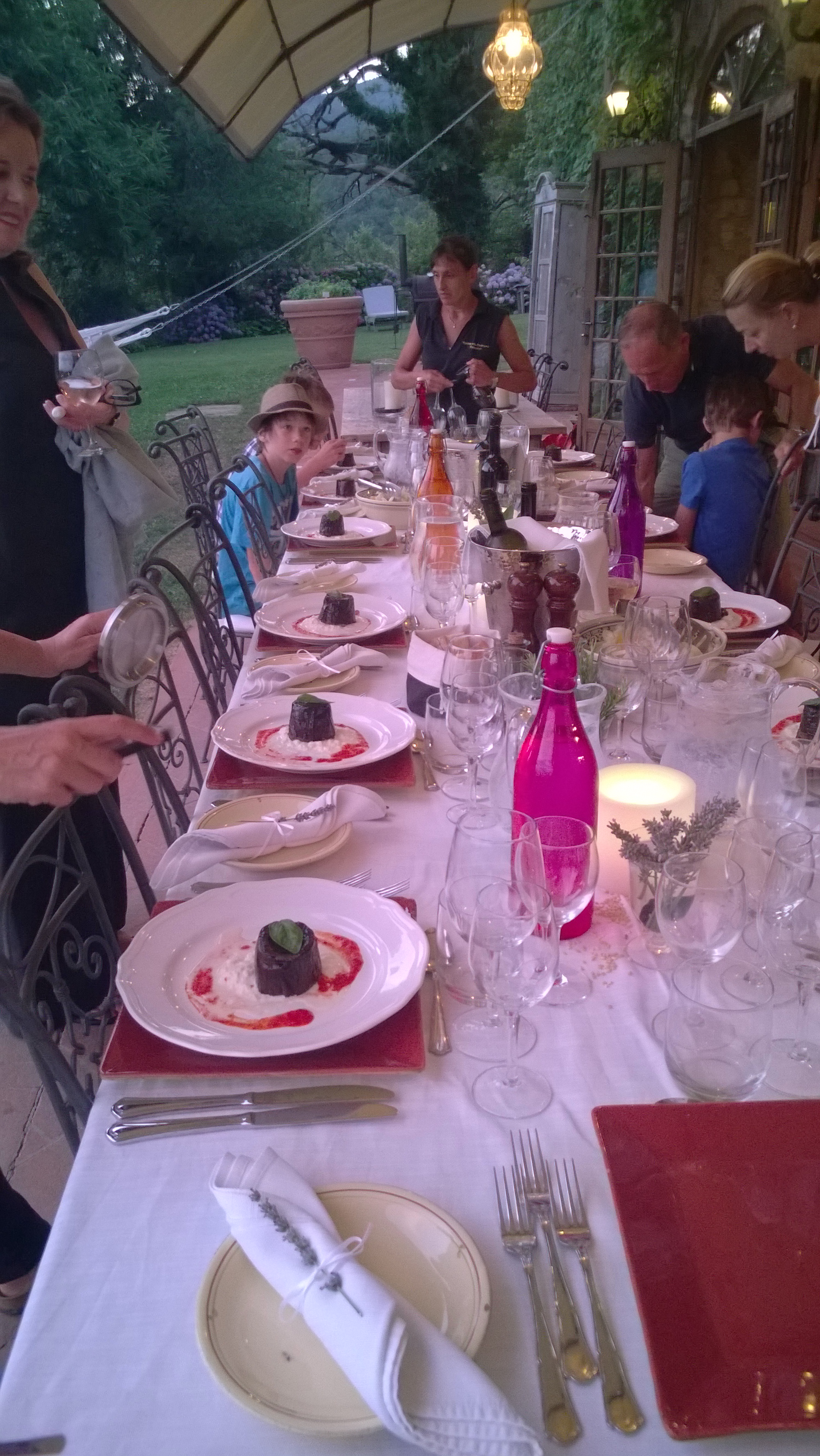
We will incorporate Burrata cheese into tonight’s appetizer—an amazing eggplant soufflé.
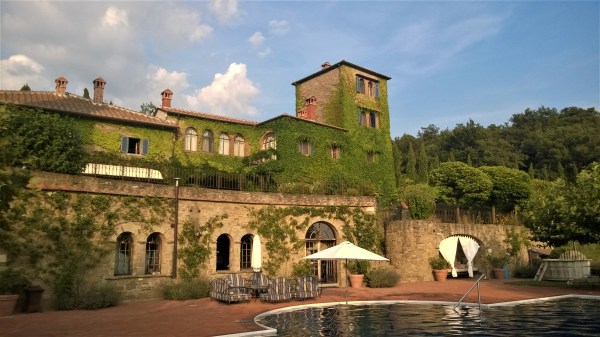
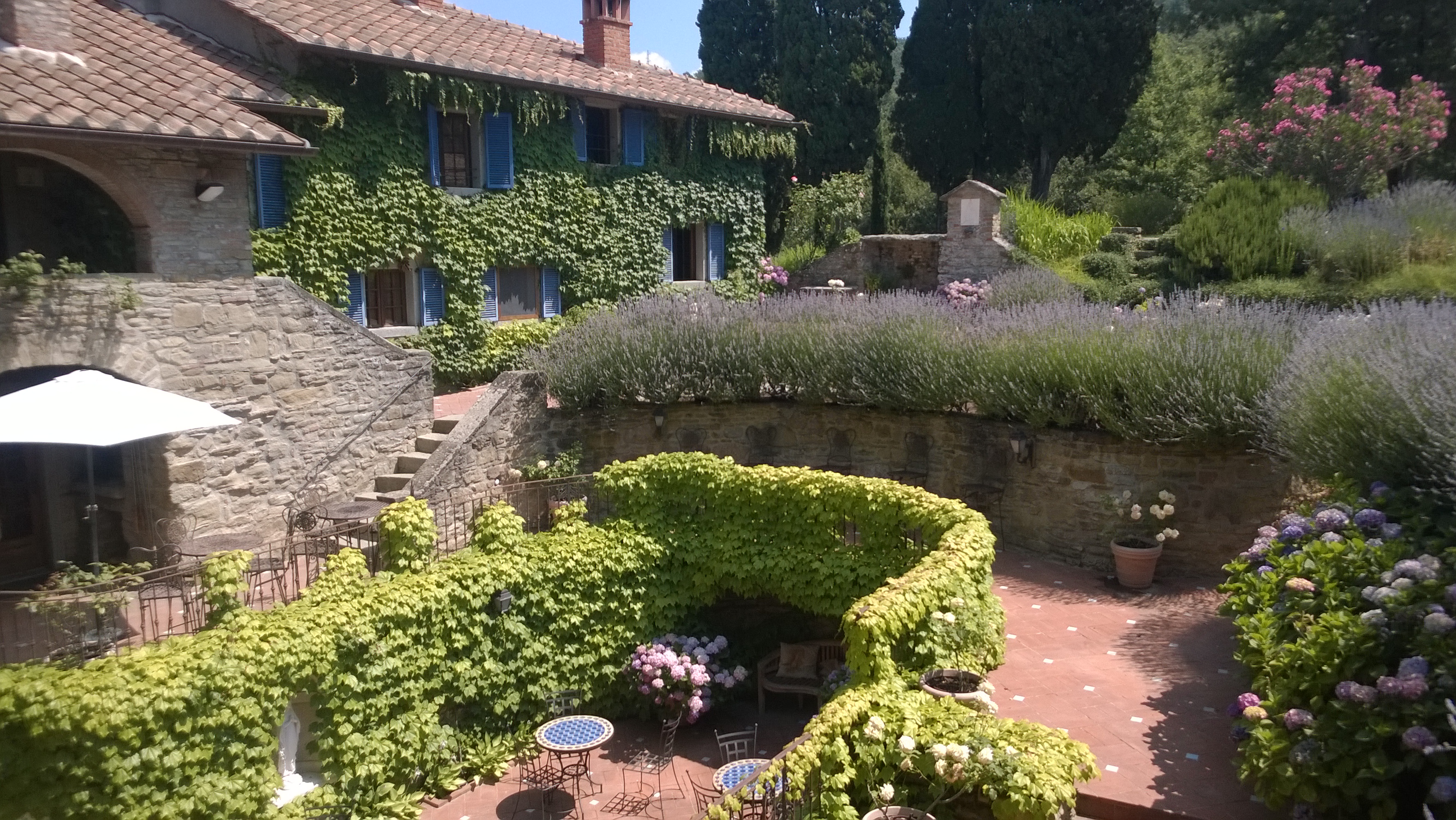
I have just arrived at the Villa Torre del Tartufo in Tuscany. Through the ivy-framed windows in my room with its wood-beamed ceiling and thick stucco walls, I gaze out at the deep blue swath of the villa’s swimming pool surrounded by terraced gardens. Lush hillsides of mid-summer stretch as far as the eye can see in all directions. I am glad I have splurged on this three-day cooking school. Made possible by selling my wedding ring, it has already exceeded my expectations as a once-in-a-lifetime experience.
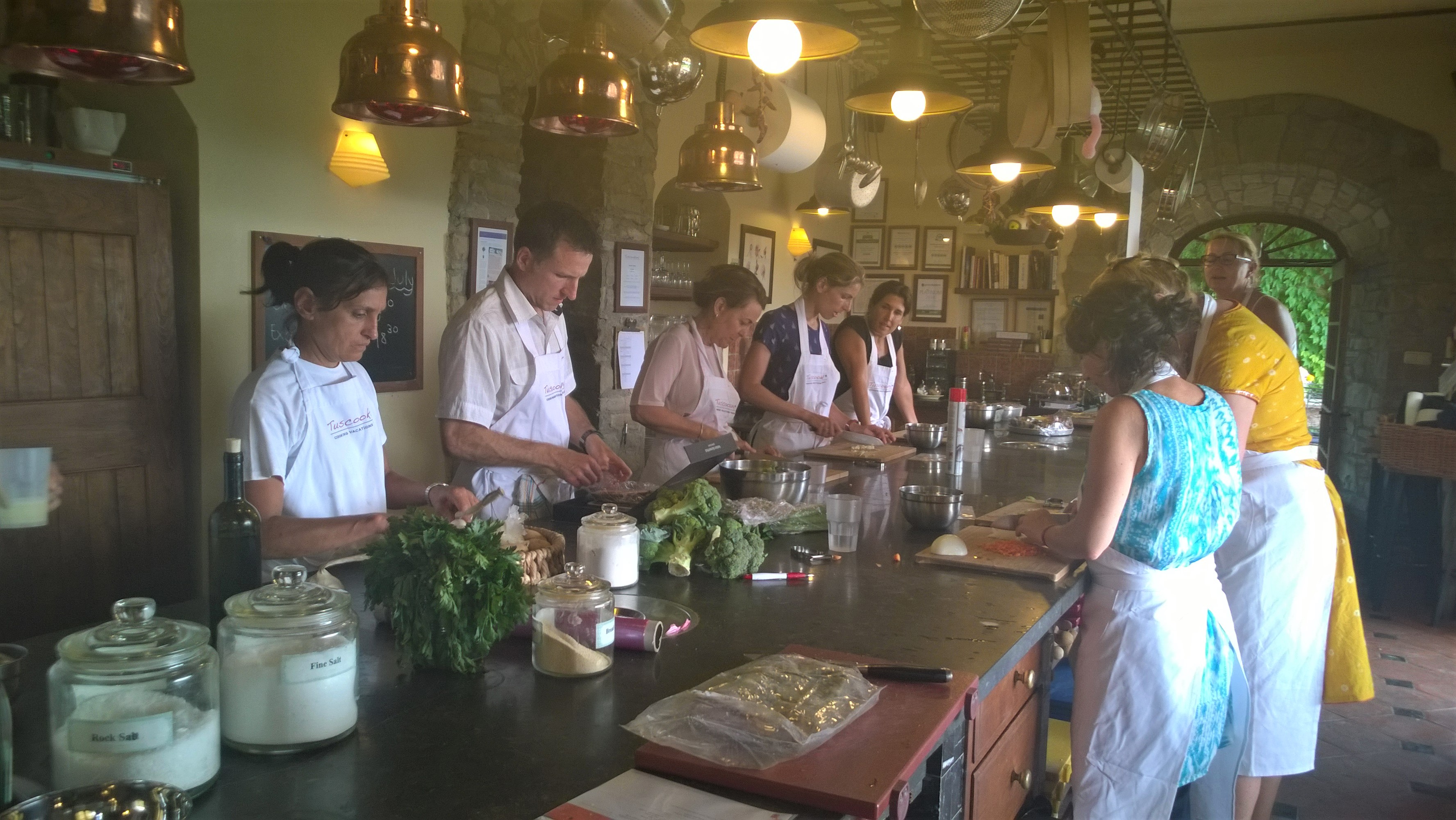
Each morning begins at 7:00 AM with a breakfast of frothy cappuccino, fresh duck eggs cooked to order, spicy capicola or Parma ham, and ripe Tuscan melon. Then we are off in a small van along narrow country roads for our Culinary Excursion of the day. We will return to the villa for lunch and split into teams to cook for five to six hours preparing an evening meal of four courses. My fellow classmates include two sisters from South Africa, Amelia and her 12-year-old son Arlo from Melbourne, Australia, a German couple, a retired teacher from Switzerland, a young American woman about to start medical school, and a couple from New York on their second visit to one of the Tuscookany schools (others are located in equally spectacular villas in Poppi and Bellorica).
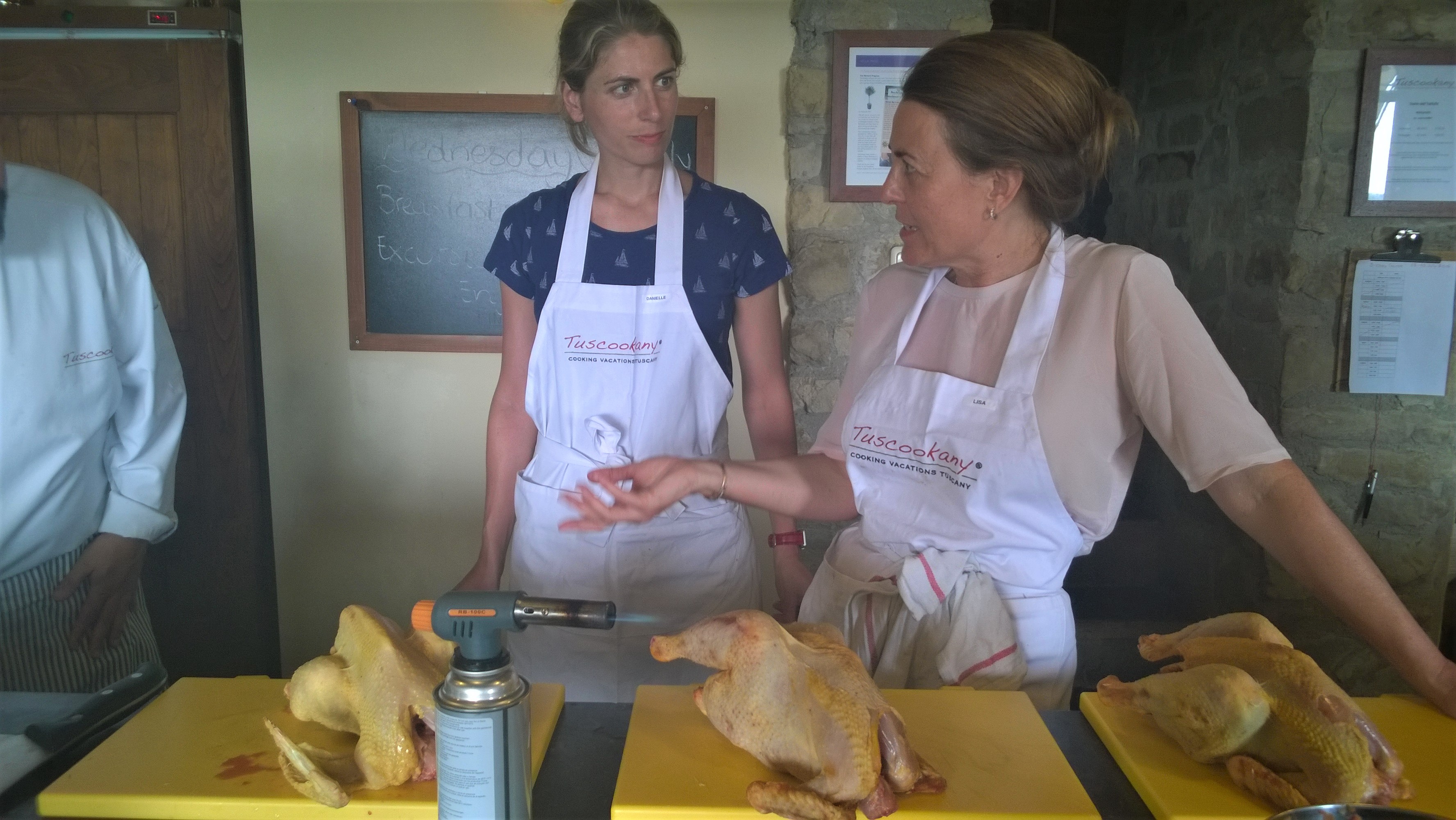
Our chefs are Franco and Paola, both born and raised in Italy. At the age of 14, Franco enrolled in a 5-year course at the National Hotellerie Institute of Italy graduating when he was 19. He worked as a chef in restaurants in England, France, Switzerland, Greece, and Rhodes and was also a chef on a Cunard cruise ship. He’s a tough taskmaster making sure we use the right utensils and that we keep our ingredients tidy on the long prep table.
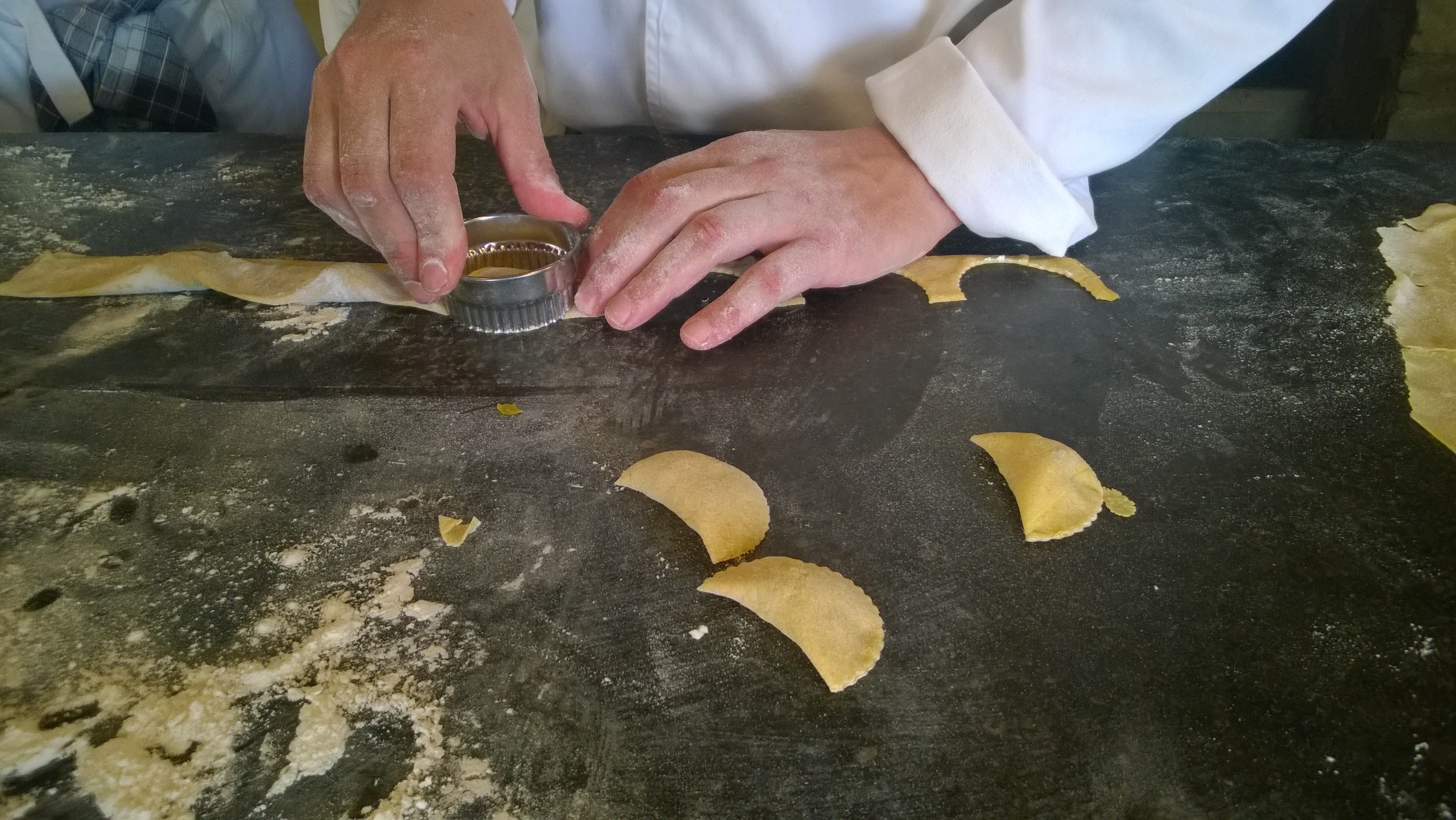
We will learn everything from deboning a duck, to shaping delicate moons of ravioli, to unmolding eggplant and cheese souffles, to roasting artisan pizzas in a 300-year-old stone pizza oven in the villa’s courtyard. We’ll even search for truffles in the wooded hillsides surrounding the villa.
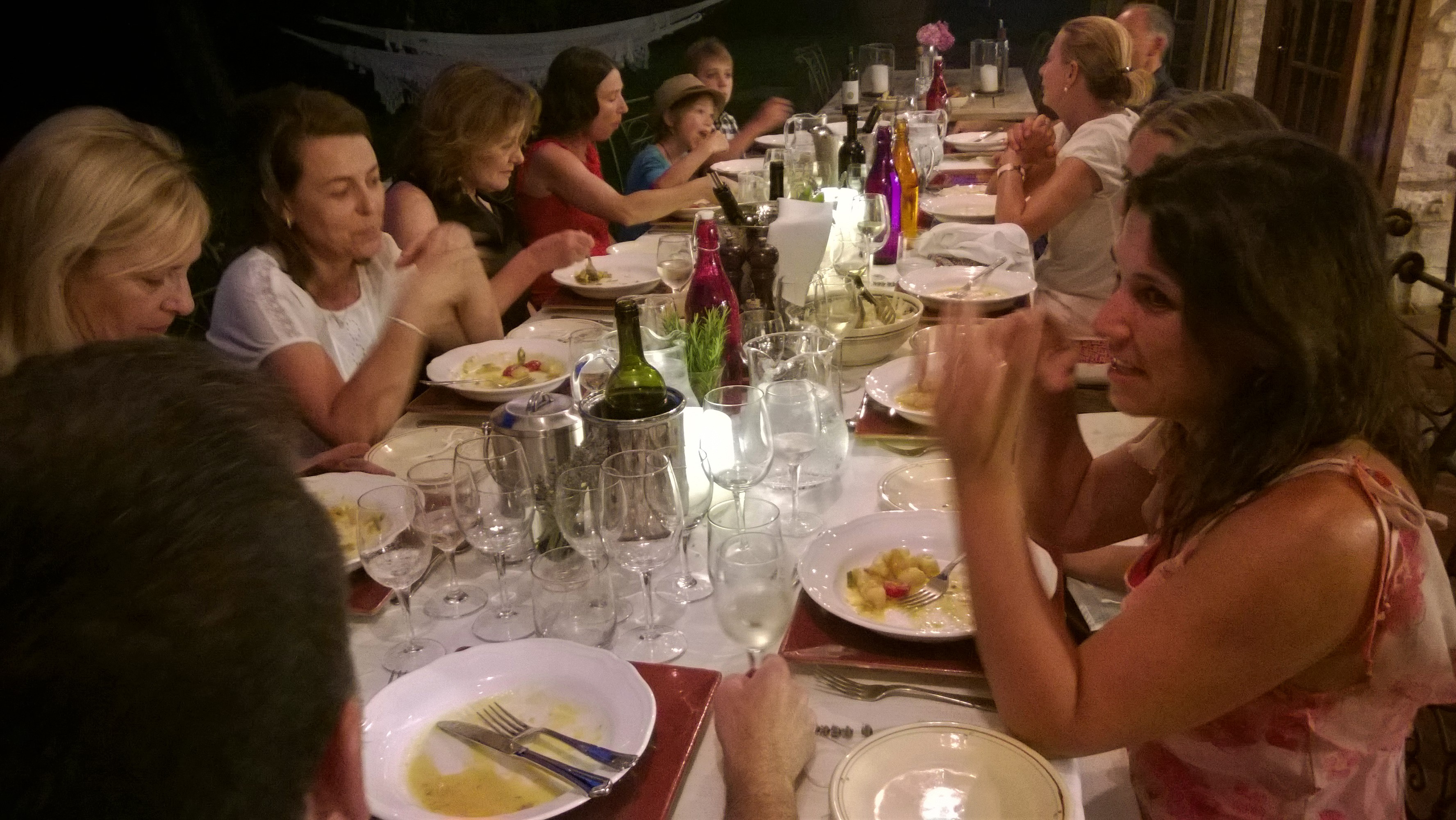
There is a short break before dinner when we can rest, swim in the pool, or schedule a massage. I opt for a quick dip and then curl up in one of the pool’s pillowed alcoves with a good book. Dinners are served at a long pine table under the grape arbor starting at 8:00 PM and stretch for hours with a local wine accompanying each course. After dessert, there are platters of cheese, pears, and toasted nuts. Franco sets an enormous rustic basket on the table—it’s full of odd-shaped bottles holding an assortment of grappa, exotic liqueurs like Limoncello or pistachio cream, and tawny ports.
At night with windows wide open to the fragrant night air of Tuscany, I fall asleep pleasantly satiated by the delectable food and wine experiences of the day.
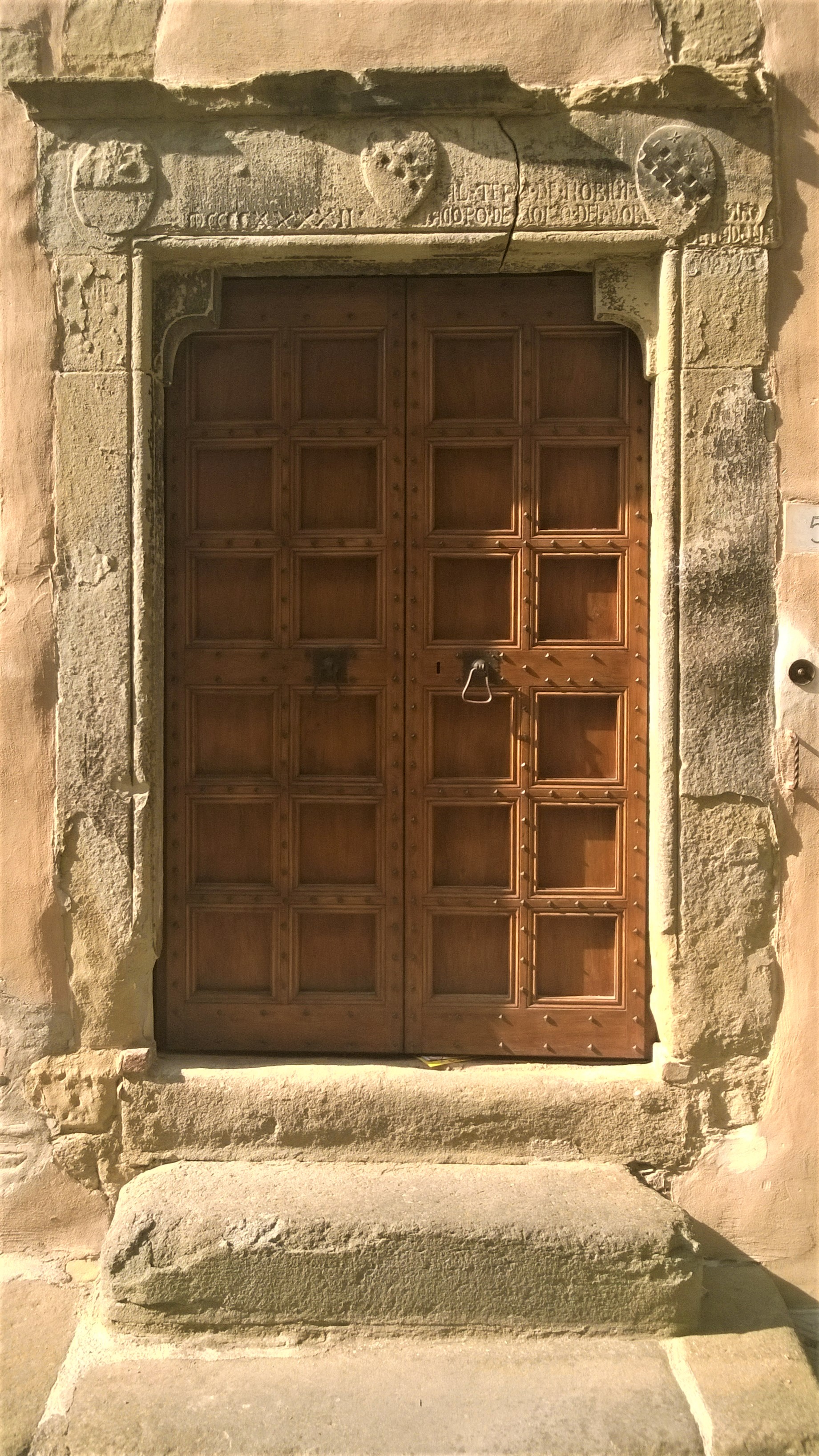
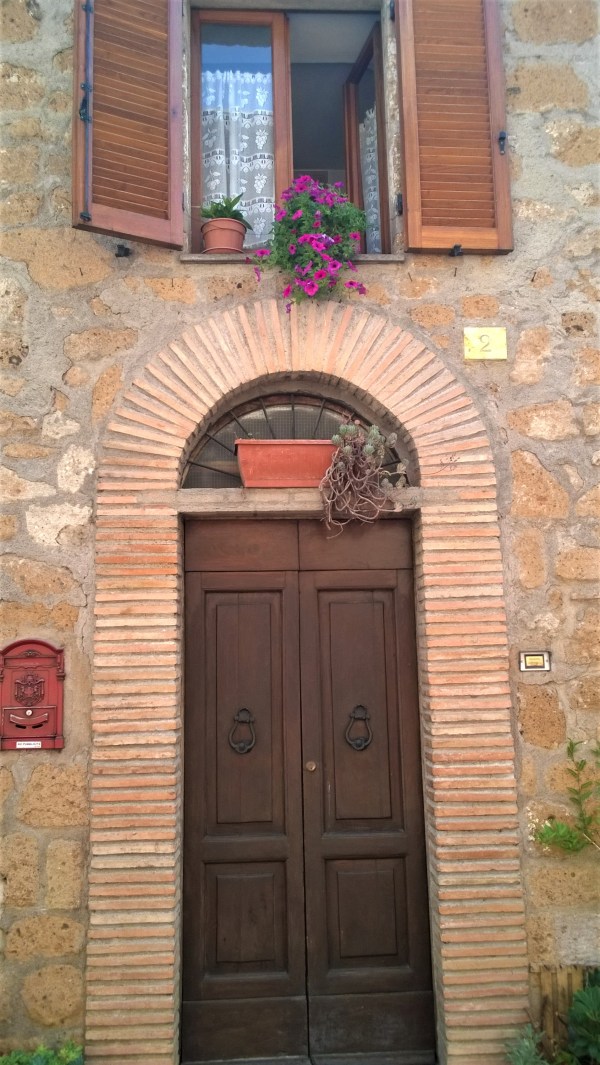
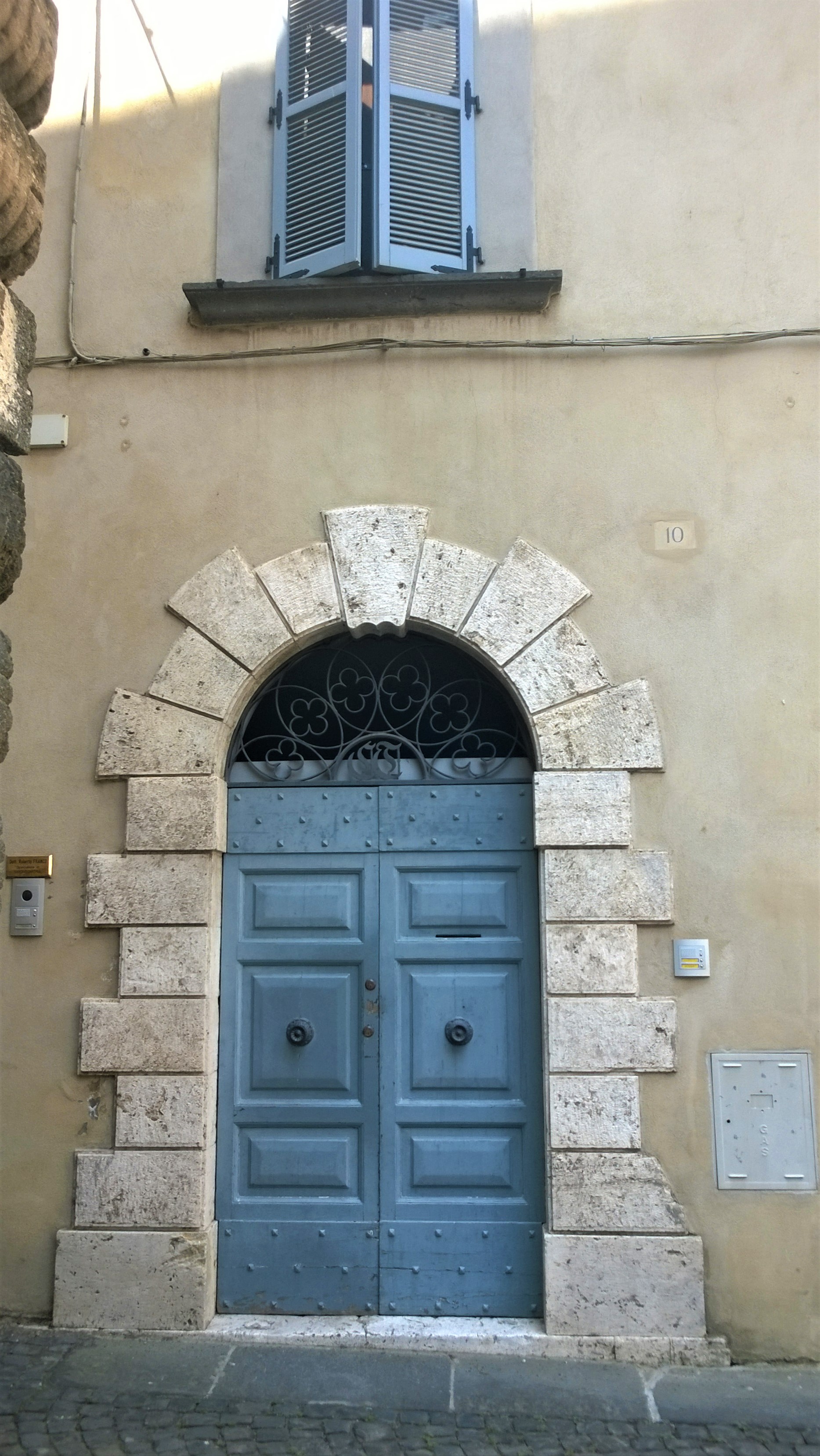
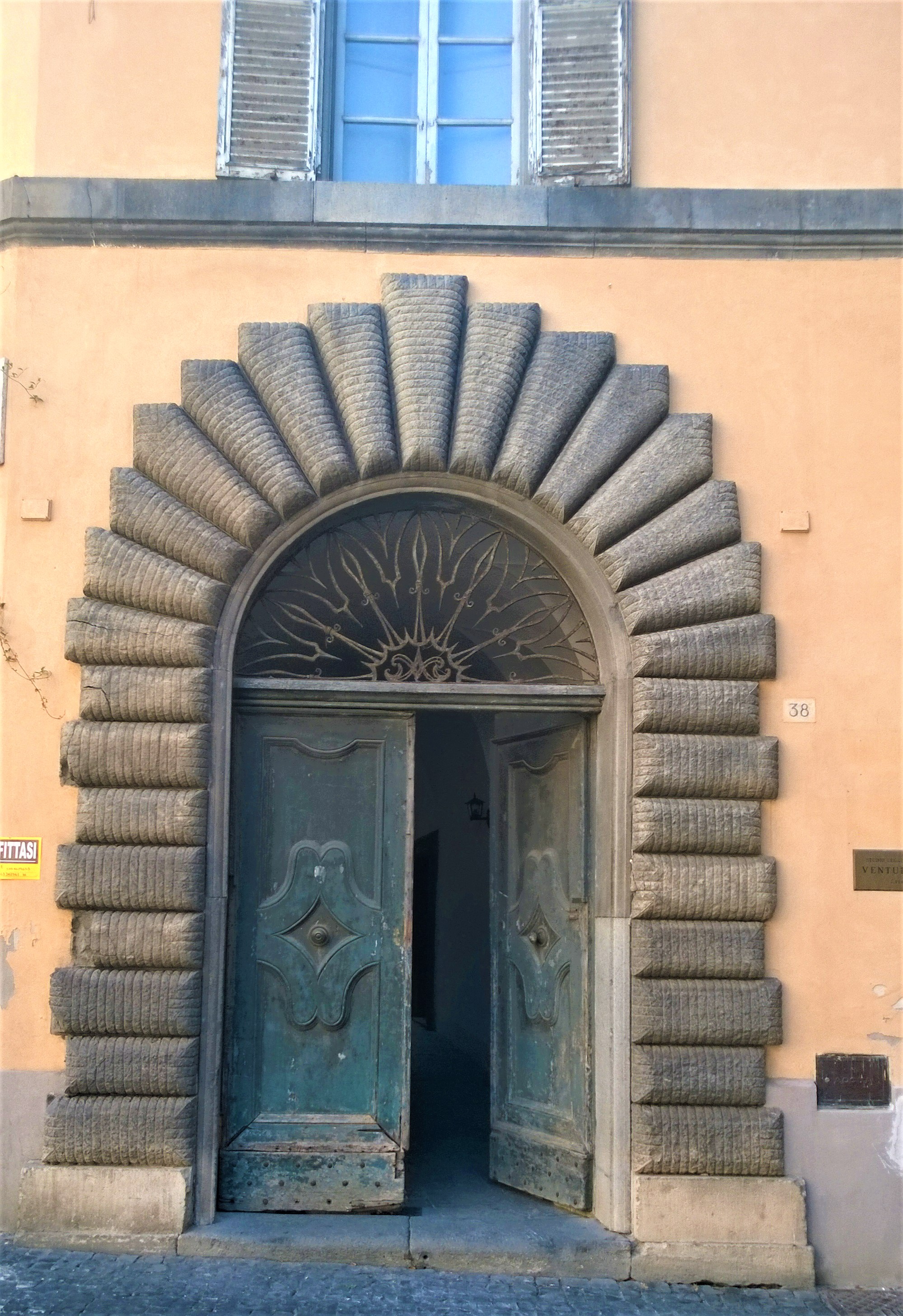
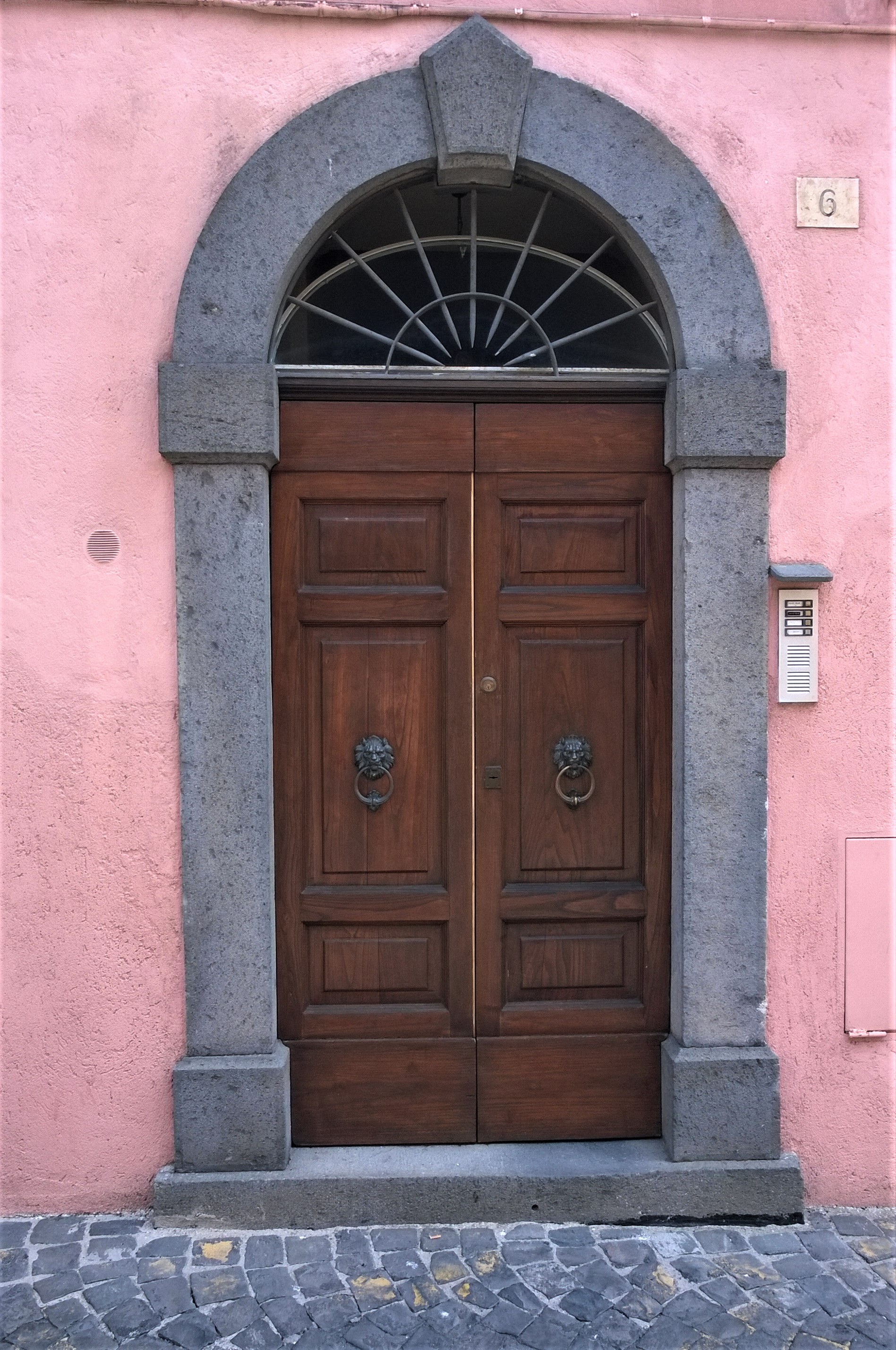
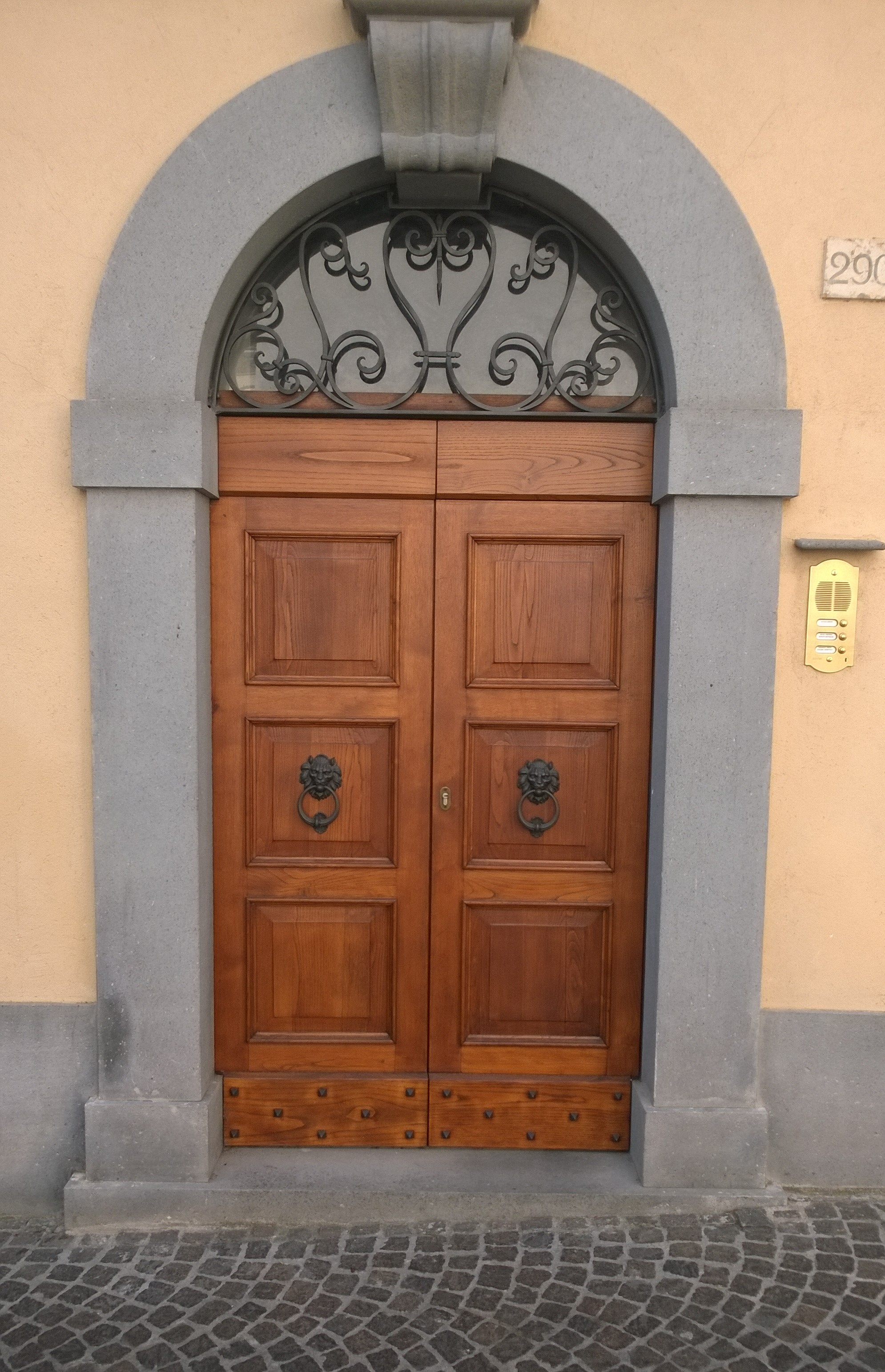
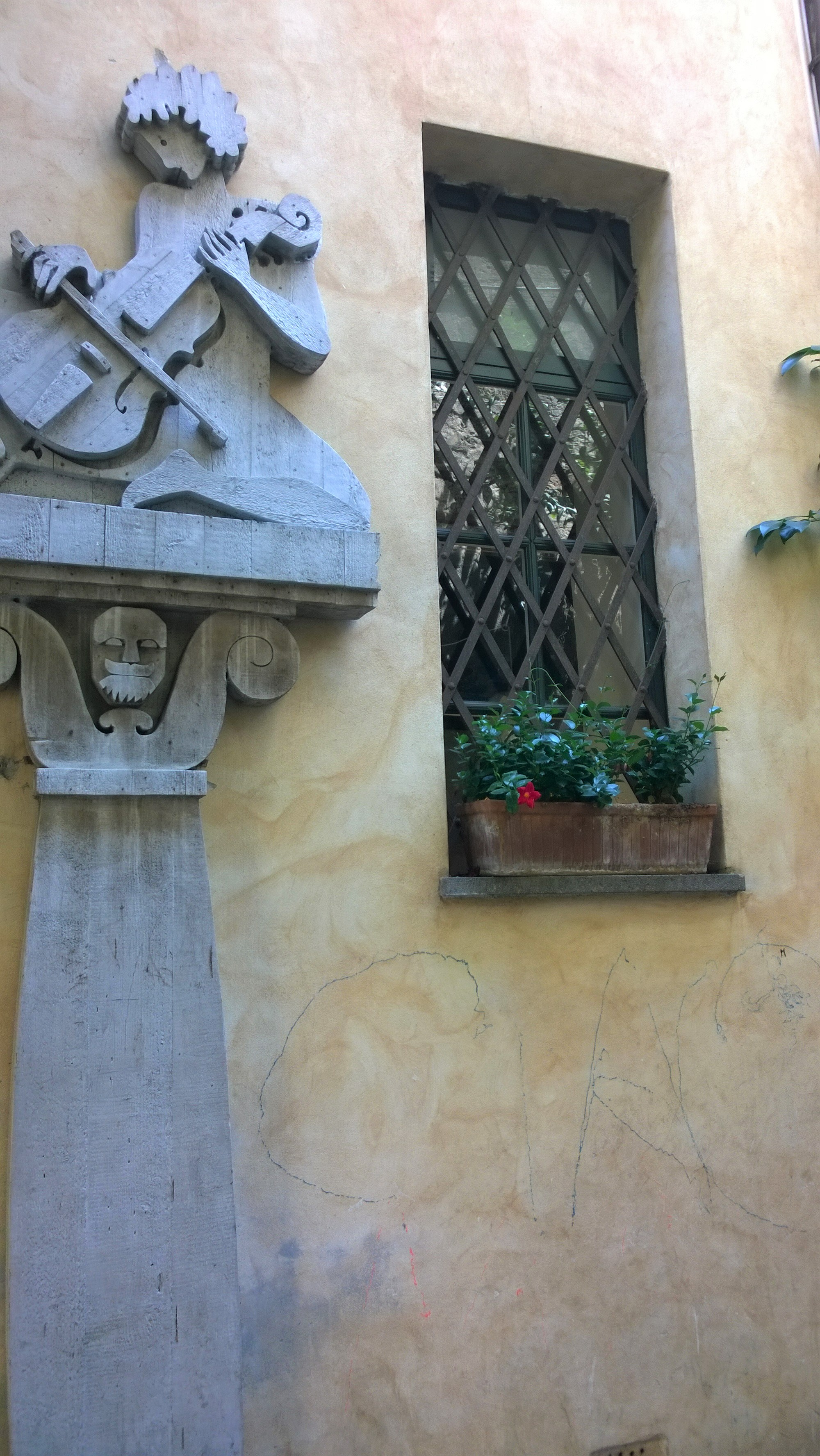
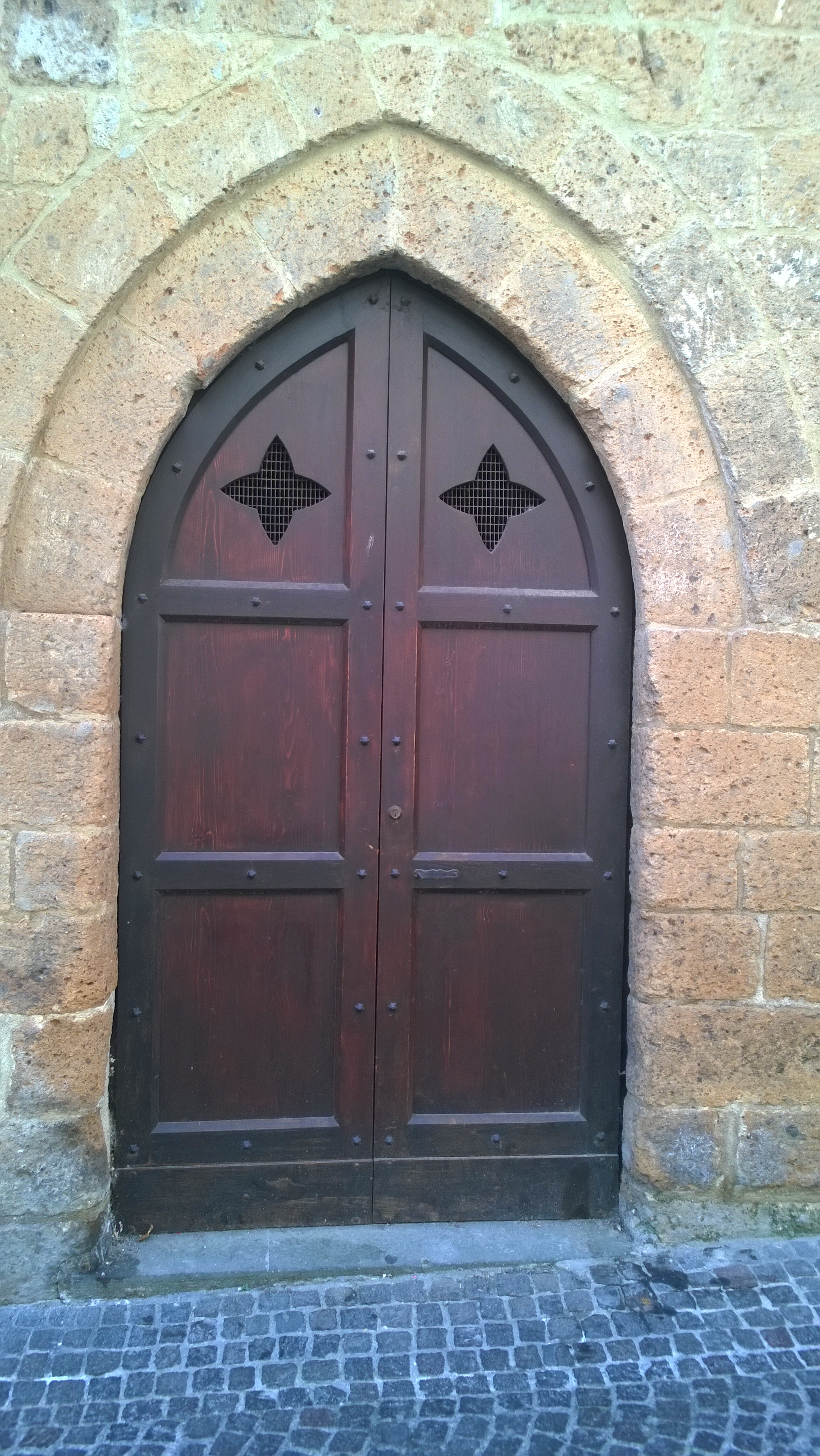
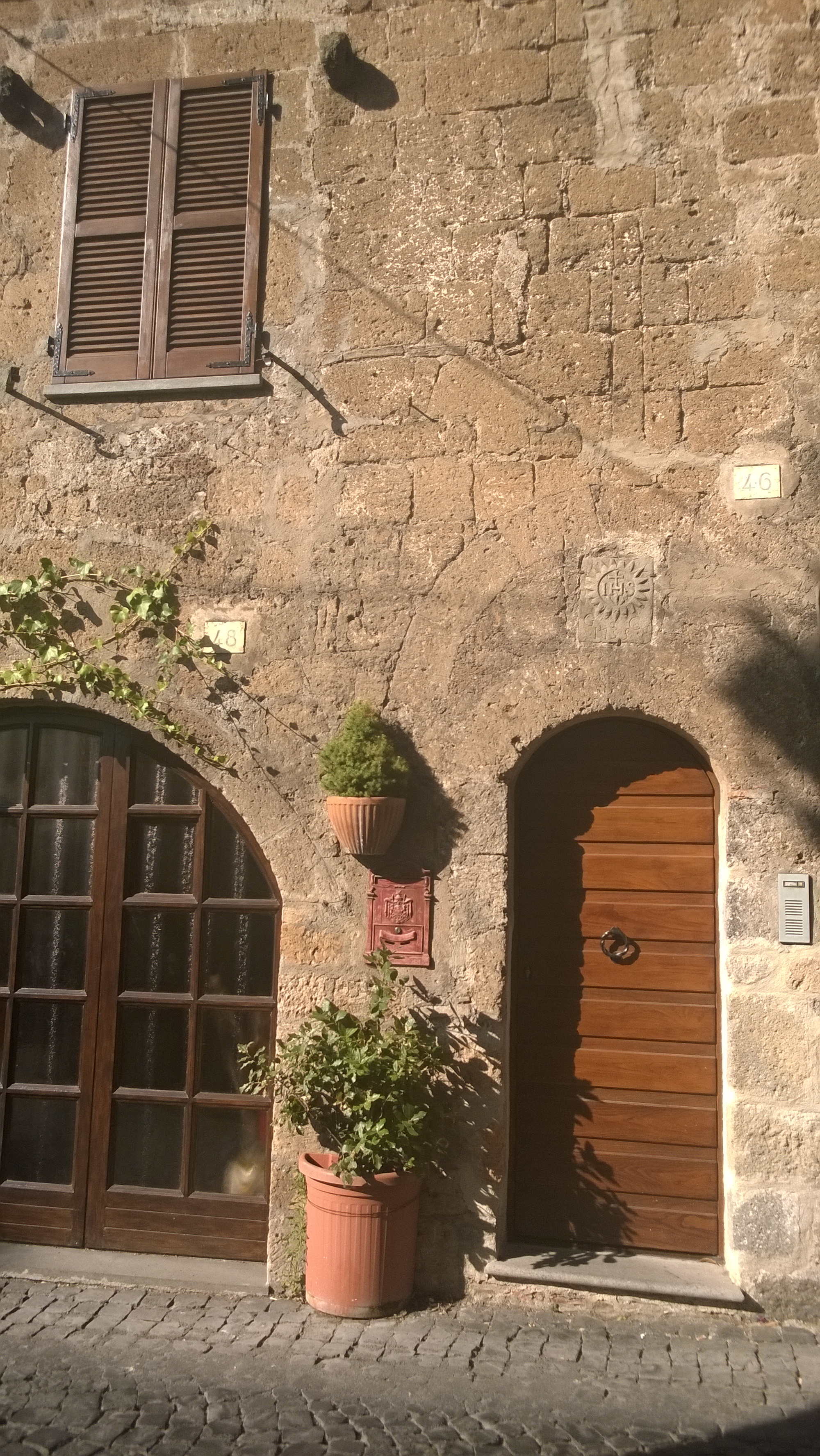
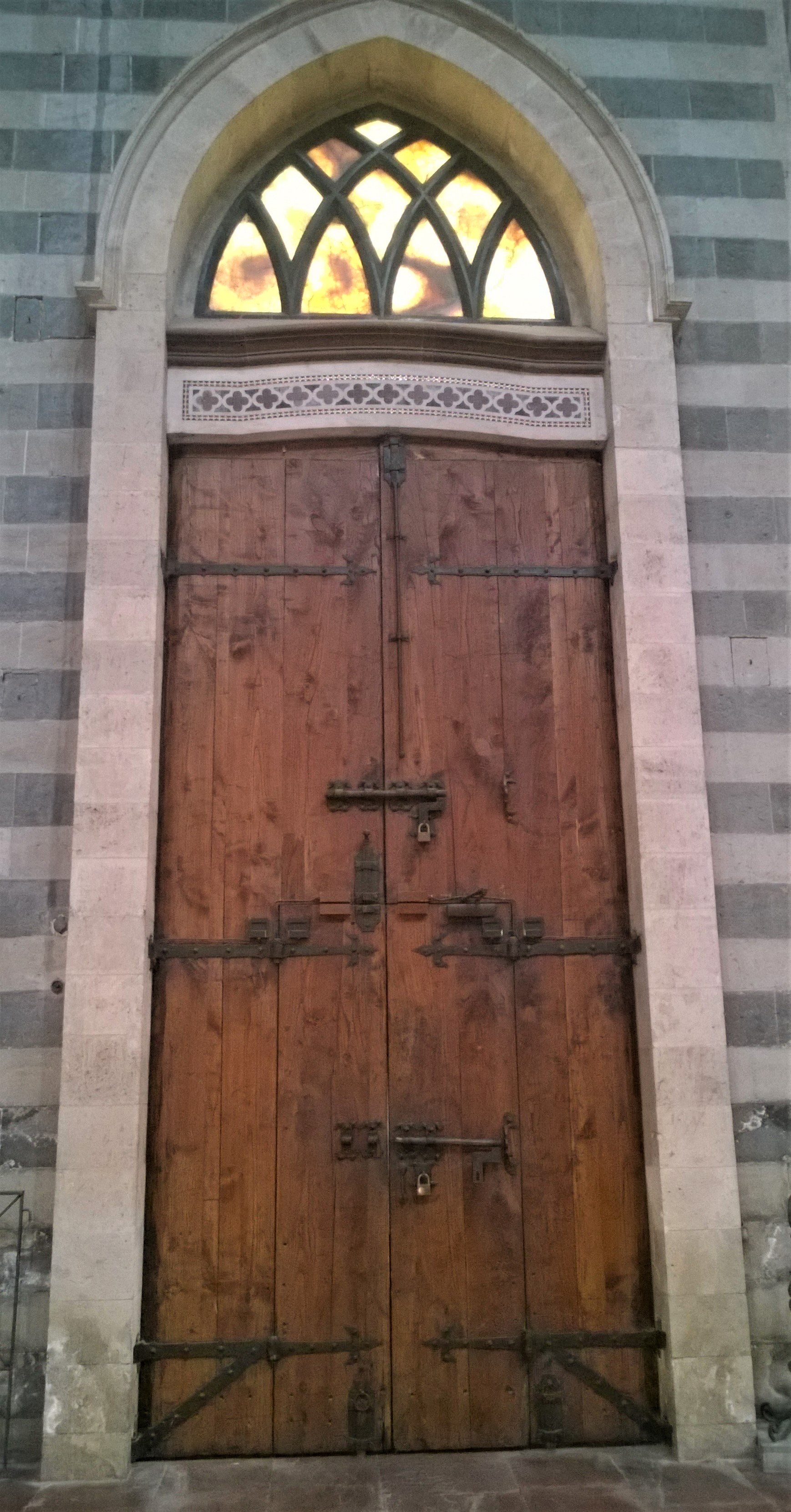
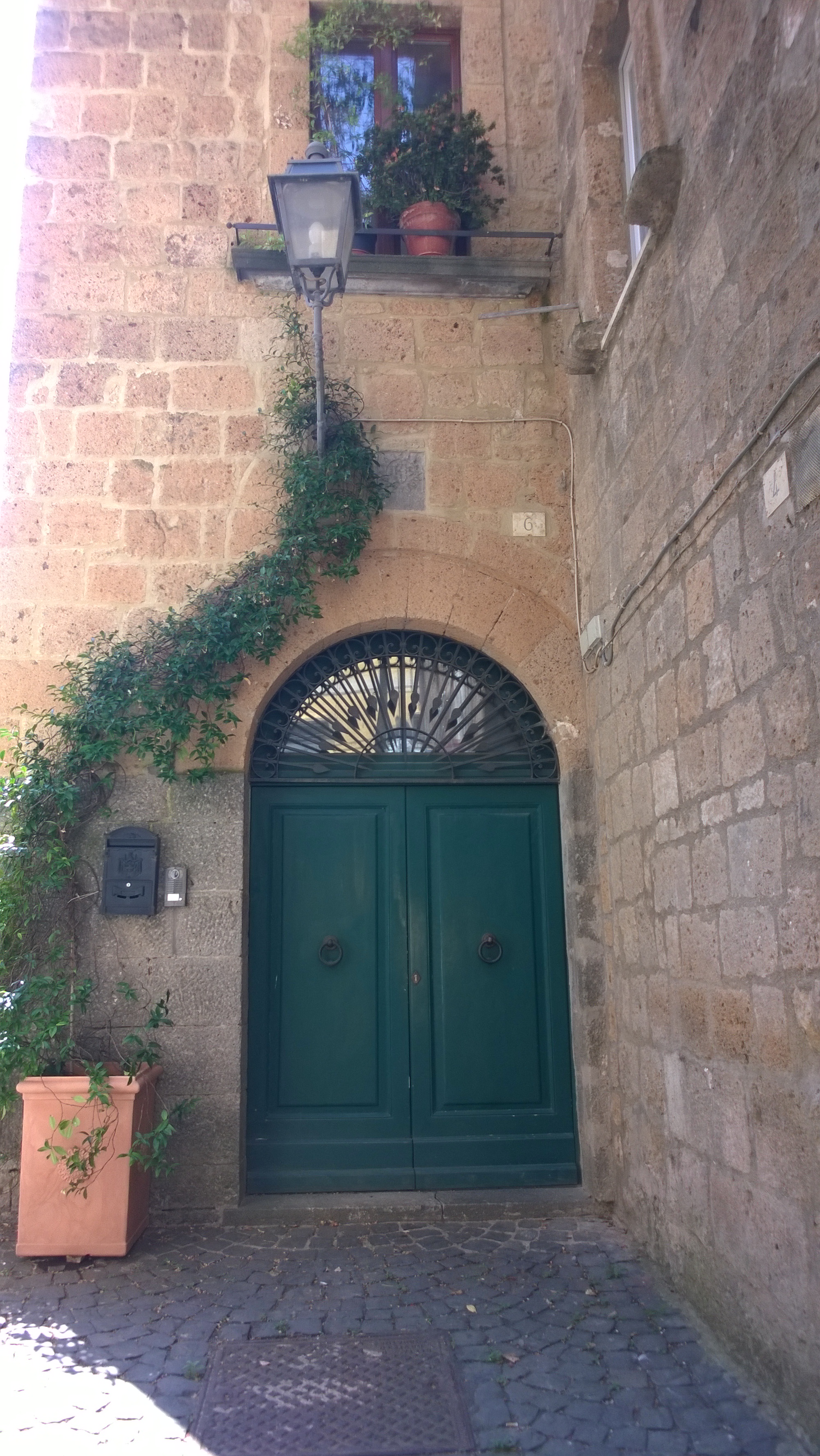
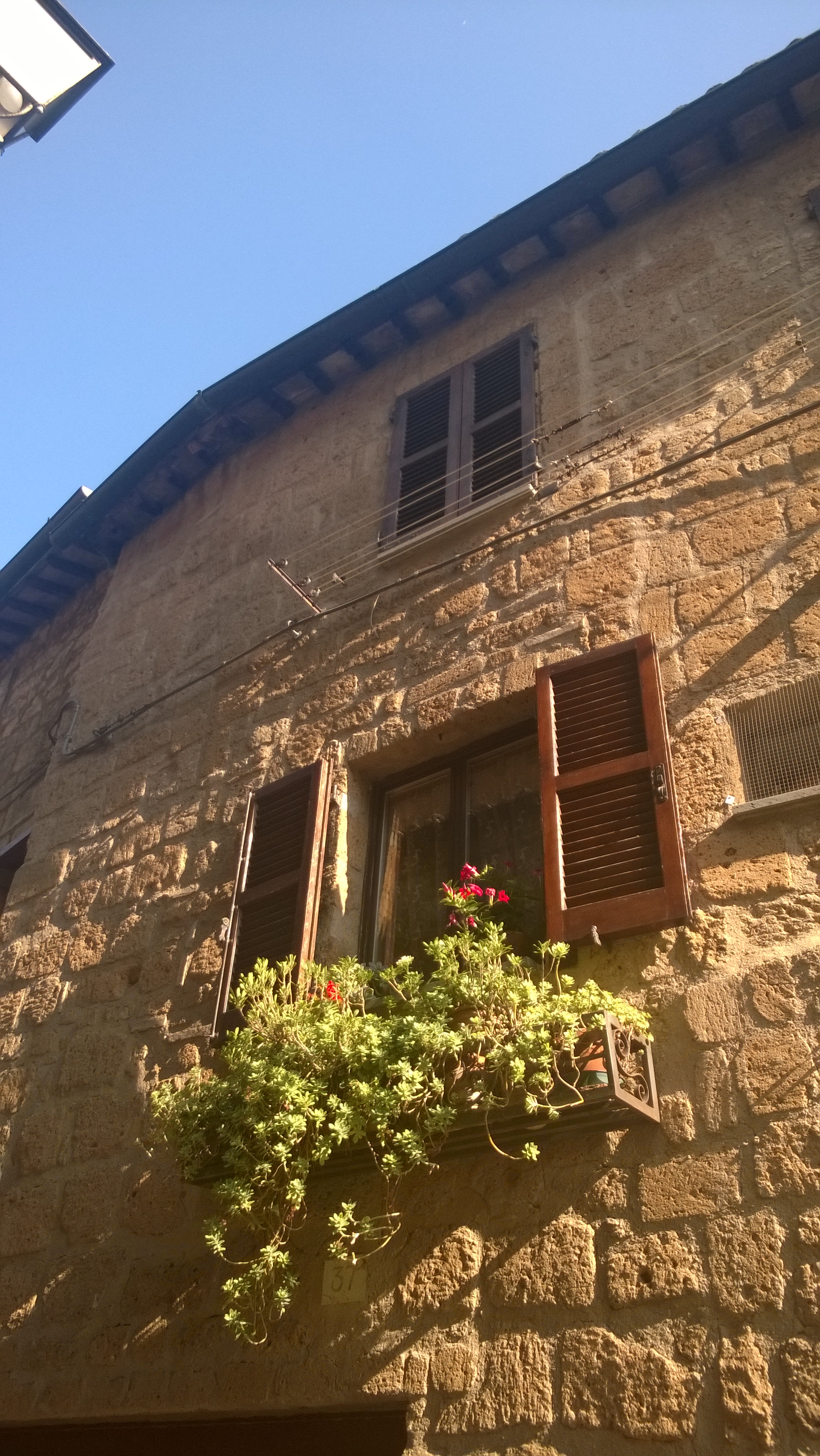
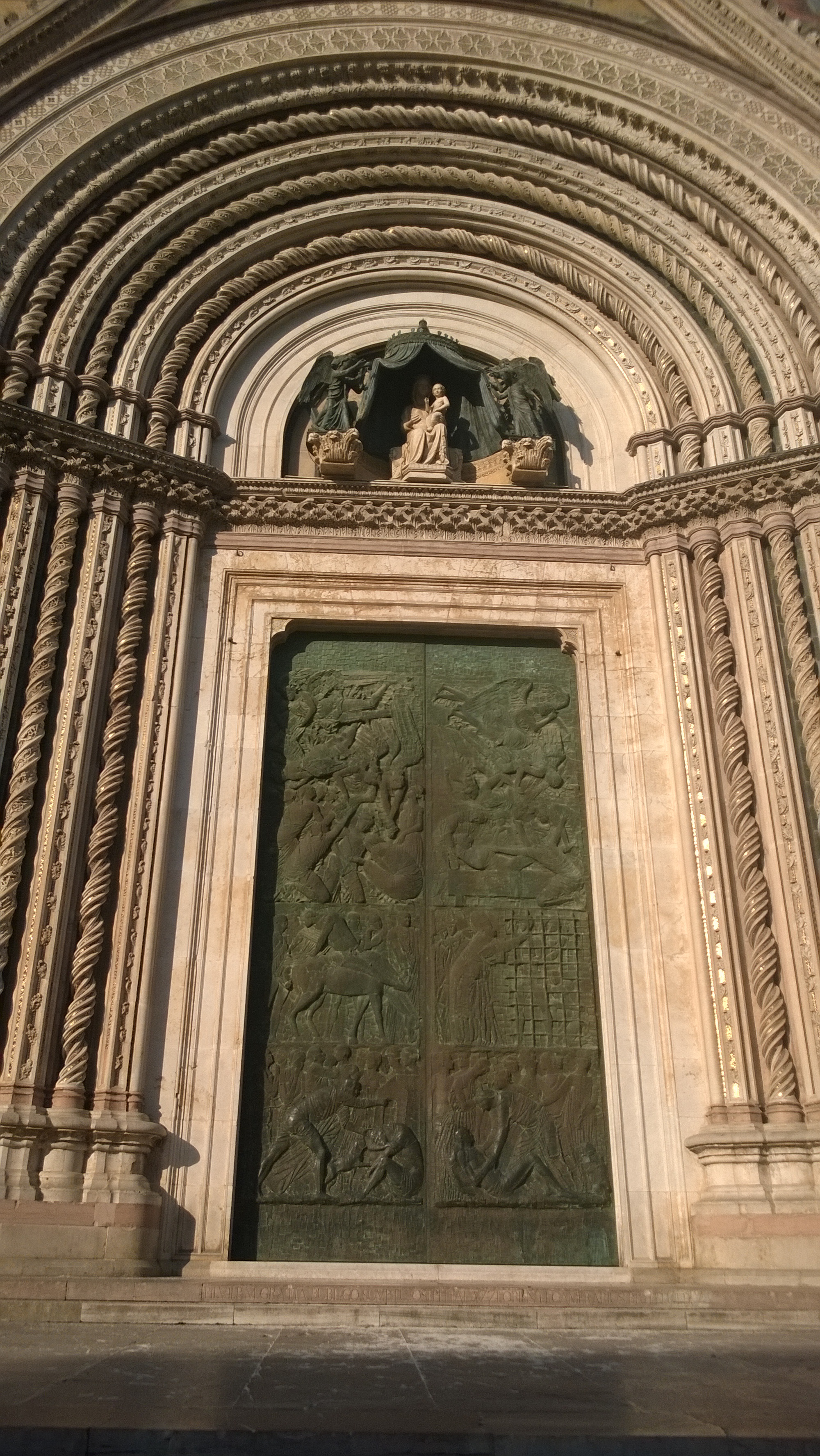
I spend a blissful afternoon taking pictures of the remarkable wooden doors of Orvieto, charmed by their different shapes and sizes. Some are massive rectangles, some feature pointed arches, and some are gently rounded with stone lintels and bronze door knockers.
Like the growth rings on a tree trunk, these doors are indelible markers of the different centuries.
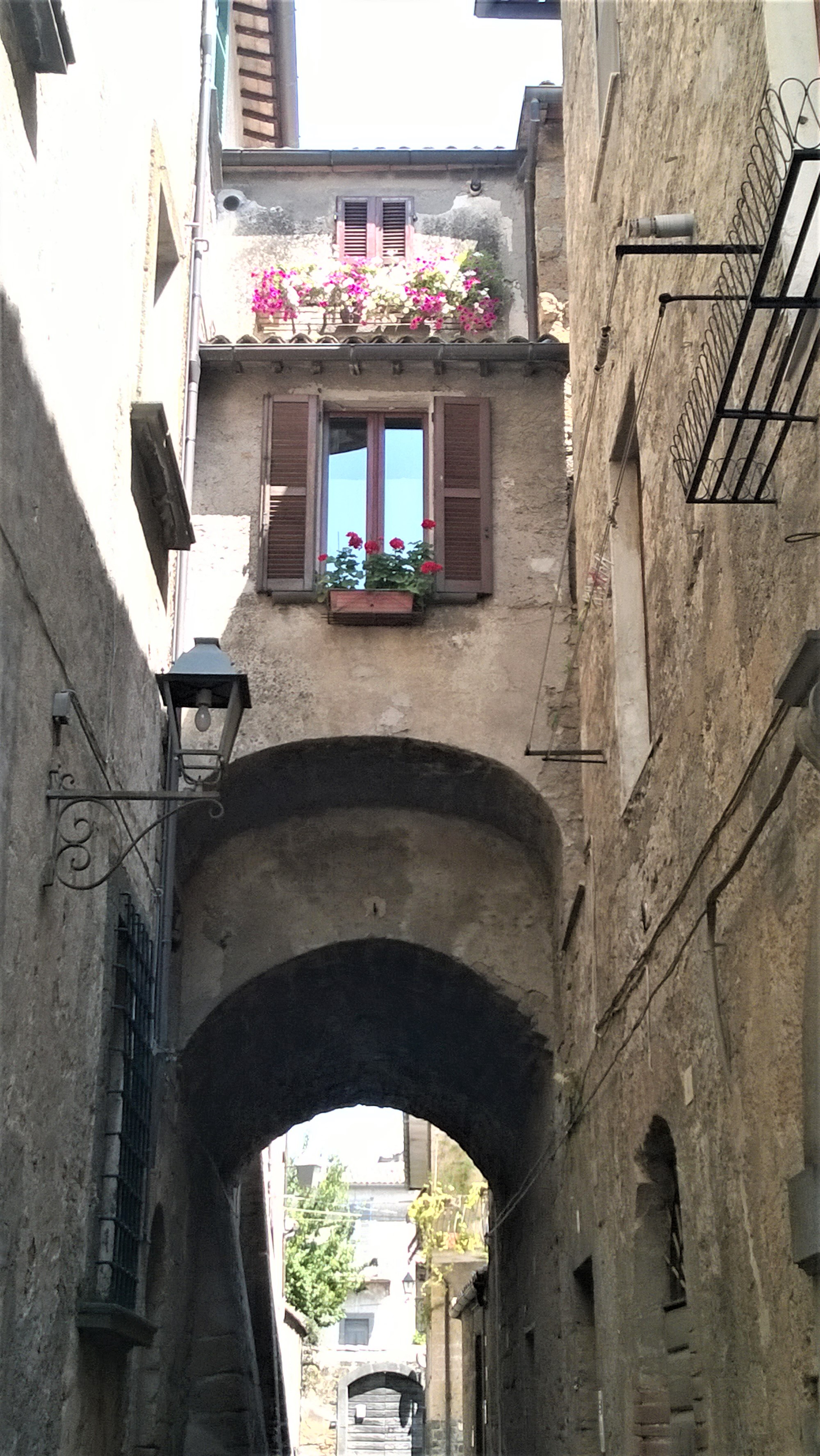
Sometimes a halfway opened door or a fluttering curtain at a window will spark my curiosity. Who lives here? How many people have crossed this threshold for hundreds of years? What are their stories?
What if I had walked these same streets in the year 1200, or 1500, or 1900–perhaps the imagining is one reason why I love reading historical fiction.
These photos are the first of many images of doors and windows that will punctuate my travels around the world.
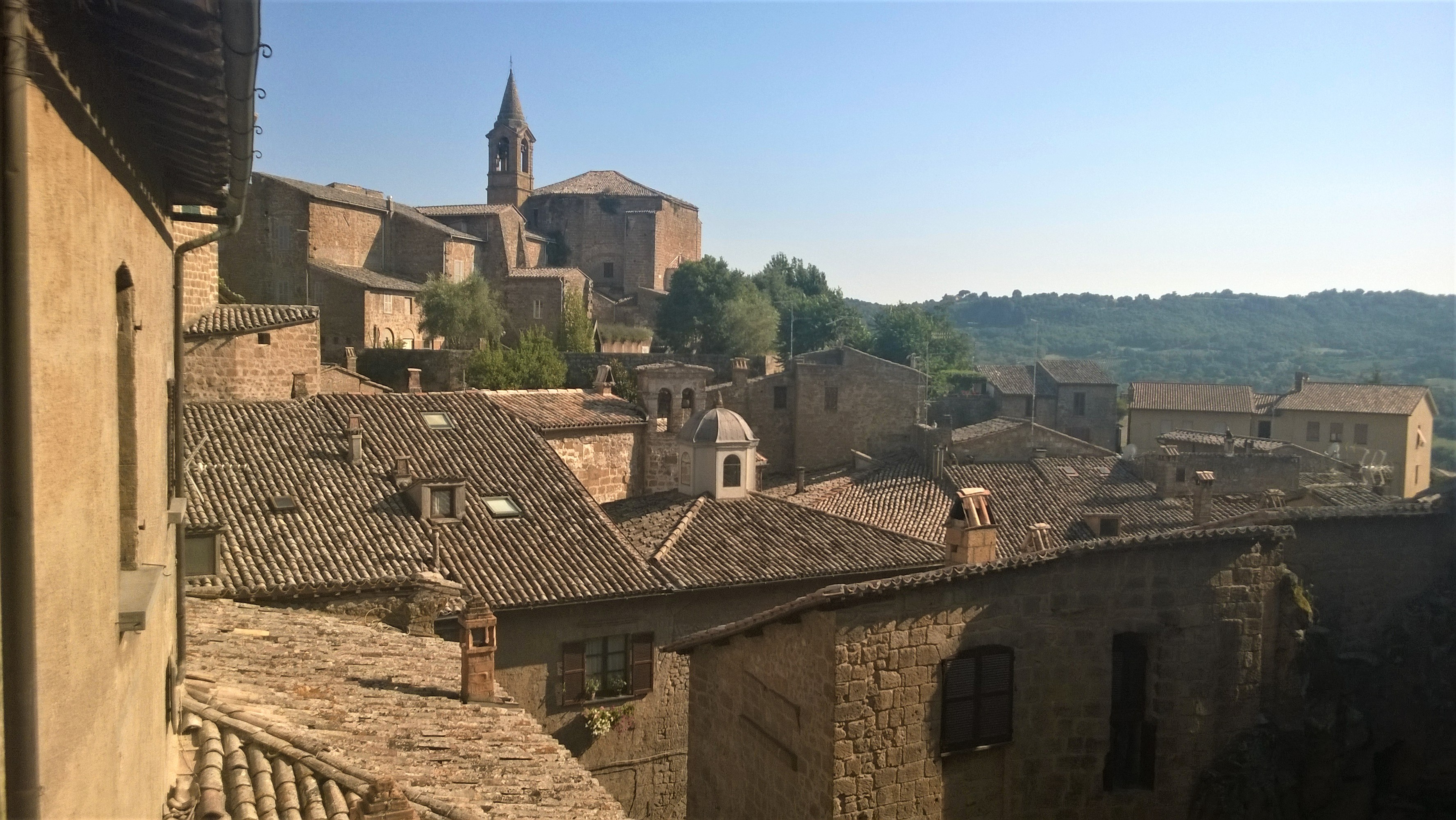
Awakened early by church bells on this Sunday morning, as I open the heavy wooden shutters in my room, a flock of swallows takes flight. It is such a magical, completely old-world experience with the birds darting and chirping and the bells echoing above the red-tiled roofs, that I laugh in delight while trying to film it on my cellphone.
Yesterday afternoon, I had taken the Trento Regionale from Rome to Orvieto, an ancient walled town perched high on a rocky outcrop of volcanic tufa in Umbria. Riding the funicular up to the town center, I passed over remnants of Etruscan settlements from 800 B.C. These rocky cliffs were a natural fortification, and they are laced with caves, grottos, tunnels, cisterns, and passageways — a veritable underground city and archeological time capsule — forgotten since the Renaissance and uncovered only by chance in 1970.
Orvieto’s stone walls, anchored in the rock, completely encircle the town, broken only by massive gates built in different centuries: the Porta Maggiore from Roman times, the medieval Porta Rocca, and the Porta Romana constructed during the Napoleonic Empire in the 1800s. The view of the surrounding countryside from these ramparts is a lush green patchwork of cypress trees and olive groves and has not changed in hundreds of years.
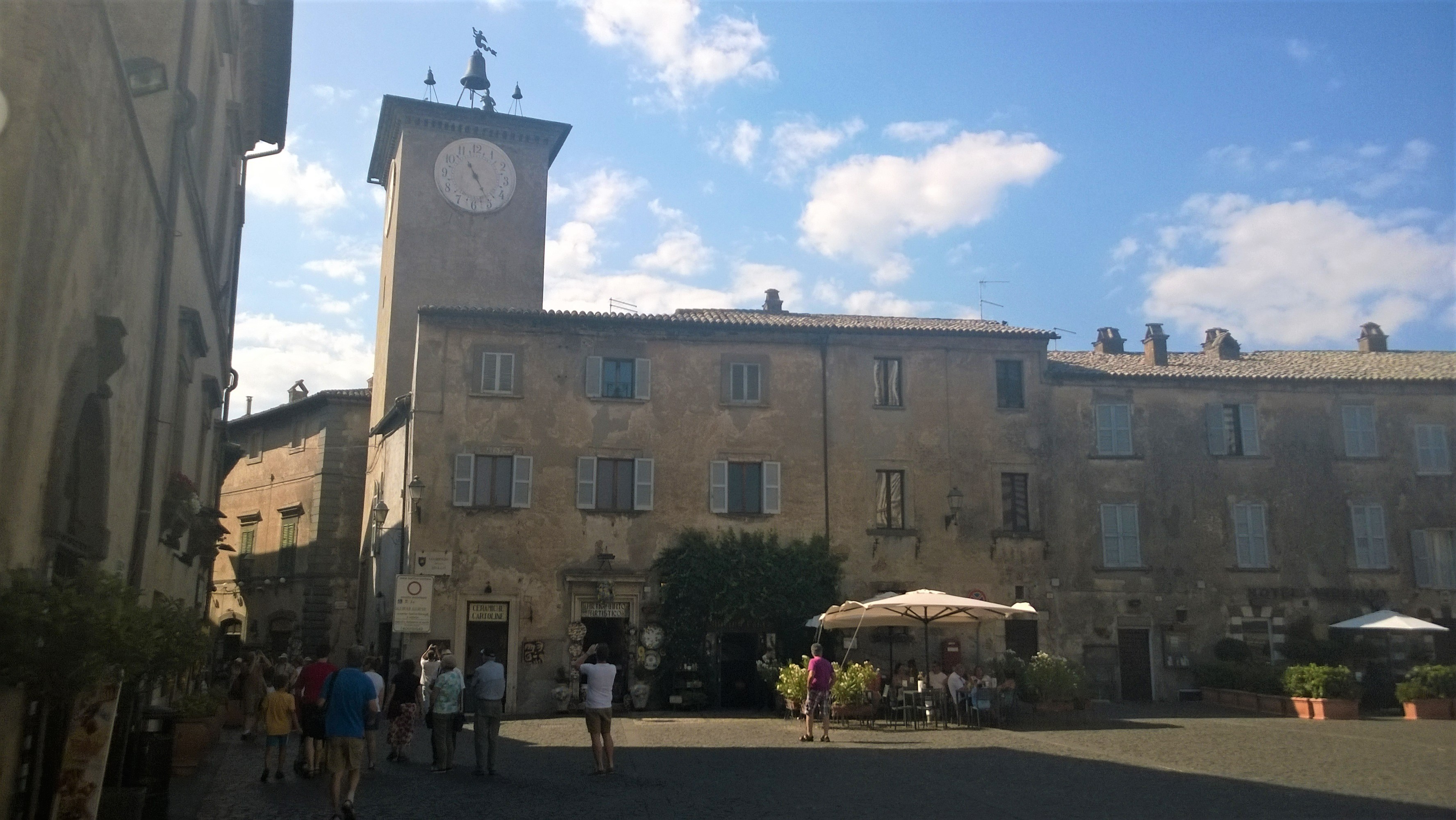
My hotel occupies a medieval building in the main piazza across from the famous cathedral or Duomo. The bronze statue atop the clock tower on the hotel holds two hammers: the large one strikes the hour on the big bell and the smaller hammer rings quarter hours on the small bells. I am immediately smitten by this ancient village with its many clock towers, stone buildings, and terra cotta roofs. No wonder the Popes sought refuge here during the city state wars in the 1500s.
Mimicking the Italians, I take my morning cappuccino standing up at the counter in a local panetteria. This costs one Euro versus three Euros were I to sit down at a table, a cost-saving practice Starbucks has yet to adopt when you take your cup to go. The people standing alongside me at the wooden counter are locals, not tourists, and judging by their banter with the owner at the cash register and the man deftly pulling shots of espresso, they are here every day.
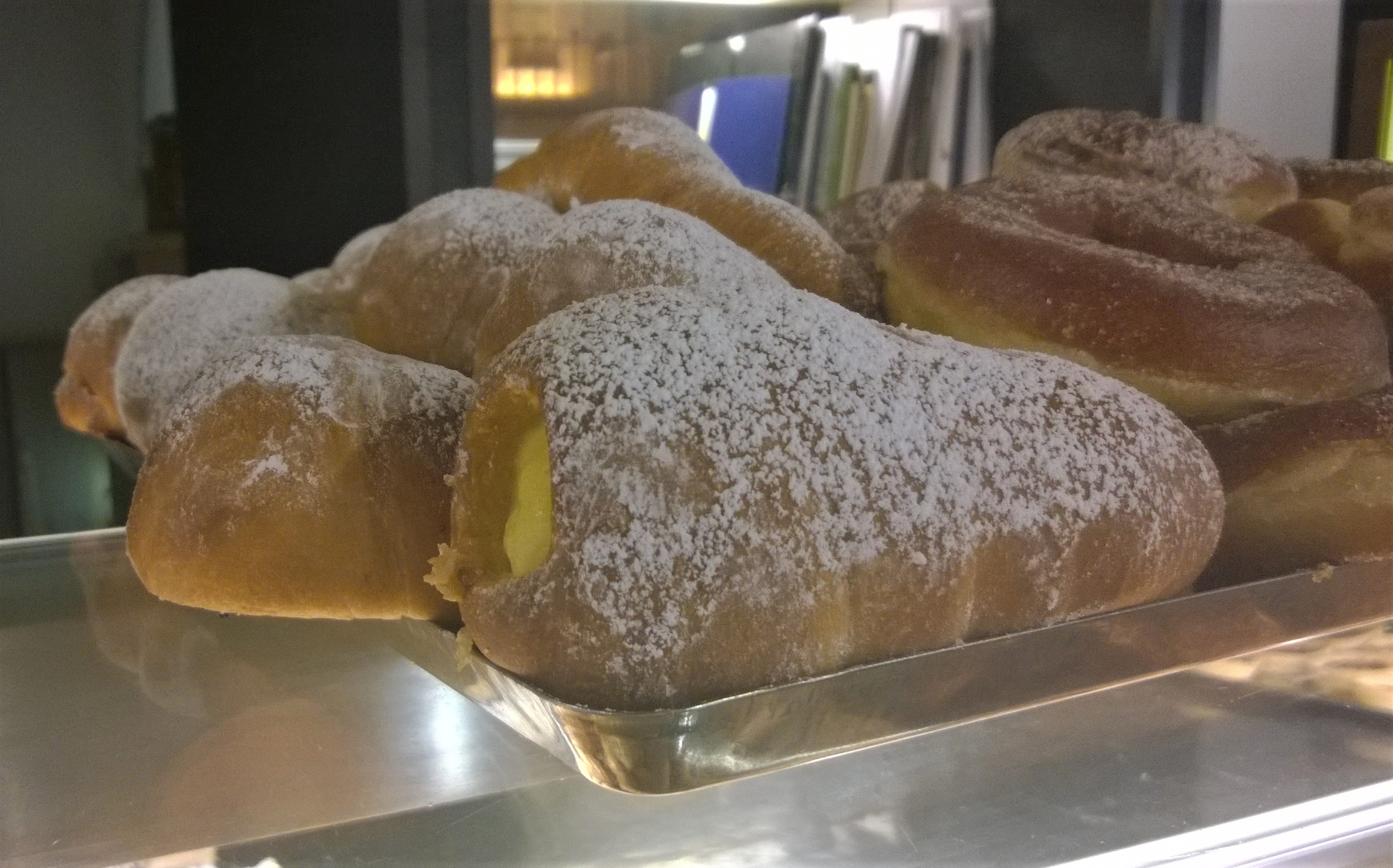
I am tempted by the cannoli dusted with powdered sugar and filled with custard. A sweet memory of those made by my Italian grandmother and which we called “lady locks.” Apparently, every region of Italy has their own unique way to make cannoli—in some areas they are hard shells filled with mascarpone cream, in Rome they are paper thin cones drizzled in chocolate. Here in Orvieto, they are overlapping layers of fluffy pastry that melt in my mouth.
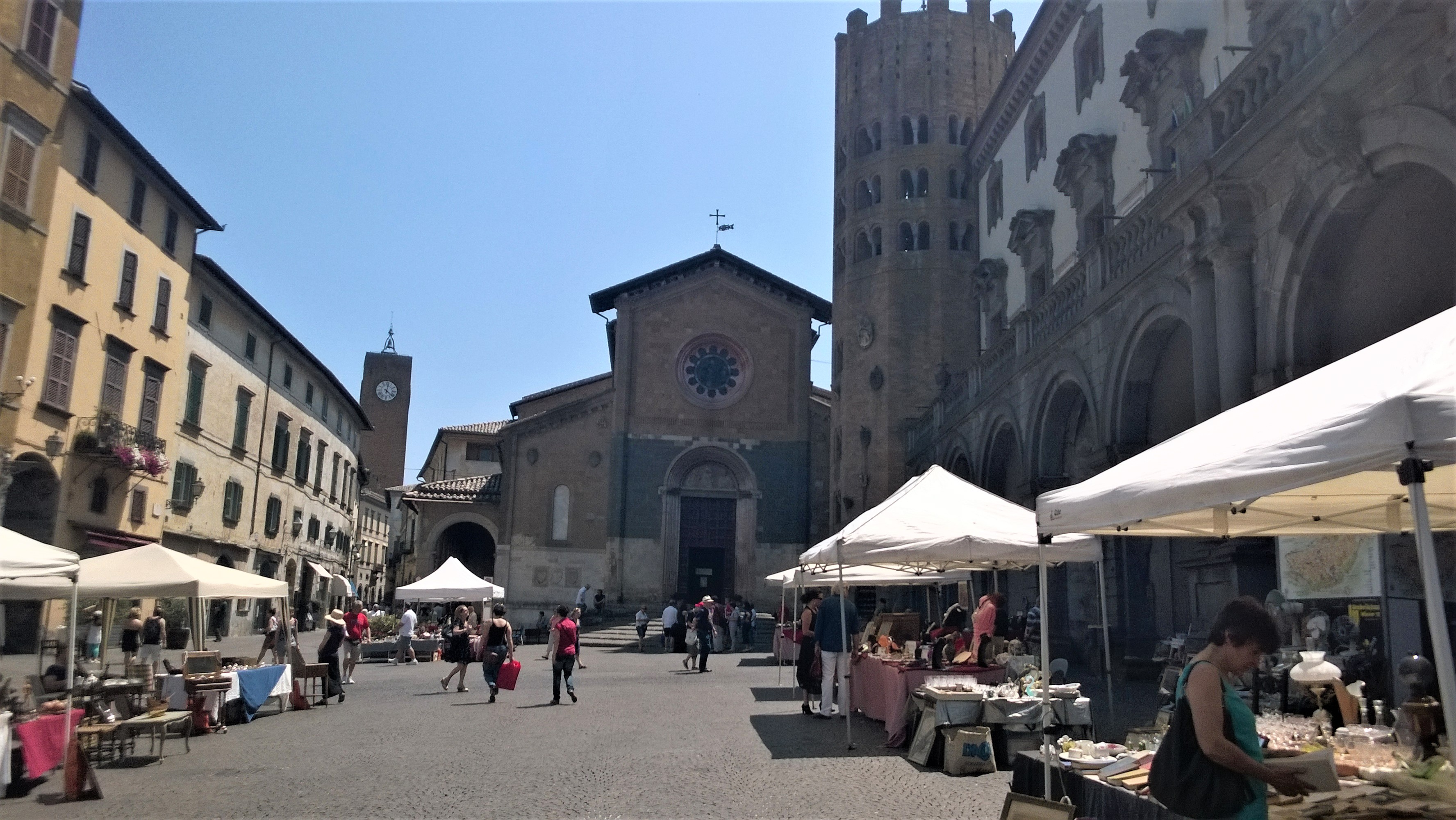
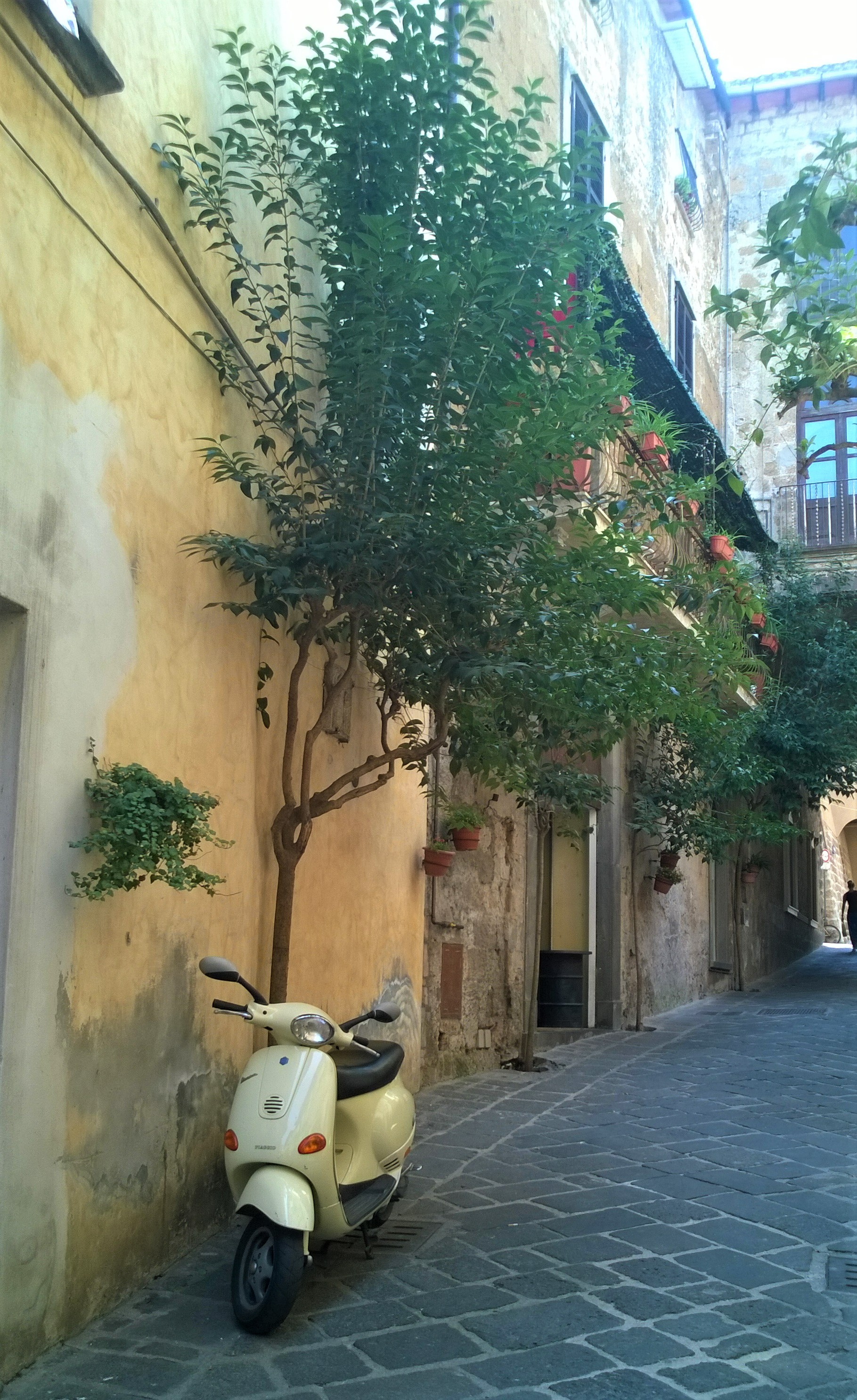
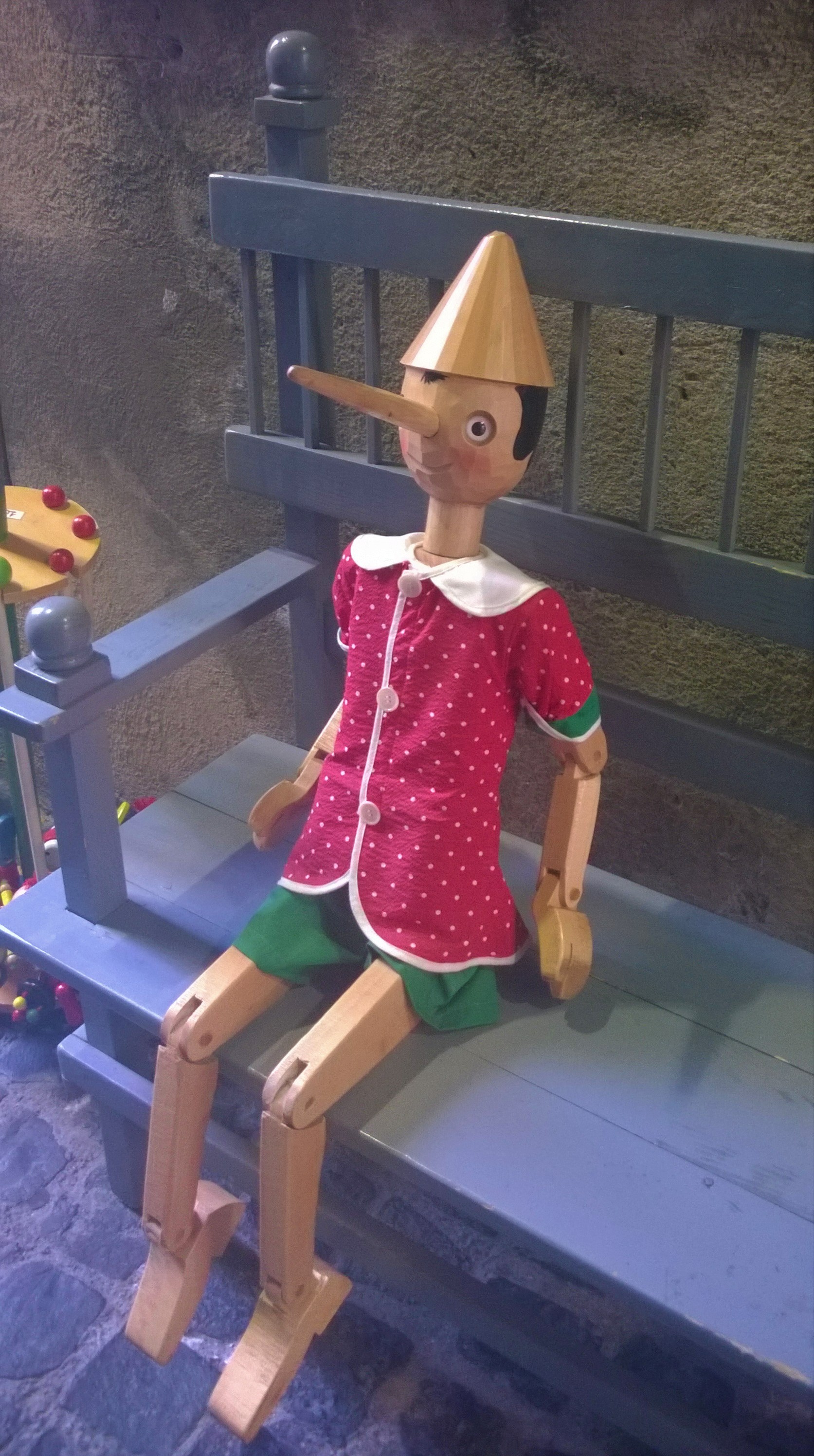
An early morning walk through the village reveals small surprises around every corner: a classic Vespa on a street too narrow for cars, a life-sized Pinocchio perched outside a wood carver’s workshop, a flea market in the piazza.
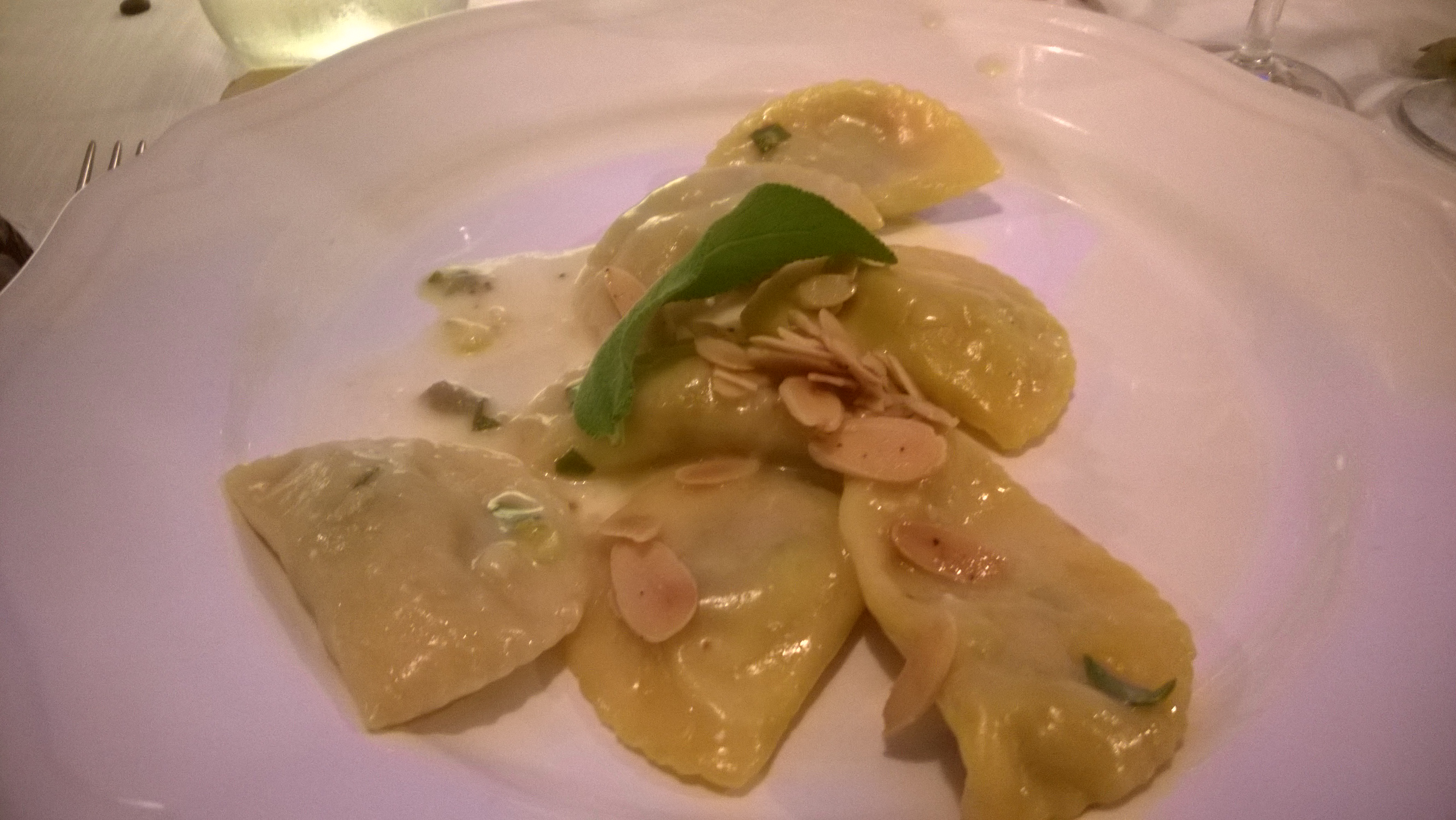
Later that evening, after a hearty dish of homemade ravioli at La Percola trattoria, I join the crowds in the Piazza Duomo for some pistachio gelato.
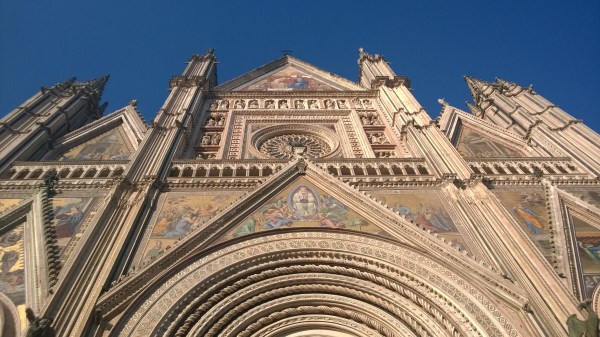
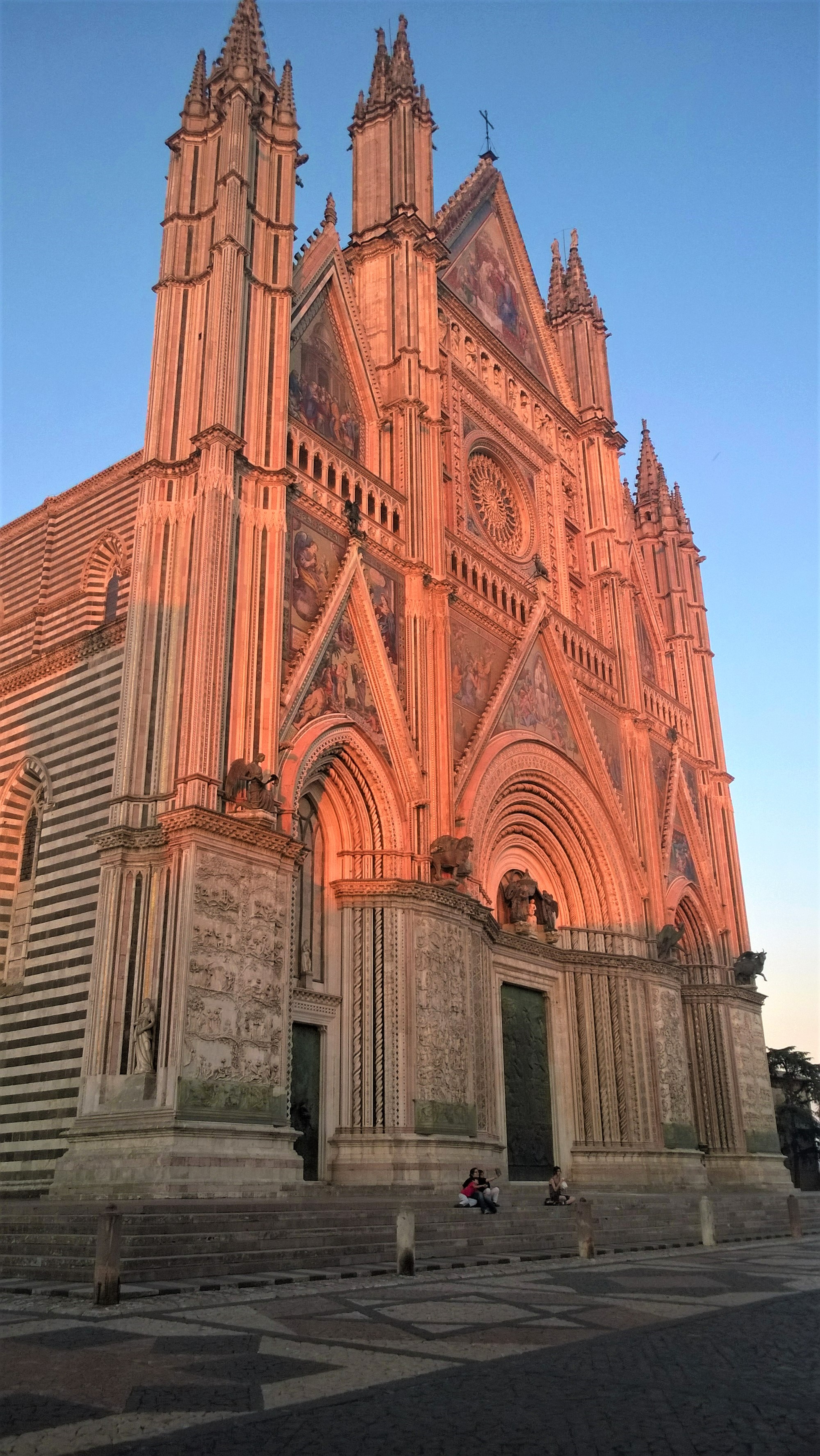
Considered one of the finest examples of Italian Gothic architecture, work began on the magnificent Orvieto Duomo in 1300 and continued nonstop for the next three centuries. Its white marble façade is covered with layers of bas-relief sculptures so lacy and delicate it seems more likely they were carved from Ivory soap than brittle marble.
Interspersed between the marble carvings are enormous colorful mosaics depicting scenes from the Bible that glitter in the sunlight, even more striking when the façade is tinged pink at sunset.
I sit on the wide, white marble steps in front of the Duomo, still warm from the record-breaking heat today, stretch out my bare legs and watch the waning crescent moon rise over rooftops that were here centuries before Lewis & Clark set out to map the Pacific Northwest. I am surprised to realize it has been 32 years since I watched the summer moon while curled up in my sleeping bag in the back of my little Toyota Celica hatchback.
I was driving by myself across the country from Seattle to Pittsburgh following the route of Lewis & Clark from the Columbia River in Washington State, through Idaho, Montana, and the Badlands of North Dakota. In that magical summer, I had no idea if I would ever marry, and it would be another five years before I met my husband. Nor would I have believed I would divorce him after twenty-three years together.
Perhaps this trip is merely a continuation of my voyage of the summer moon. I smile. While I would like to have a wonderful partner to share this journey, once again, I am traveling solo. A breath of summer wind assures me that he is out there somewhere, looking at the same moon and also yearning for a kindred spirit. Someday we will find each other.
By 7:00 am, I have devoured a delectable breakfast of prosciutto, fresh fruit, and brioche on the rooftop terrace of my hotel. I’m off to explore the city before anyone else is awake–my favorite time of day to walk and wander.
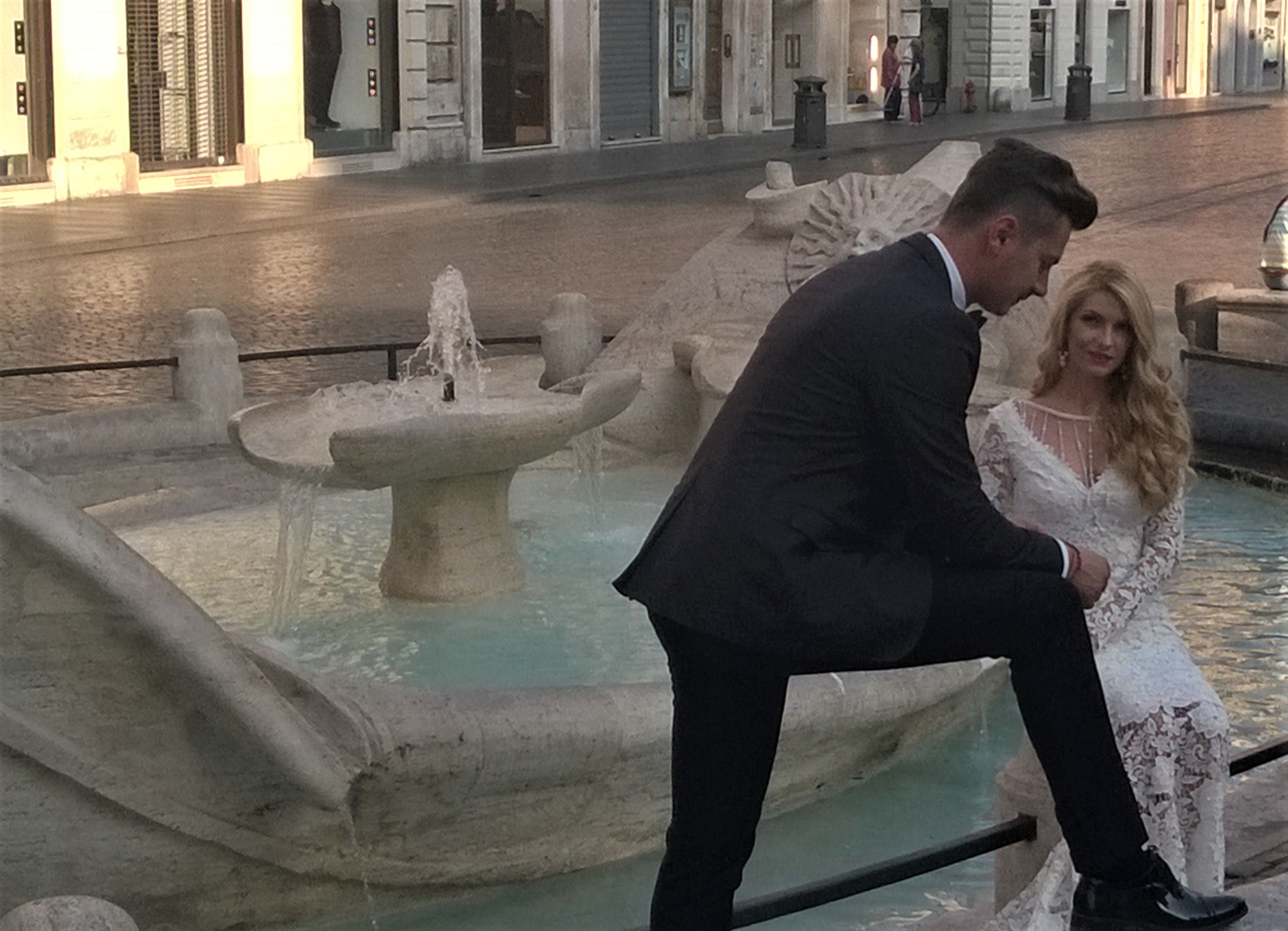
Unlike last night, the Spanish Steps are completely deserted this morning except for a young bride and her groom posing for wedding photos by the fountain. She is blond and willowy, he dark and handsome. They call out in Italian to the photographer and as I watch them for a few minutes, I am struck by how young love is both capricious and endearing.
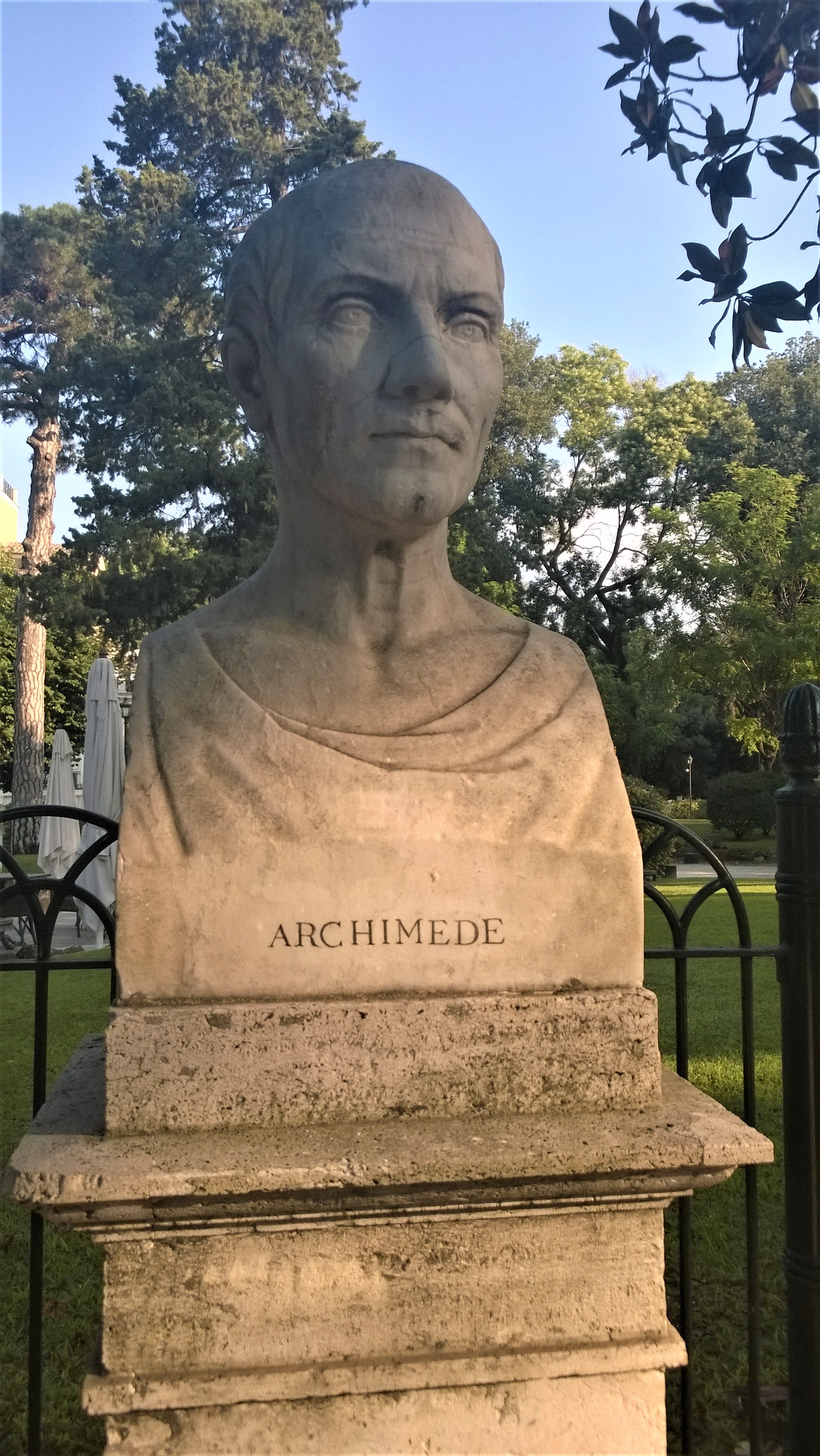
I head up the hill through the Villa Borghese gardens where there is a lovely overlook towards St. Peter’s Basilica and the Vatican. A view Galileo might have had while imprisoned in the nearby Villa Medici for daring to think the world revolved around the sun. The filtered sunlight dapples the stone busts of Archimedes, Hadrian, and Aristotle along the garden paths. I wonder what would they think of us in this 21st Century?
Next, I wind past the Piazza del Popolo, then down the Via Del Corso where the famous designer shops of Gucci and Fendi are still shuttered. I’m following the old Roman Way on narrow side streets to the Pantheon.
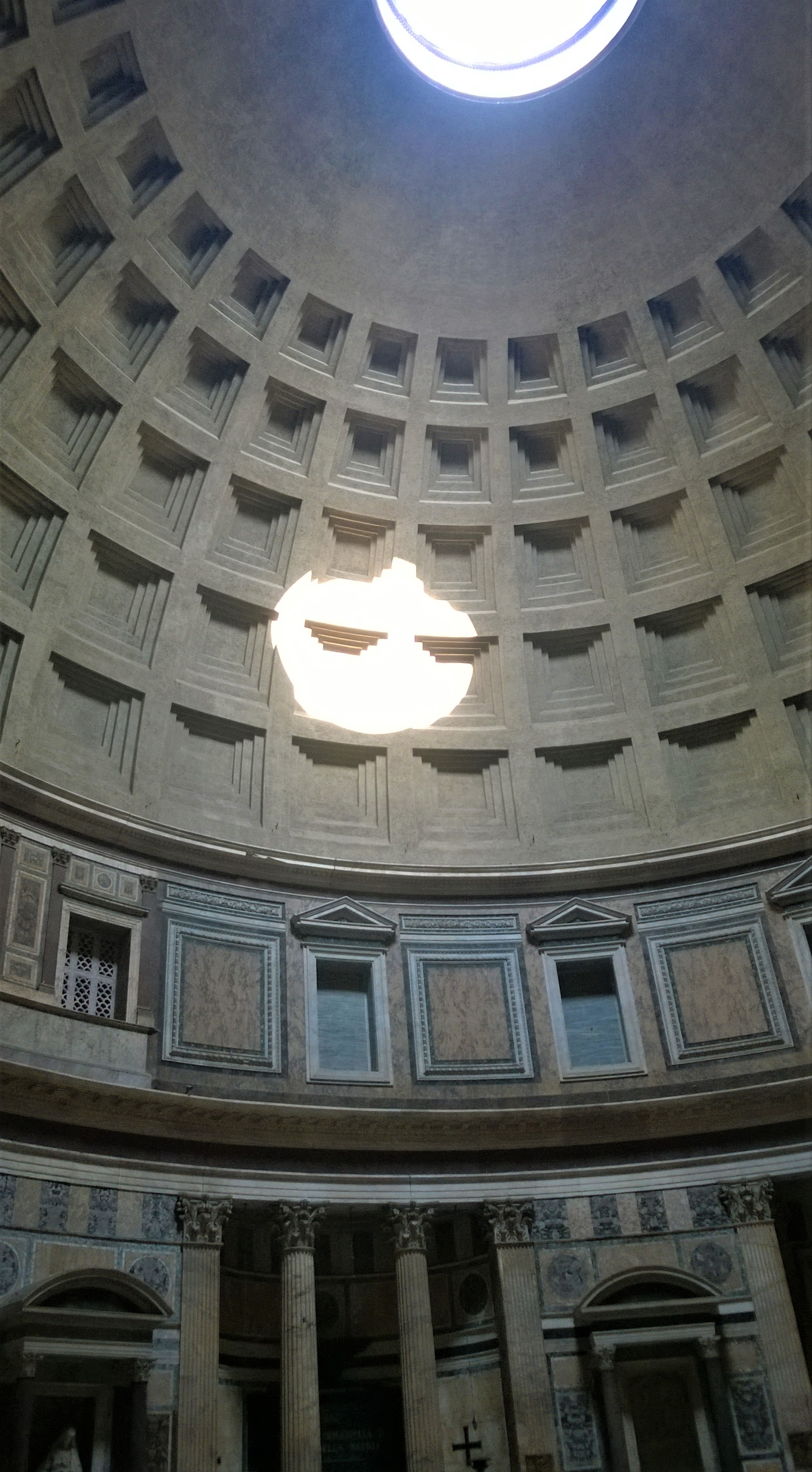
The ancient Roman temple is open and deserted, so I take advantage of the chance to take pictures of this engineering marvel without dozens of onlookers in the foreground, especially with a rare sunspot from the oculus highlighting the sculptural recesses in the dome. The Pantheon’s dome has survived nearly 2000 years due to the “secret sauce” of volcanic ash in the cement — the pumice mixture becomes lighter in each of the higher concourses of the dome.
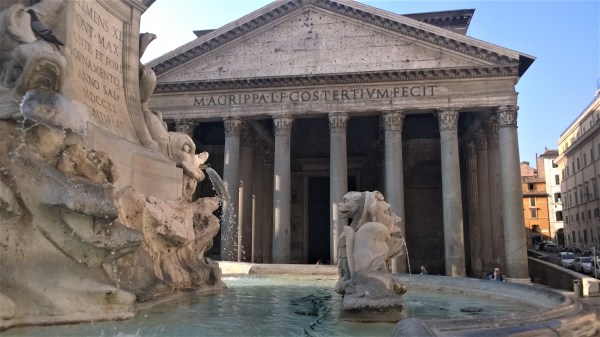
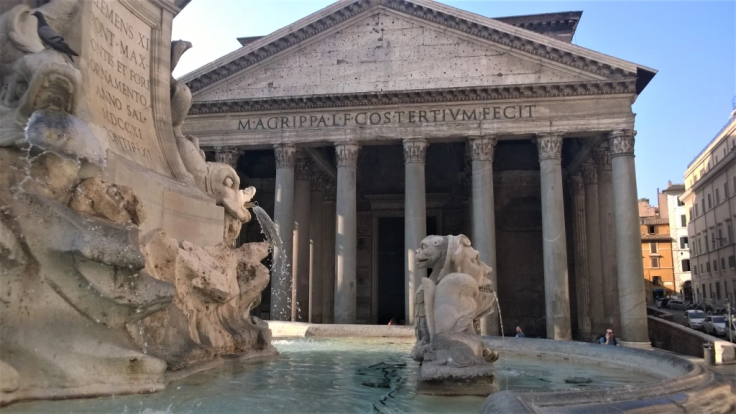
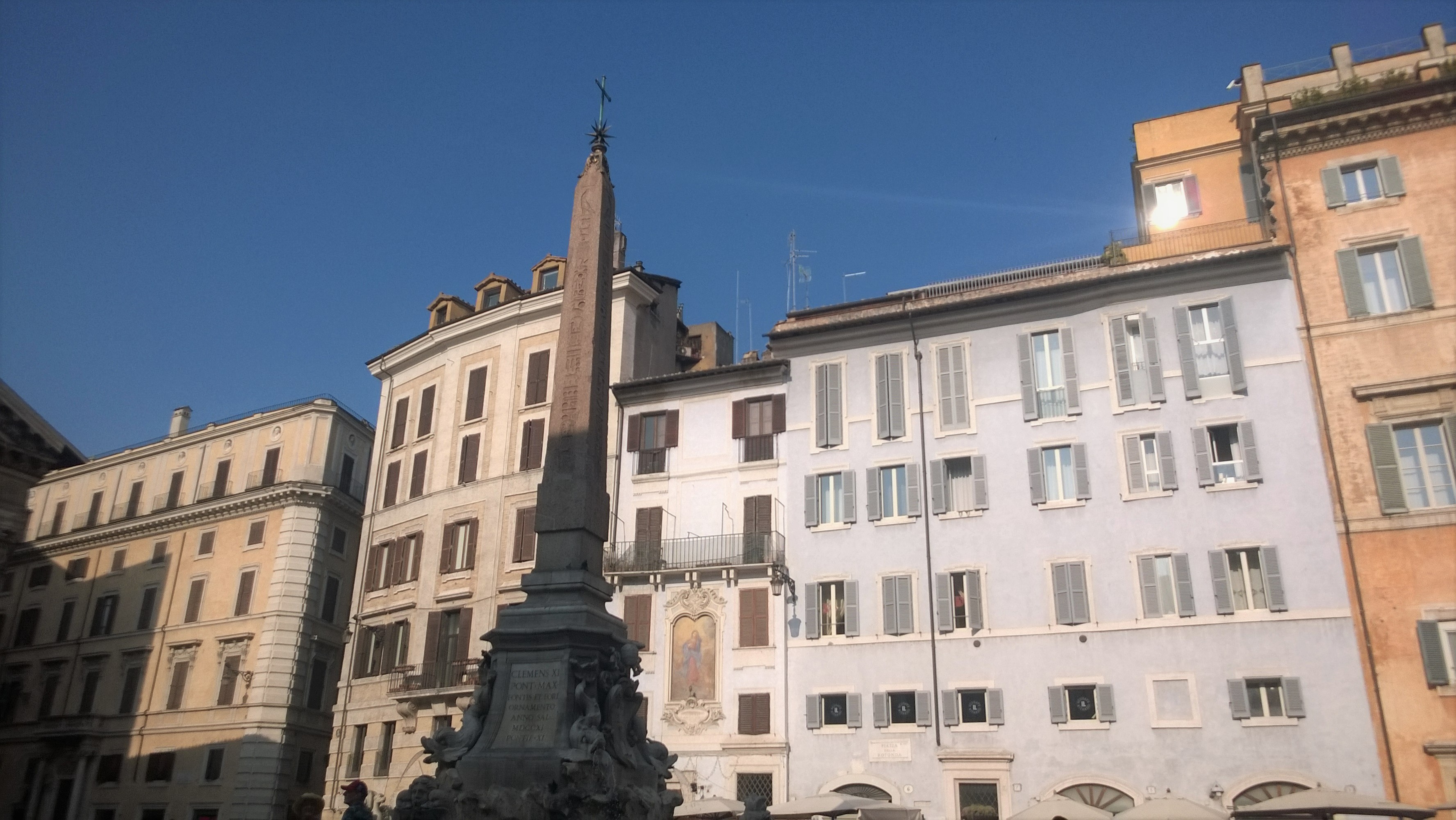
I take more photos outside of the fanciful fountain, known for its grotesque masques and menacing dolphins. This morning the water is a glassy mirror except for the trickling spray.
Most people take pictures of these creatures, but the real treasure is the Egyptian obelisk of Ramses II with its carved hieroglyphics in the center pedestal. Not original to the fountain, it was moved here in the early 1700s by a zealous Pope who also installed an oversized gold cross atop the obelisk. Poor Ramses probably rolled over in his grave. Although, if there is an afterlife, Ramses and Galileo would undoubtedly have lively conversations about the sun.
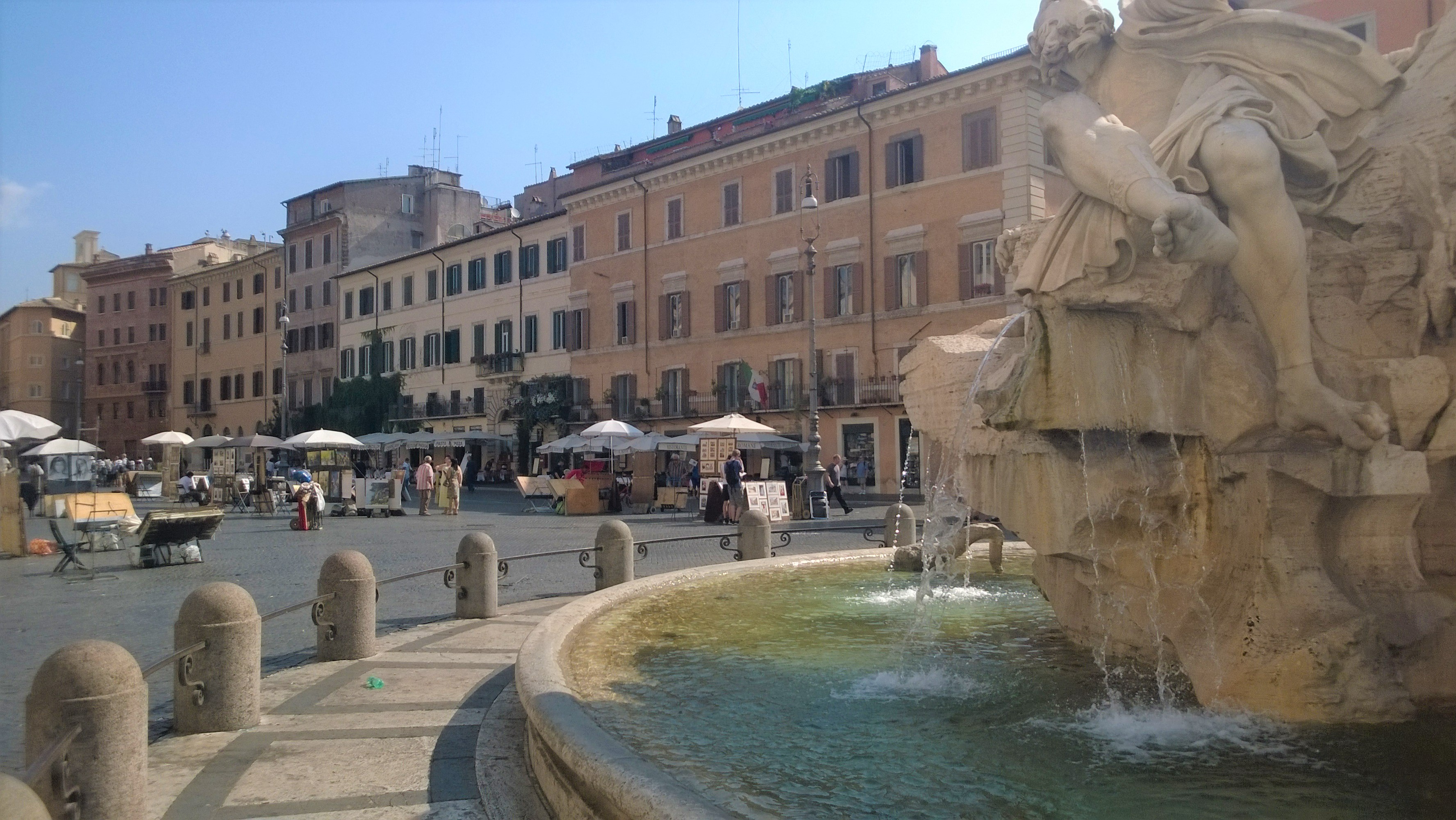
Next, I explore a warren of twisting streets which open onto the spectacular Piazza Navona. Sidewalk vendors—mostly artists—are setting up their tables and umbrellas. I find a sundrenched table at one of the sidewalk cafés, order a cappuccino, and spend a pleasant hour watching the Piazza come to life.
From the window, I watch the shadow of our plane as it undulates across the rolling hills on our descent into Leonardo da Vinci Airport. It’s been decades since I touched down anywhere in Europe. I expect it will have changed a bit; I certainly have. Of course, at the end of my junior semester student teaching at the American Community School in Athens, I thought I would be back to Greece and Europe often. The future I imagined then is very different from the life I have now—yet I am unexpectedly content.
There were no such things as rolling suitcases, or carry-ons, or TSA Precheck on my first flight to Europe via Icelandic Air to Luxembourg. That flight was a far cry from the creature comforts in Business Class on a new Boeing 767. The Flight Attendant passes by with hot towels (for the third time during our 9-hour nonstop flight) and collects my empty water bottle. I unplug my cellphone from the built-in charger with its Wi-Fi connection and smile—neither existed when I was in college. The world around me has been accelerating at the speed of light.
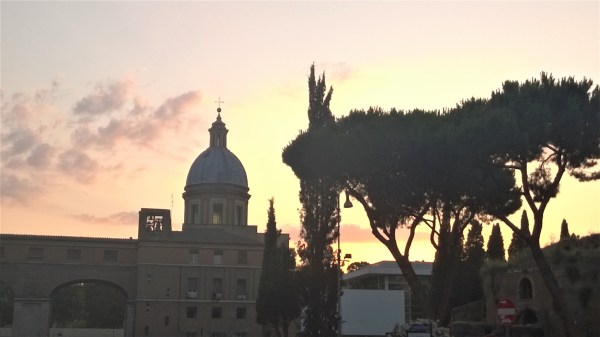
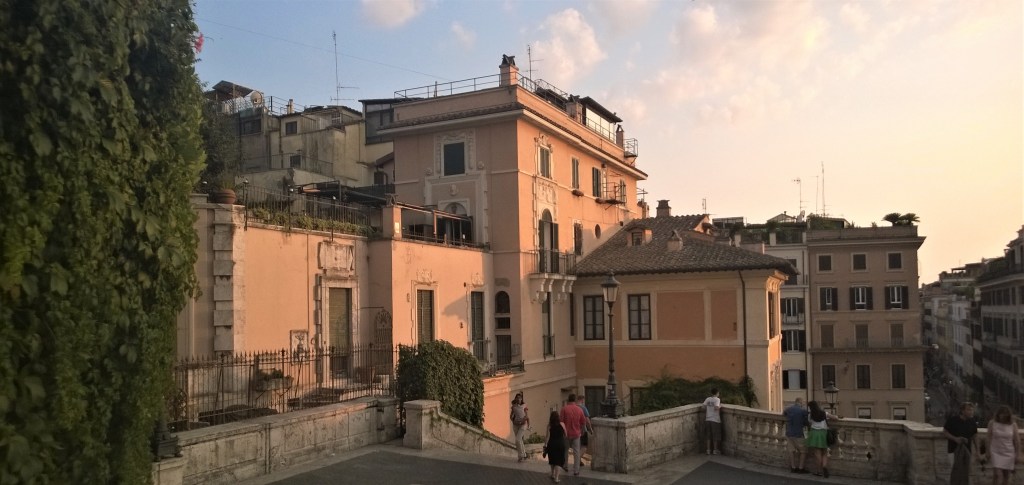
Once though customs, I collect my suitcase in baggage claim, and follow the crowds to the Leonardo Express—the light rail connection to the main train station in Rome. It’s 36-degrees Celsius today and arriving at Roma Termini, one is immediately assaulted by a cacophony of dialects, aromas, and confusion. I find the taxi stand and soon have been deposited at the Hotel Scalinata di Spagna at the top of the Spanish Steps—a place I had found online.
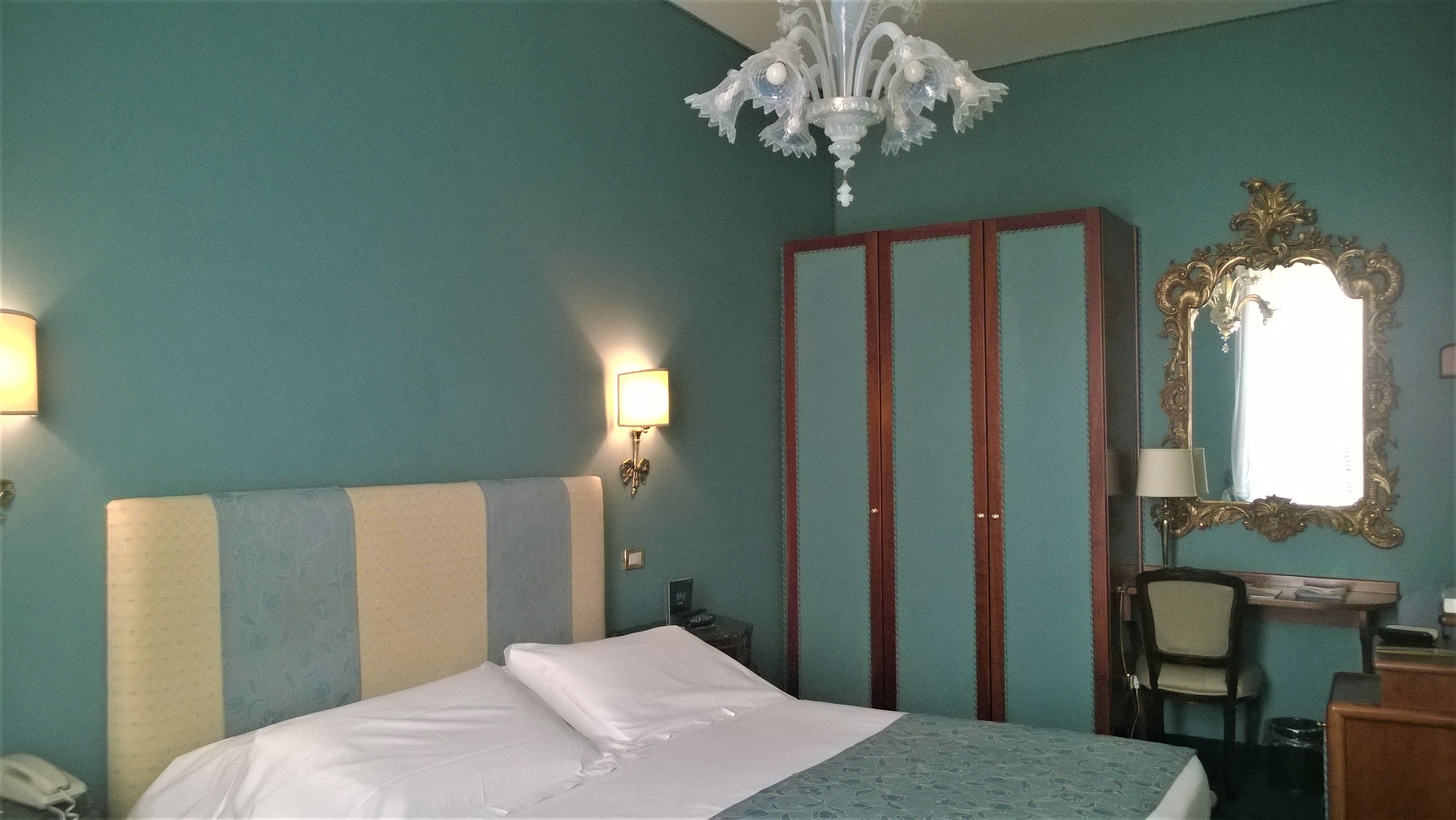
I remember pouring through travel guidebooks in college which now seem antiquated when compared to instantaneous reviews on Trip Advisor and Expedia and those 360-degree birds-eye views and satellite pictures. My deep turquoise room with its fanciful crystal chandelier, gilt mirrors and gold brocade draperies is refreshingly European. The only slightly Westernized intrusion is the small refrigerator honor bar.
As enticing as the crisp white sheets are, I’m too excited to sleep. After a quick shower, I change into a summer dress and sandals and I’m off to find dinner and wander the narrow streets near the Spanish Steps.
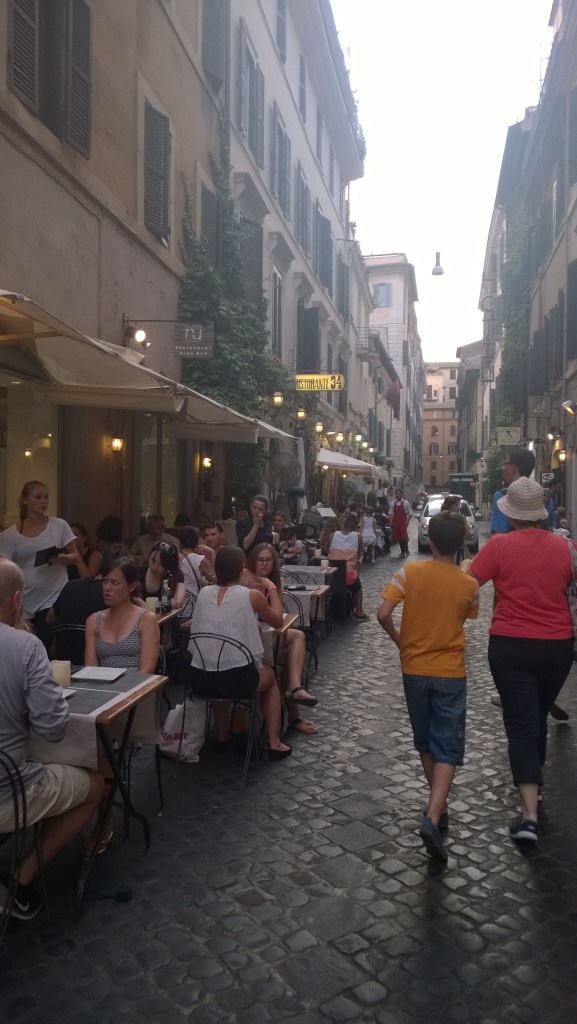
At the Ristorante Al 34 on Via Mario de’ Fiori, a bustling side street, my plate of lamb and asparagus risotto arrives quickly, replete with a bowl of freshly grated Pecorino Romano cheese. I savor a second glass of house red wine as I watch the waiters juggle taking orders, clearing tables, uncorking wine bottles, and joking with the regulars. A “dance” Italian waiters seem to have mastered without missing a beat.
Walking back to my hotel, I mentally record the sounds of the city on this sweltering summer night: throaty Vespa motors, Frank Sinatra music drifting from one restaurant, the laughter of people dining al fresco. Climbing the Spanish Steps, I hear dozens of languages as I pick my way carefully through tourists who form a solid carpet on the well-worn marble steps. If only Gregory Peck and Audrey Hepburn might magically appear and transport us to a more innocent time in this Eternal City.
The heavenly sheets and duvet waiting in my room are the perfect ending to my own “Roman Holiday.”


 Postcards from the road not taken
You must be logged in to post a comment.