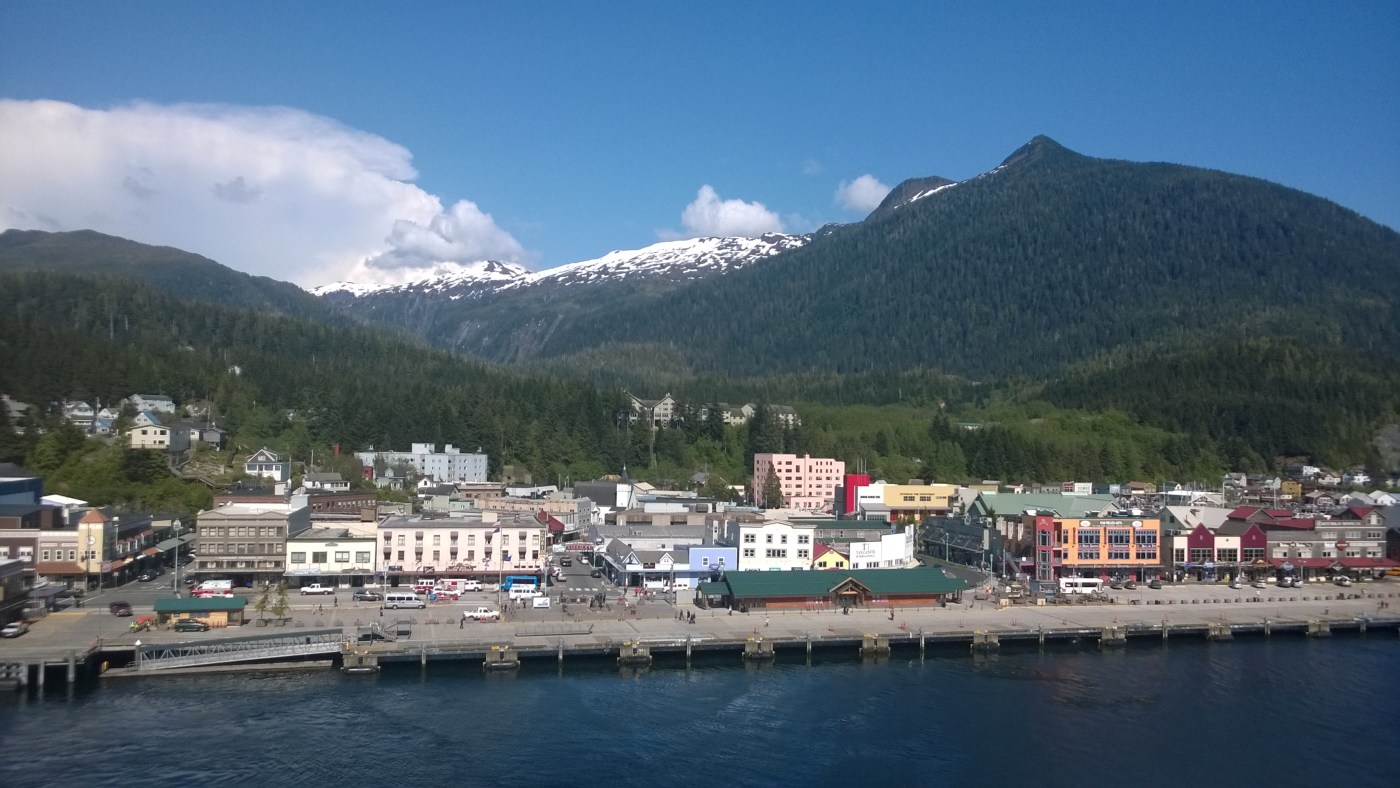
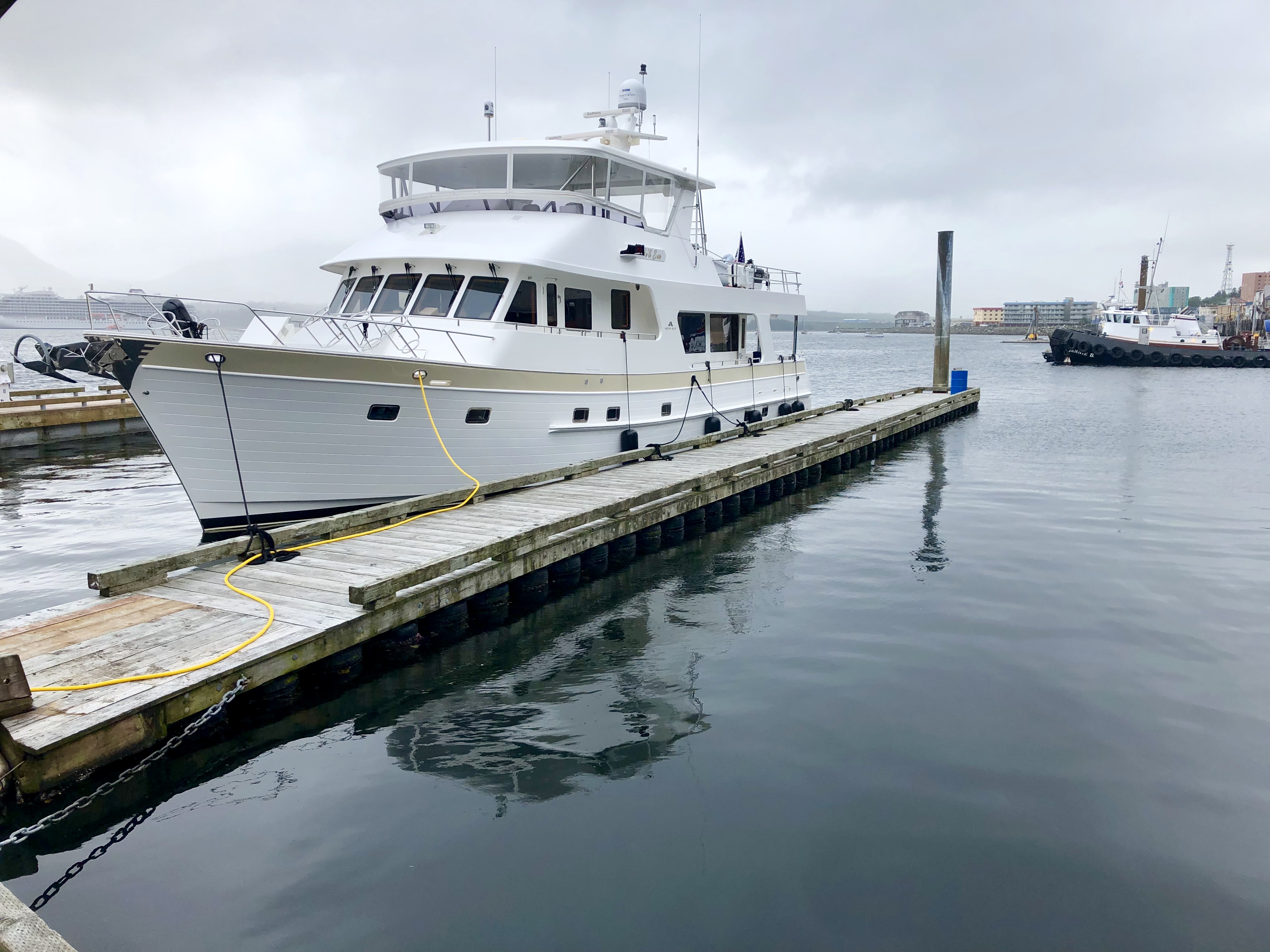
My friend, a master mariner, has been hired to reposition a 70-foot motor yacht for clients who have finished their trip and are flying home. Starting in Ketchikan, Alaska, we will have the boat to ourselves for the 500 nautical mile journey down the Inside Passage to April Point on the east side of Vancouver Island, British Columbia. It will take us five days, traveling at an average speed of ten knots, for eight to ten hours each day.
More importantly, it’s a rare opportunity to document this wilderness in its current state before it disappears as recent legislation will open drilling and logging in one of the most pristine places on the continent. I’ll be journaling and taking photographs along our route.
A light rain and misty skies greet us when we land in Ketchikan. This small fishing village holds a treasure trove of memories for me.
In the early 1900s, Ketchikan was the Salmon Capital of the World. Dozens of canneries lined the wharves and sturdy wooden fishing ships unloaded their silvery bounty. The fish were processed and canned in short order. As many as 850,000 cans a year left Ketchikan bound for kitchens across the country where they were turned into salmon croquettes at a time when formal place settings for dinner included fish forks for a fish course.
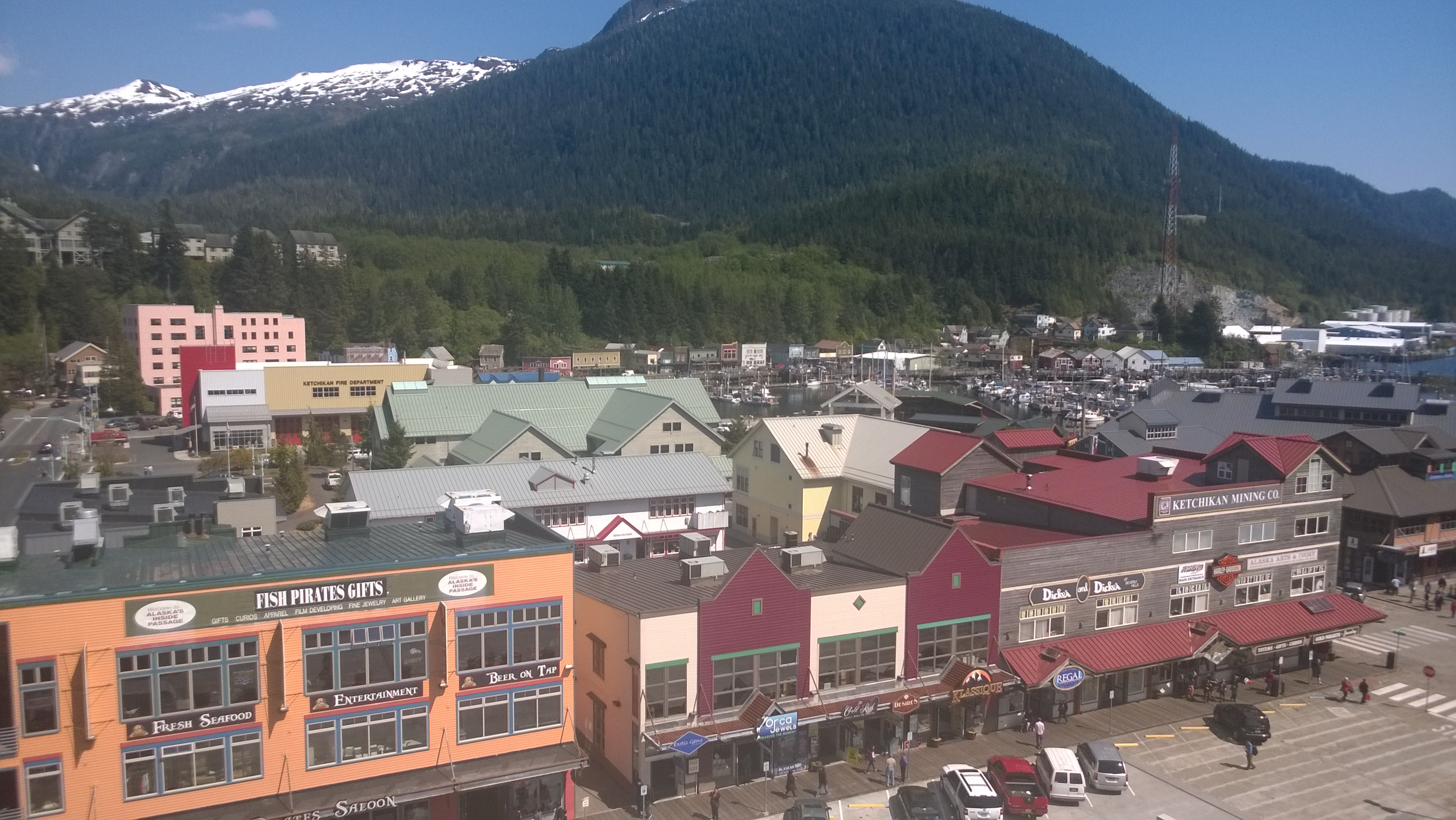
In 2019, the canneries are long gone, native salmon are an endangered species, and gargantuan cruise ships jostle for dock space. On this rainy day, thousands of tourists from Norwegian, Viking and Disney ships crowd the narrow streets looking for trinkets in androgynous shops which all sell the same souvenirs. If they are hoping to discover Alaska, they will not find it here.
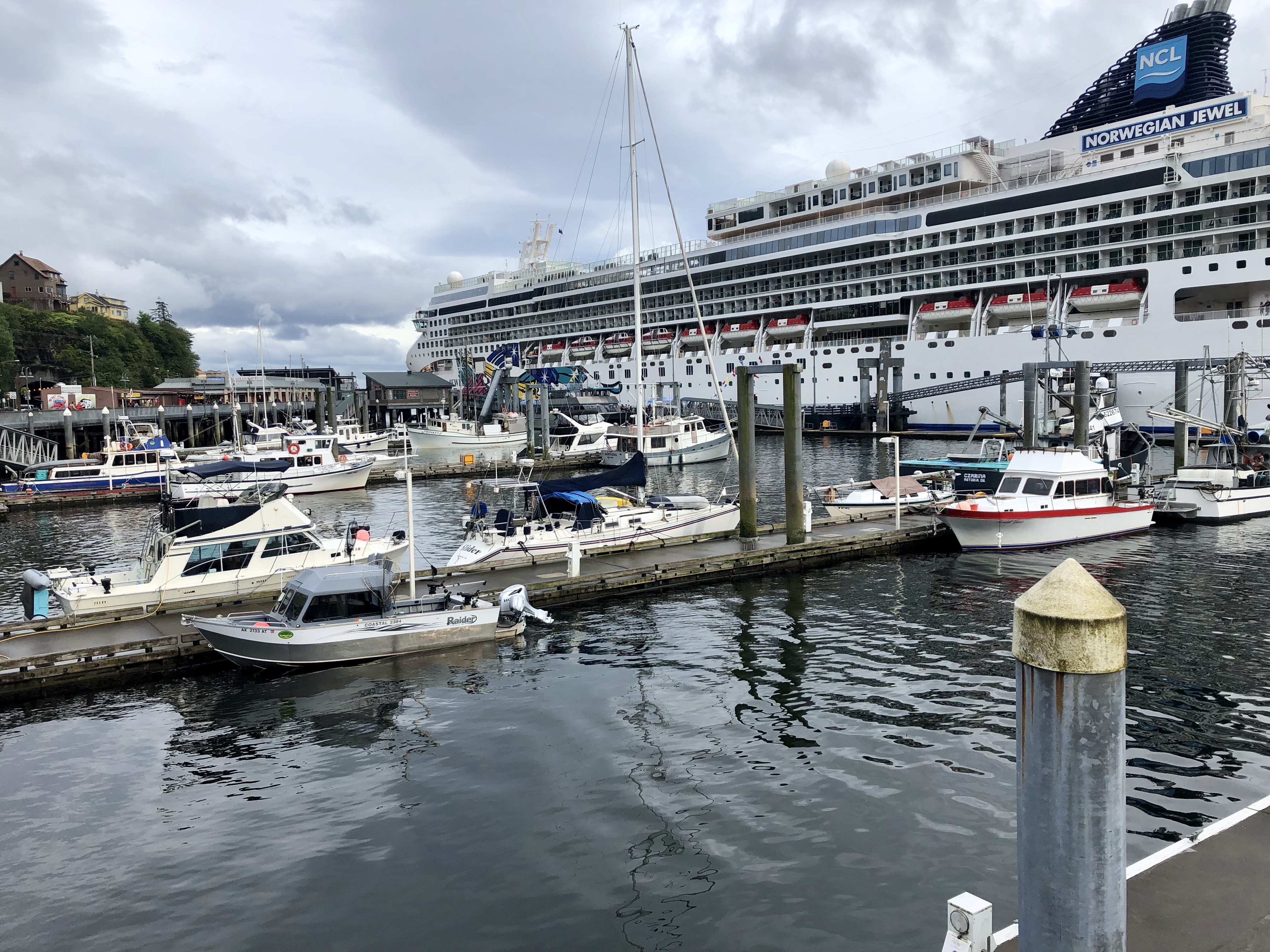
Ironically, it was a cruise ship that first brought me to Ketchikan in 2012. I had just started working as a contractor in the office of Holland America Line and since I had never been on a cruise ship, my boss encouraged me to take a cruise. Having explored Puget Sound, the San Juans and Gulf Islands on small sailboats and motorboats with my former husband in the 1990s, I was reluctant. When we spotted those behemoth cruise ships in the distance, we were unanimous in our disdain, vowing never to sail on one.
In 2010, at a time when my life was unraveling with personal challenges and a divorce, I had watched the lights of cruise ships passing in the night on the Strait of Juan de Fuca from our living room high on a hill in Sequim. I had wondered about those who had the financial wherewithal to book passage during the worst recession since the Great Depression. And I wondered too if I would ever be solvent and whole again.
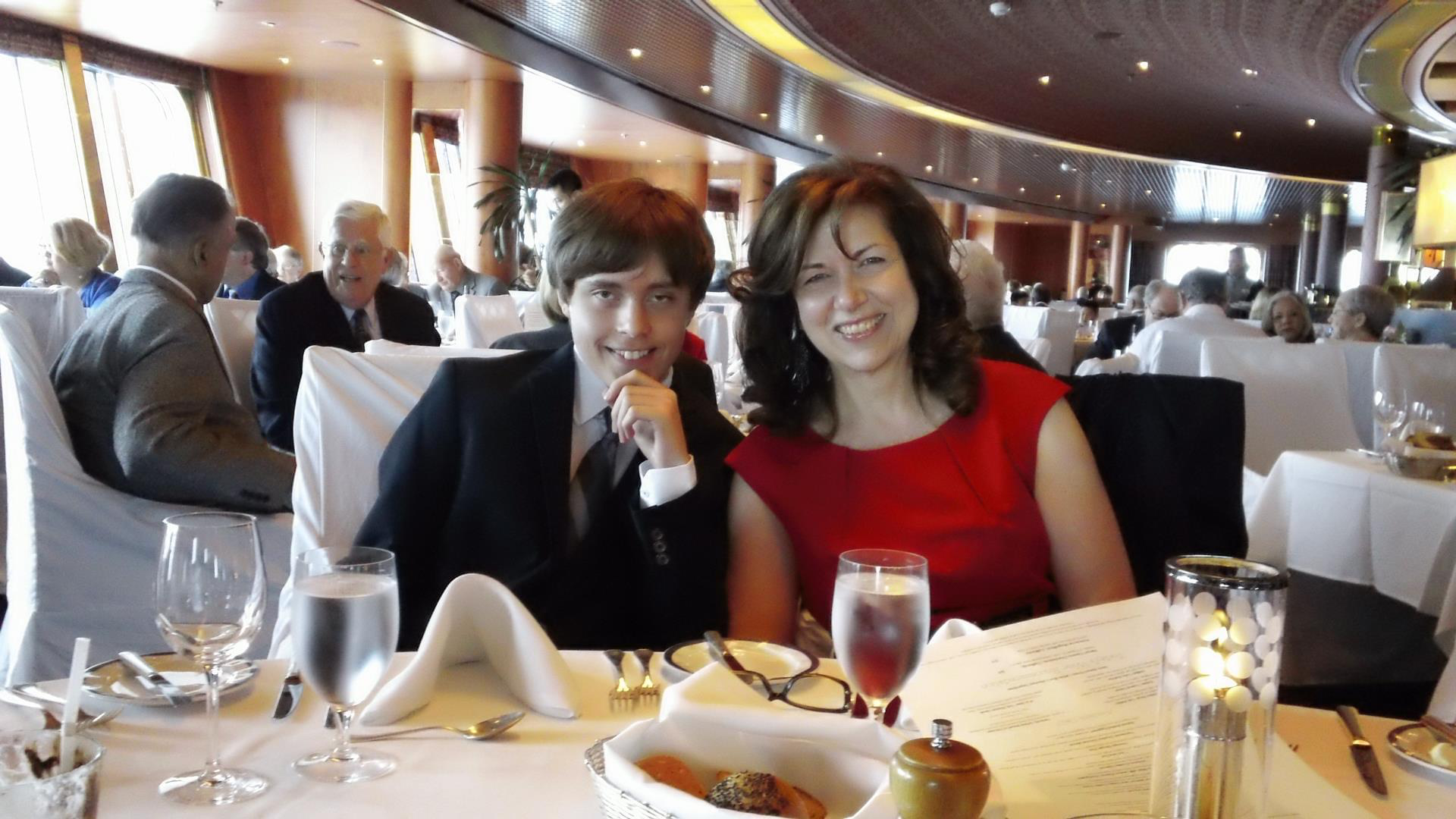
Today, it seems serendipitous it was also late July when my son, his godparents, their daughter, son-in-law and three small children had sailed from Seattle on the ms Oosterdam–my first cruise of many related to my work. I had bought my son his first sport coat and tie for formal dinners in the dining room and we had celebrated his 15th birthday on board. He had relished being able to order whatever he wanted at dinner followed by late-night milkshakes from room service.
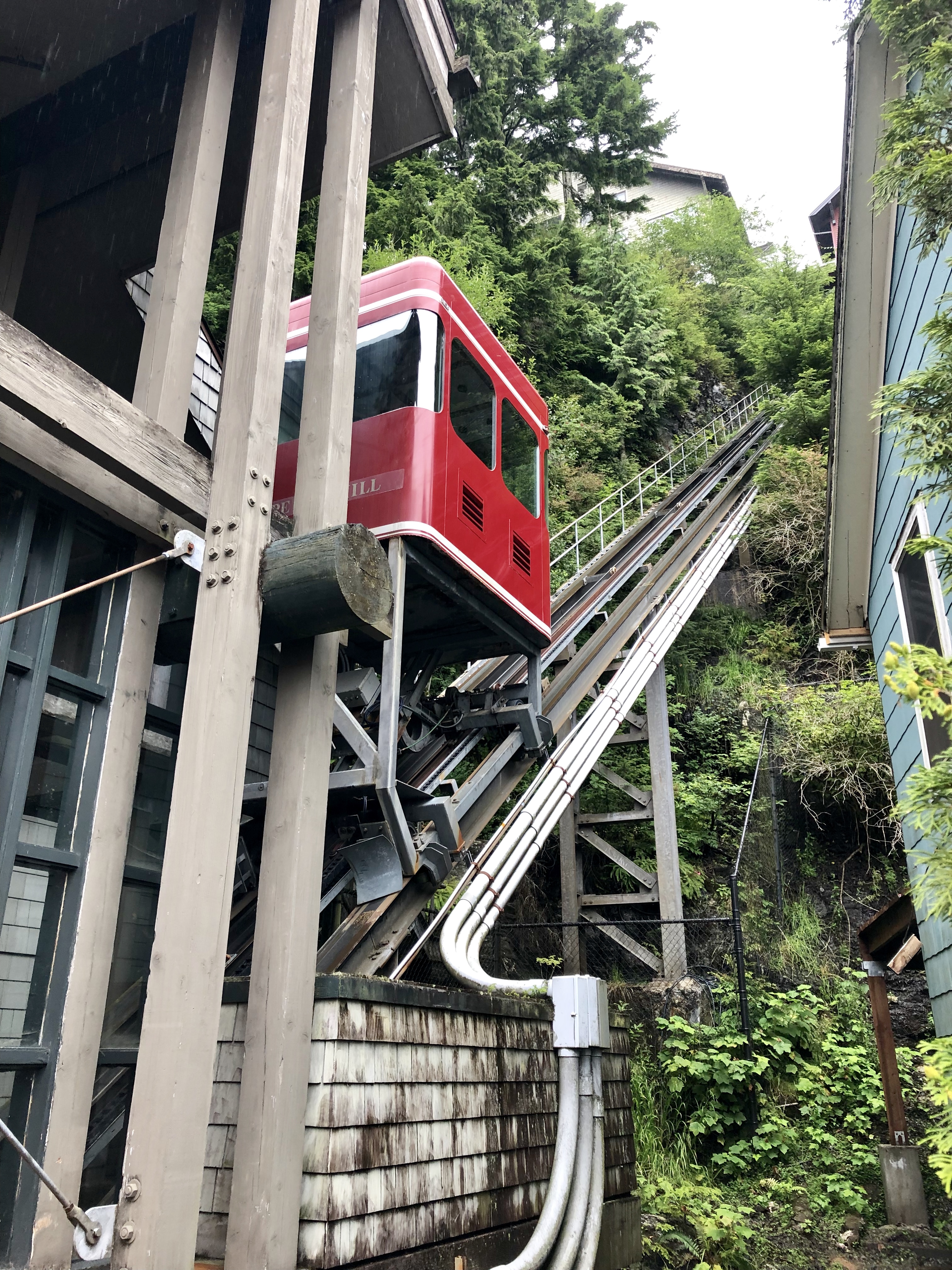
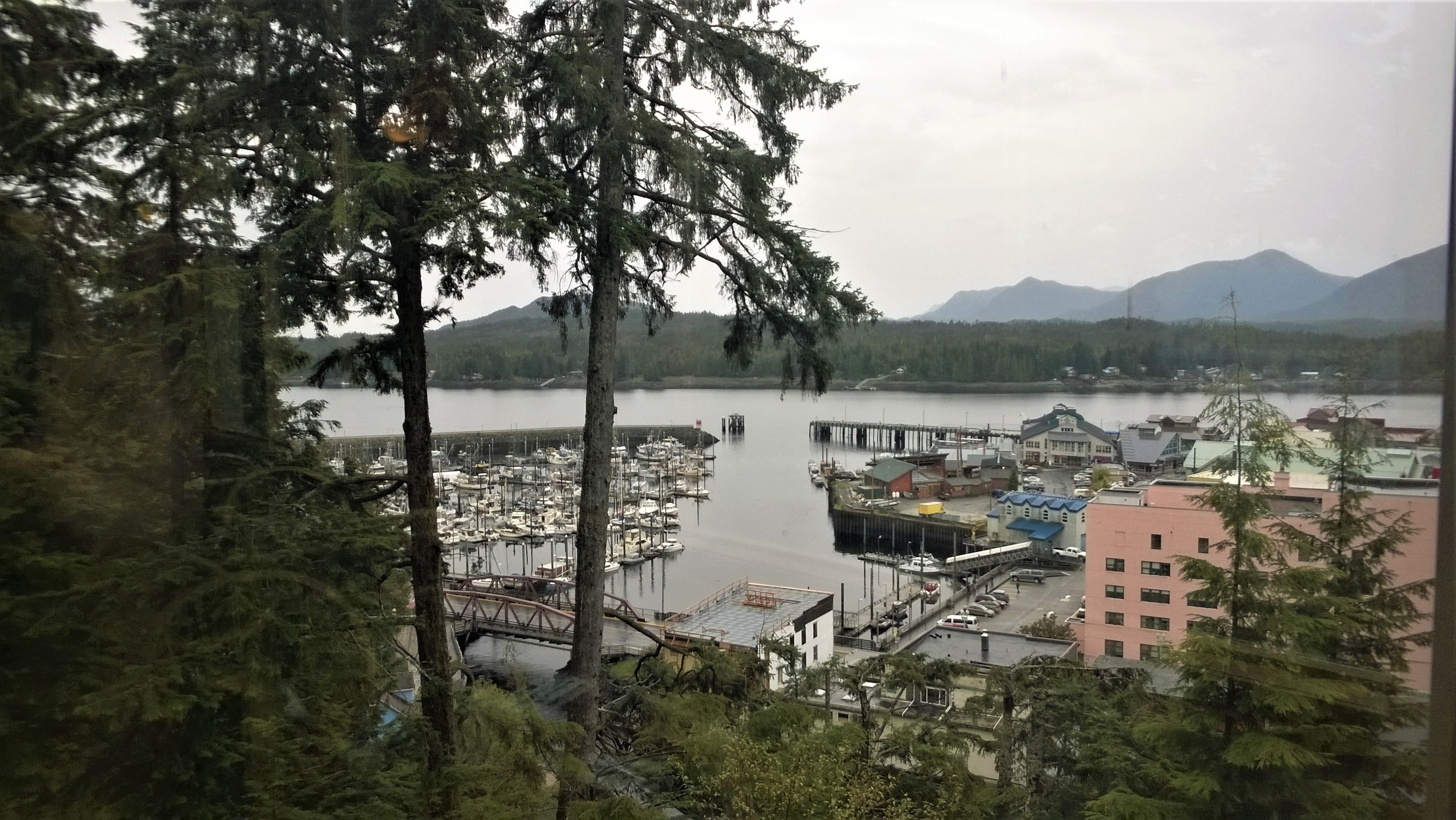
But it was a rainy day in Ketchikan that held the sweetest memories of that trip. In a back alley off the main street, we had stumbled upon the bright red funicular for the Cape Fox Inn that sits atop a steep bluff. It was just the two of us that morning. “Let’s see where it goes,” I suggested. To our pleasant surprise, there was a restaurant at the top with lovely views of the harbor. We lingered over pancakes, elk sausage, and second cups of coffee and hot chocolate. Just talking about life and possibilities for his future.
After breakfast, my son and I wandered into a small shop off a back alley. He stood admiring a case of knives with scrimshaw carvings on handles made of pale ivory-colored bone. Impulsively, I told him to pick one he liked as a birthday present. We spent a good 30 minutes while he examined his options; finally choosing one etched with an eagle and fir trees. He beamed with excitement as they wrapped it.
The following spring, he would forget it was in a jacket pocket and the precious knife would be confiscated at his high school. Despite my explaining its sentimental value, the Vice Principal insisted the knife would be destroyed and not returned.
Then in 2015, I was back in Ketchikan working for the company and staying at the Cape Fox Inn. Each day, I would visit another one of our ships to train officers and crew as they docked in port for the day, returning to the inn each night. I was now an employee enjoying my work and making good money. I had been able to buy a charming 1907 Craftsman house on a tree-lined street in a great old Seattle neighborhood. The mortgage was about the same as renting a small apartment in Seattle. Life was infinitely better.
So, one afternoon, I found the little shop again and purchased a knife for my son to replace the one that had been confiscated. To my dismay during the security check on my flight back to Seattle, although packaged and sealed, this knife was also confiscated.
This afternoon after we clean the yacht and stock up on provisions at the local Safeway, I take a walk in the rain, where I hope to find a talisman from the past.
By instinct, my footsteps follow the wooden walkway to the funicular, but it is closed this dreary afternoon. A shopkeeper explains the tram keeps breaking down and is awaiting repairs. Turning right, I navigate by memory into a narrow shop that sits on stilts above Frenchman’s Creek. Moving from displays of Alaska-themed T-shirts and waterproof parkas, to a room full of moose mugs, miniature totem poles and grizzly bear tchotchkes, finally to a small interior room with display cases full of pocketknives, Swiss Army knives and wicked blades of various sizes and shapes.
The young attendant laughs as I recount the story of two previously purchased and confiscated knives.
“Let’s hope the third time’s the charm,” I quip.
“Some of the cruise ships won’t allow these depending on the length of the blade,” he cautions.
“Thankfully, we’re not on a cruise ship, we’re on a private boat,” I explain.
I select a lovely small knife with a curved scrimshaw handle delicately etched with an eagle and fir trees. The cost is more than double what I paid for the first knife. As they run my credit card, the fact I no longer worry about the cost is a testament to how much my finances have improved over the last few years.
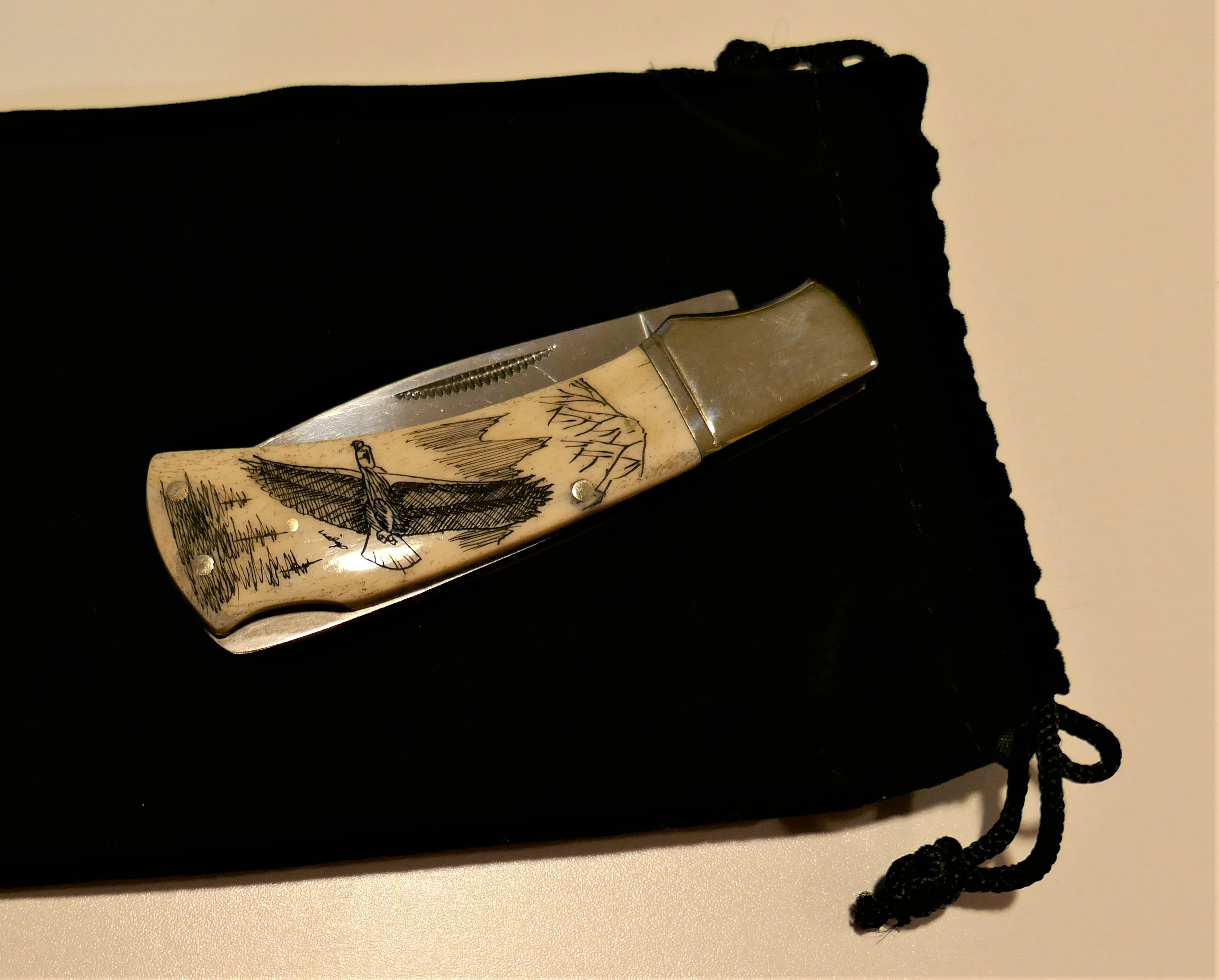
I smile. The 15-year-old boy who had stood deliberating choices at the glass case would be turning 22 in August and his three-year tour of duty as a Bradley Assault Vehicle/tank driver in the Army would be ending in November. This was a future neither of us had envisioned that long ago rainy morning. The cashier places the knife in a small velvet pouch. As I tuck it into my purse, I look forward to seeing my son’s face when he unwraps it at Christmas.
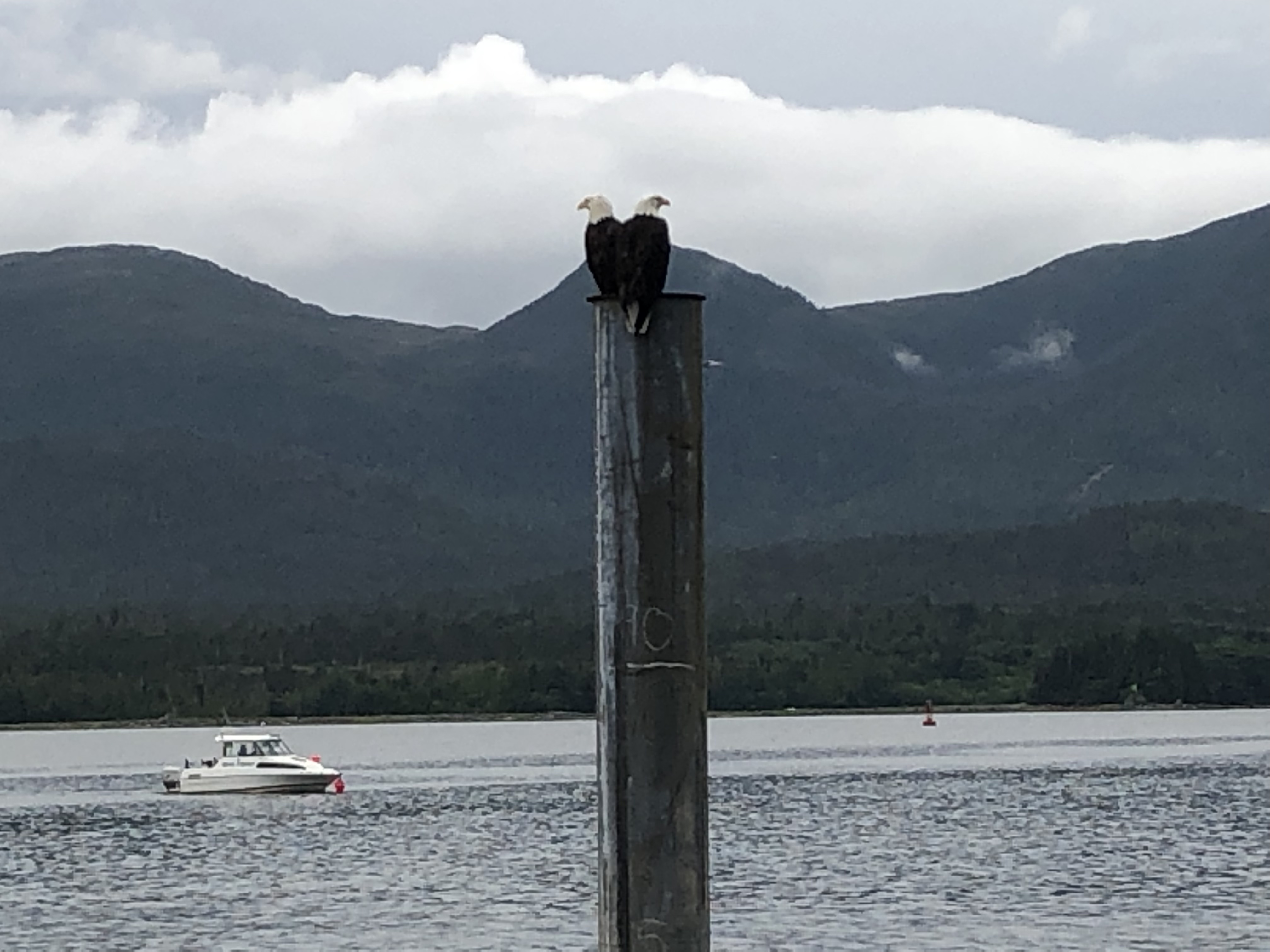
After the last cruise ships depart and all the floatplanes have been tethered for the evening, the mist clears on the Tongass Narrows. It is still light at 9:30 pm as we watch two majestic eagles atop the piling next to our boat.
Strange sometimes the paths we travel to come full circle.
© Copyright 2012-2026. Lisa Scattaregia. All rights reserved.


 Postcards from the road not taken
You must be logged in to post a comment.