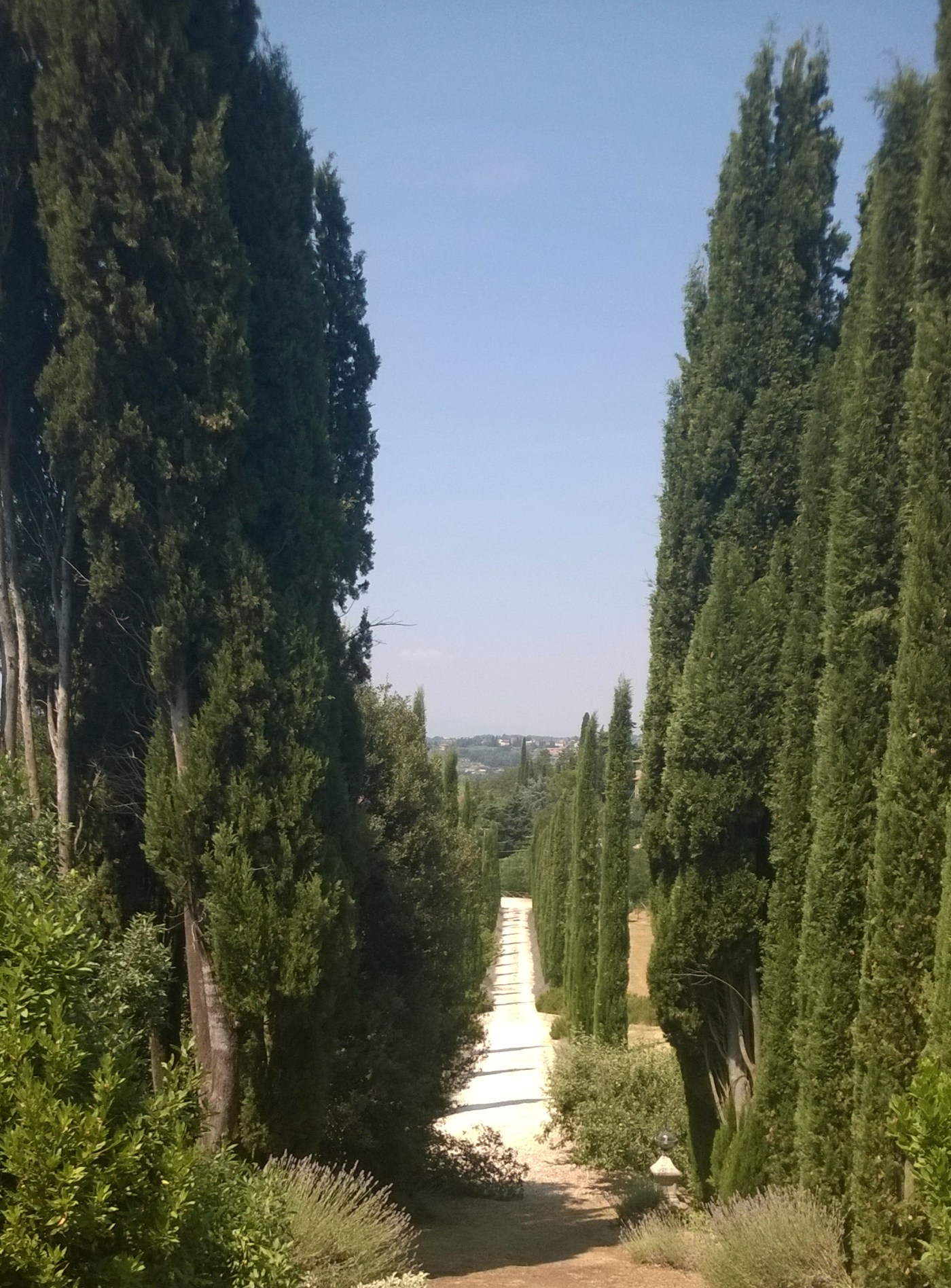
Today we visited the Villa la Ripa Winery where the “new” wing dates to 1558 while the tower (circa 1000) was built by a relative of the Medici family. Rows and rows of Sangiovese, Cabernet Sauvignon, Trebbiano, Canaiolo, Syrah, and Malvasia grapes are grown in symmetrical grids along the long drive to the Estate.
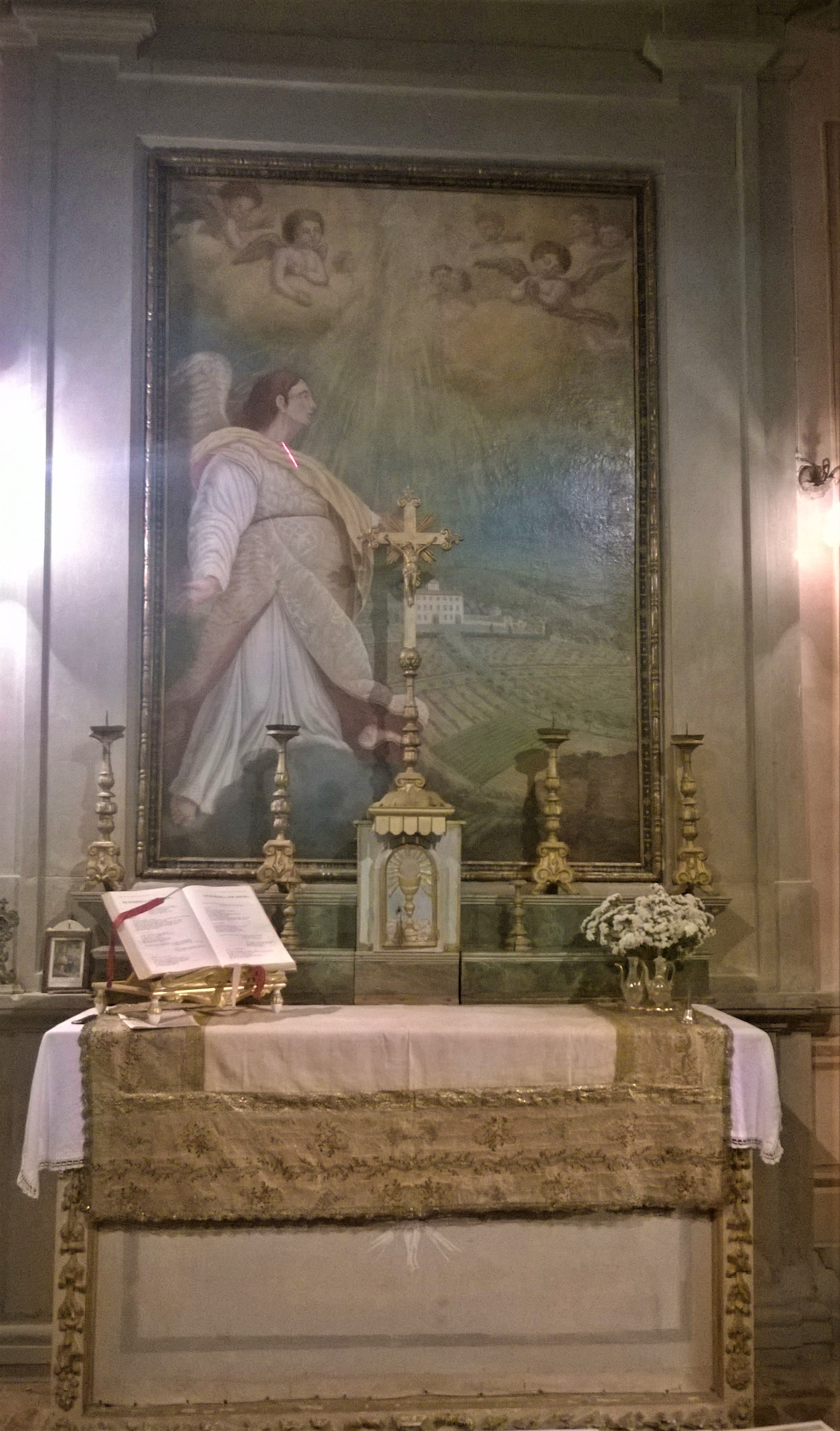
Luzzi Saverio, the delightful winemaker, is a practicing surgeon and history buff. A highlight of the tour is the villa’s chapel where a huge 16th Century painting above the altar shows angels hovering above the villa and large vineyard.
Luzzi recounts the story how this painting was hidden during World War II when Germans occupied the villa. Recently, his wife found the pastel frescoes on the walls of the chapel protected under a layer of whitewash paint. When asked how she found them, he replied, ‘The white paint simply started to dissolve when she used a sponge and plain water to clean the walls.’
I wonder about the resourceful member of the resistance who had thought to protect the frescoes. Did they survive the war as the frescoes had?
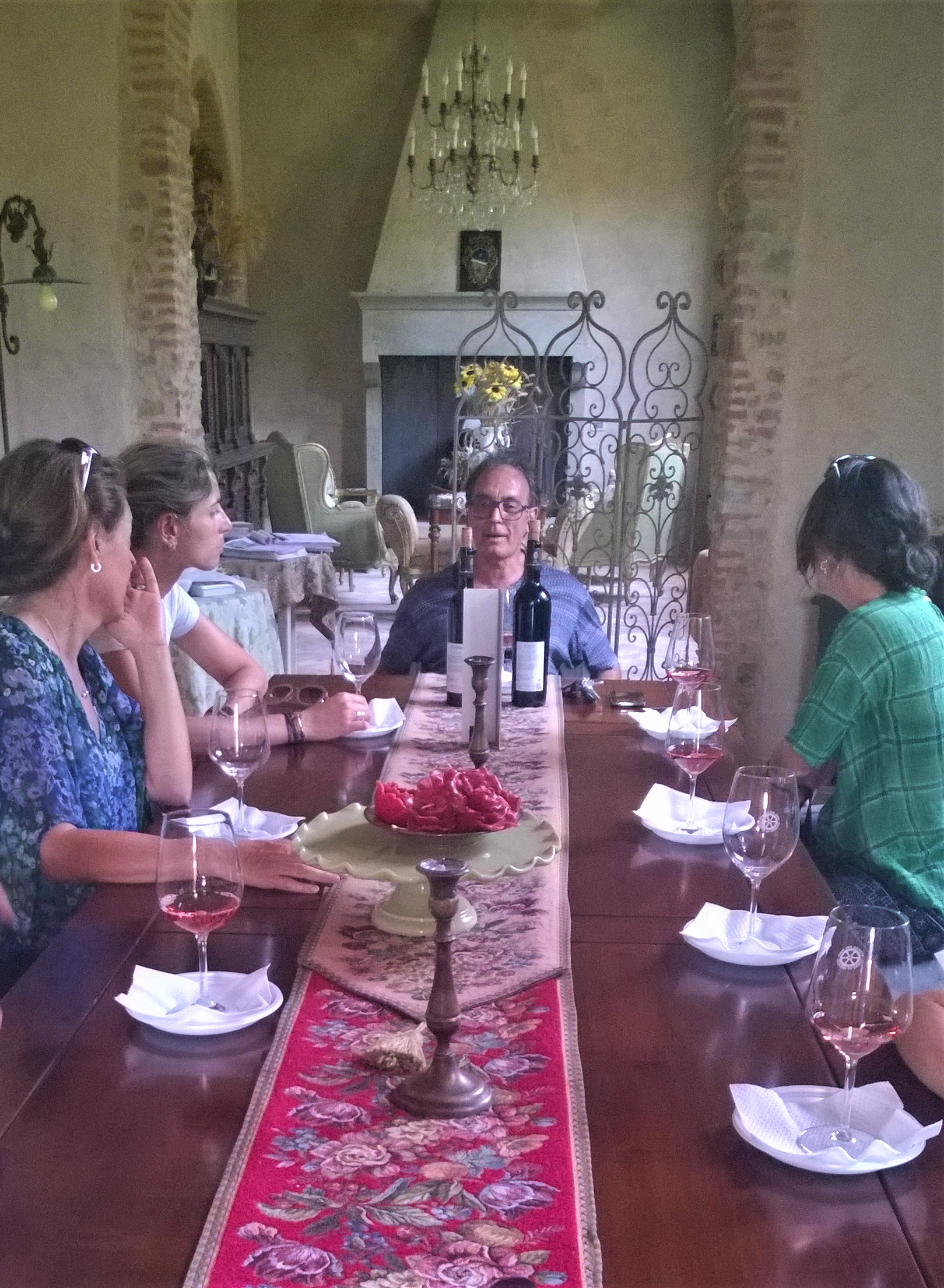
While seated at the long refectory table for wine tasting, Luzzi recounts the history of the villa. The first owner circa 200 A.D. was Marco Peconio, whose name derives for Pacho, the god of wine (more commonly known as Bacchus from the Etruscans). Even in Roman times, this region was linked to the art of cultivating the vine. Circa the year 1000, the property passed to the Ricoveri family who erected a fortified palace with an adjoining tower (the tower is a focal point on the grounds this morning).
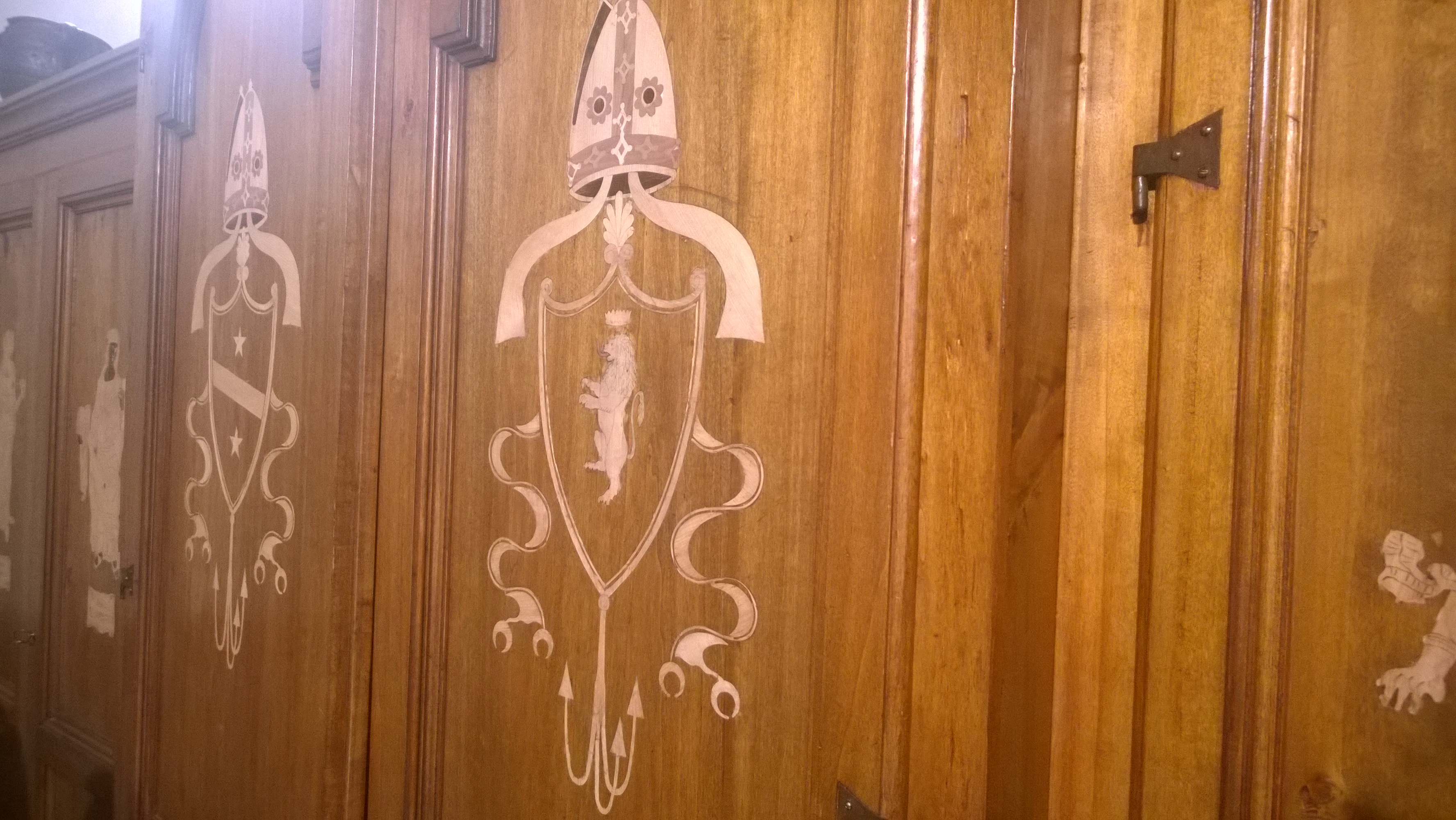
The Gualtieri, an important family of cardinals, poets and winemakers, acquired the property during the Renaissance and registered it to the Order of San Stefano, a dynastic military order founded in 1561 by Cosimo I de’ Medici, first Grand Duke of Tuscany. They erected the chapel and adjoining vestibule with intricately carved and inlaid cabinets to hold vestments of visiting Cardinals who came to say Mass in the chapel. Following the invasion of Arezzo by Napoleon in 1798, the villa was seized and auctioned. The Ubertini, a noble family from Arezzo, held the property until the early 1900s.
Luzzi is determined to faithfully restore the Estate and expand production. His daughter Claudia, a pharmacist, has developed a brand of cosmetics using organic products from their fields (wine, olive oil, and herbs). Red wine contains resveratrol, a substance known to improve circulation. Claudia’s product packaging cites a study by dermatologists at the University of Wisconsin that showed resveratrol protects the skin from damage by sun exposure and also supplies nutrients to the skin.
When some of the Estate’s vines were planted here, the territory of Wisconsin was a wilderness outpost. Another example of just how small and interconnected our planet has become.
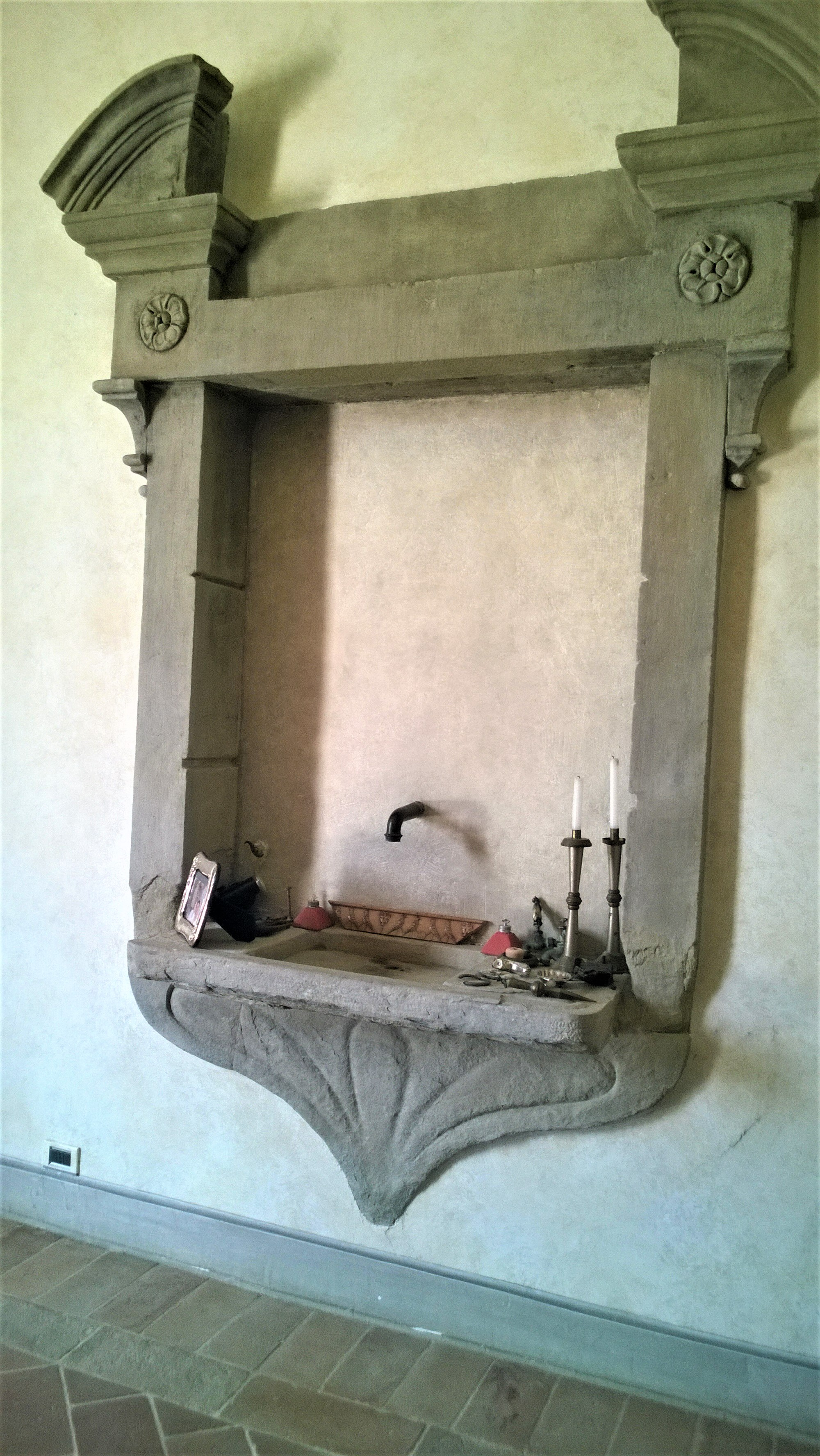
A faucet protrudes from the wall in a decorative stone niche in the hallway and reminds me of a similar dripping faucet in the movie Under the Tuscan Sun (based loosely on the Frances Mayes novel of the same name). Twelve years ago, watching that movie while trapped in a lonely and unfulfilling marriage, I could not have imagined this trip or the lightness I feel reconnecting to my true self and the joy of simple pleasures.
© Copyright 2012-2026. Lisa Scattaregia. All rights reserved.


 Postcards from the road not taken
You must be logged in to post a comment.