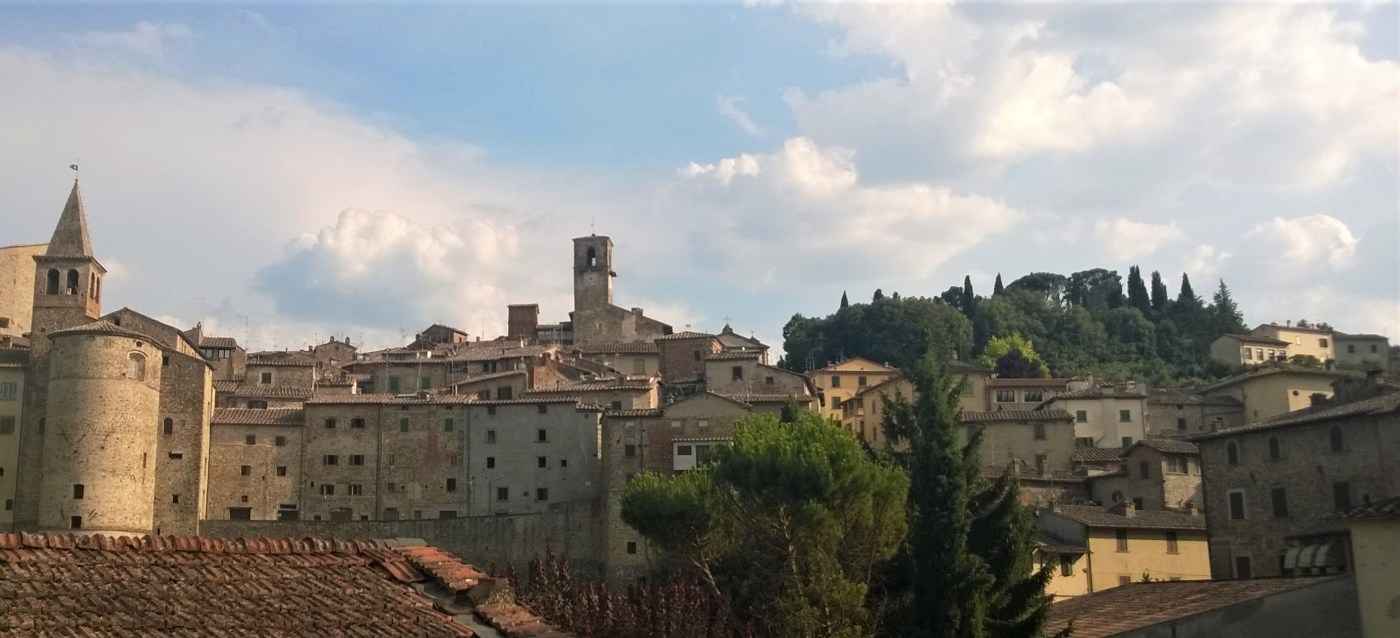
Our last Culinary Excursion takes us to the ancient town of Anghiari whose 11th Century walls are still intact.
The decisive battle here in 1440 between Florence and Milan inspired a series of famous studies for a fresco by Leonardo da Vinci. In 1504 Leonardo was given a commission and contract, signed by Niccolo Machiavelli, to decorate the Palazzo Vecchio’s famous Hall of the Five Hundred in Florence. At the same time a fresco by his rival Michelangelo, who had just finished the David statue, was commissioned for the opposite wall. This was the only time that Leonardo da Vinci and Michelangelo worked together on the same project.
Michelangelo did not stay in Florence long enough to complete the finishing touches on his fresco as he was summoned back to the Vatican by the Pope. Leonardo built an ingenious scaffold in the Hall of Five Hundred that could be raised or folded like an accordion. This painting was to be his largest and most substantial work. Since he had a bad experience with frescoes (his The Last Supper in the refectory of Santa Maria delle Grazie in Milan), Da Vinci wanted to apply oil colors directly on the wall instead of transferring them from canvas. He began to experiment with a thick undercoat (possibly mingled with wax). After he applied the color pigments, the paint began to drip. Trying to dry the painting in a hurry and save whatever he could, he hung large charcoal braziers close to the painting. Only the lower part could be saved in an intact state; the upper part couldn’t dry fast enough, and Leonardo abandoned the project.
These unfinished paintings by Michelangelo and Leonardo adorned the same room together for almost a decade (1505–1512). Tragically, in renovations to the Palace (1555-1572), remnants of famous artworks were lost including the The Battle of Cascina by Michelangelo and The Battle of Anghiari by Leonardo da Vinci. Many preparatory studies and charcoal sketchings of this great work by Leonardo still exist. The composition of the central section of the fresco is best known because of a drawing by Peter Paul Rubens in the Louvre, Paris.
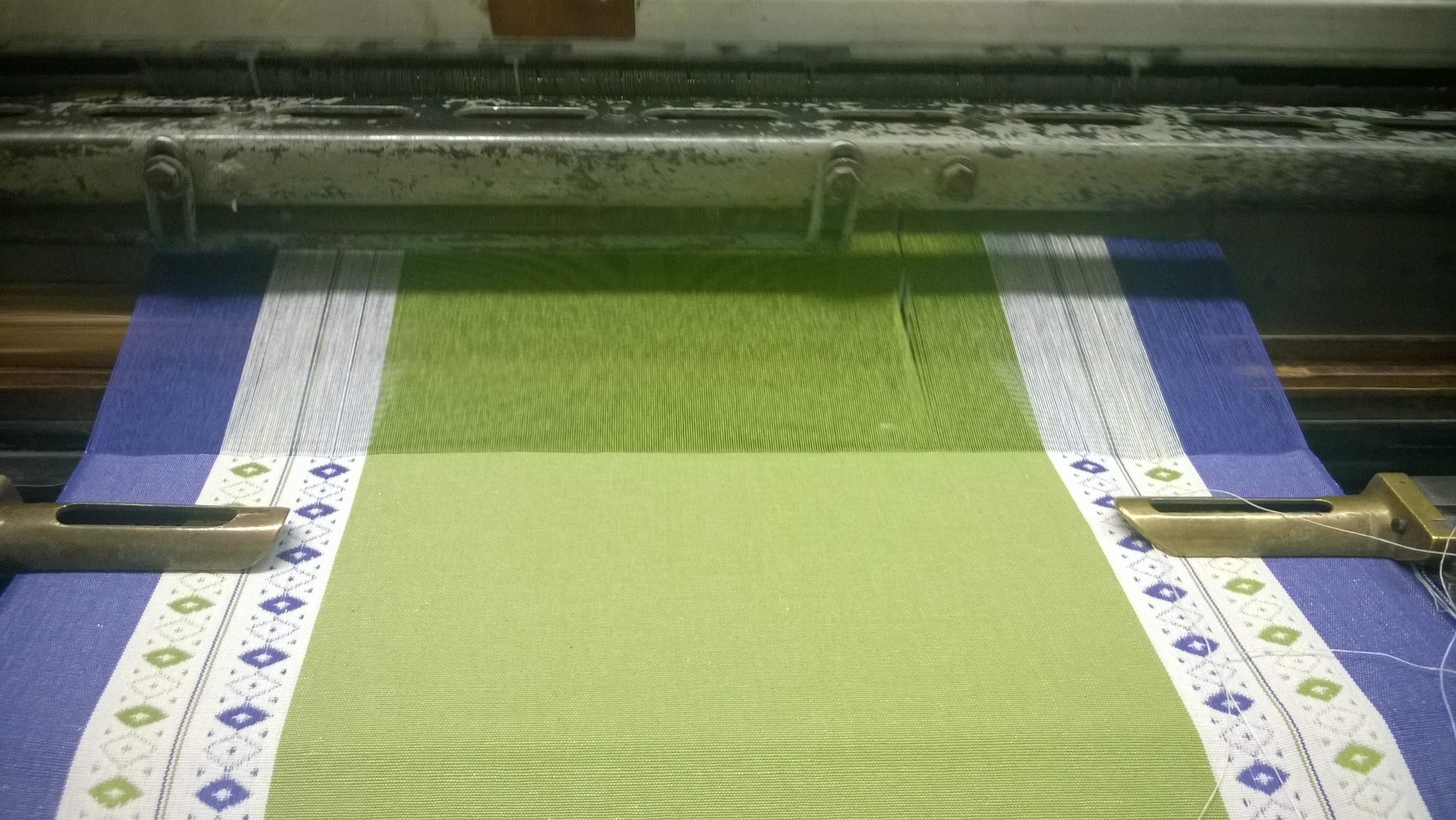
Our first stop is the Bussati factory—famous for luxury table linens and fine textiles. A real cottage industry in every sense, Giuseppe Bussati created a network of home weavers in the Tiber Valley in the 1830s, centralizing operations in Anghiari in 1842. Still located in the original building, workers “card” wool into thread and weave beautiful damasks on clacking looms that date back to the Industrial Revolution.
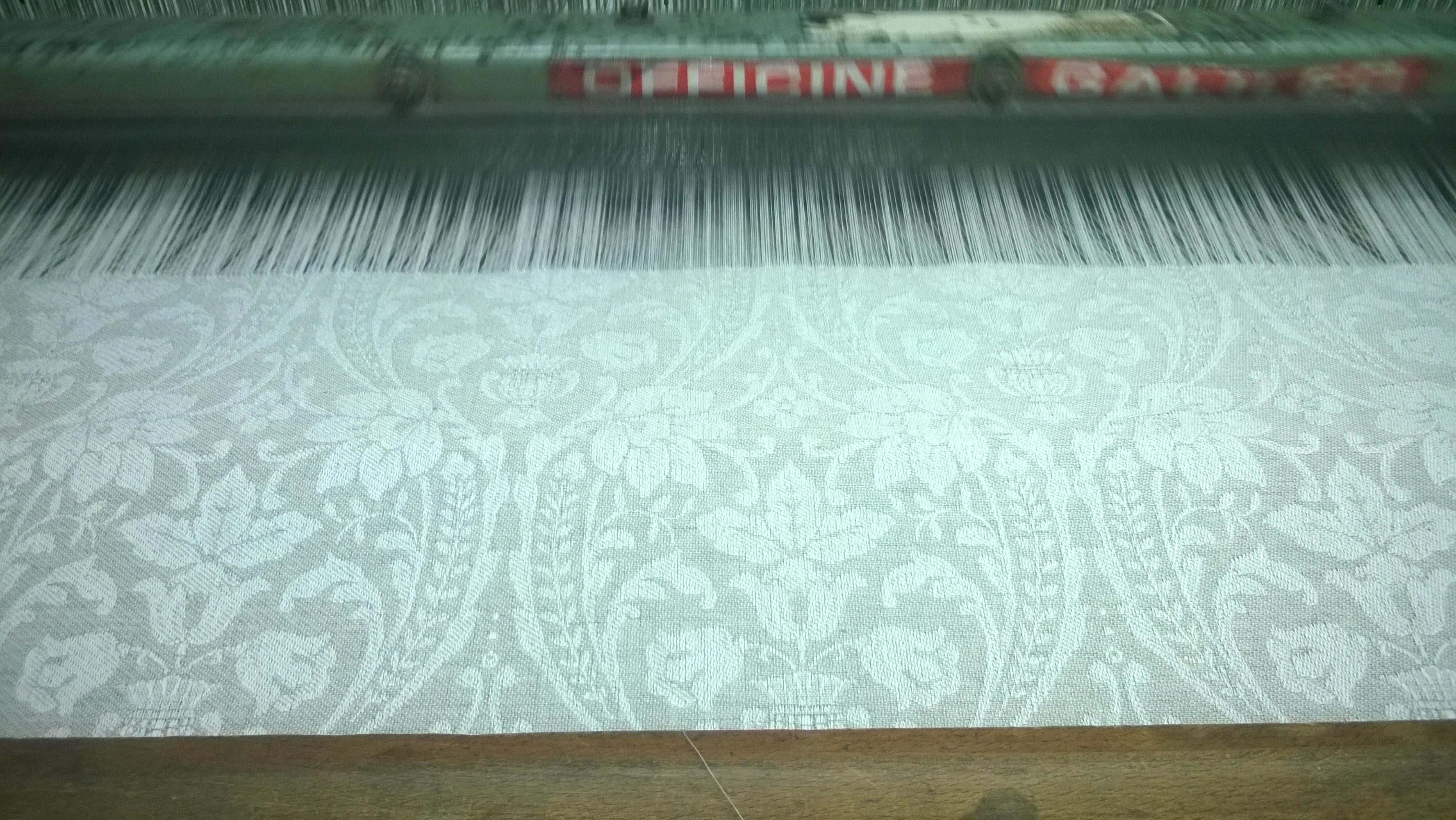
We watch in amazement as one of the weavers demonstrates how when patterns are changed on the looms, hundreds of threads must be painstakingly inserted by hand into the needles, a process which can take several days.
In the small shop next to the factory, a stack of white damask tablecloths harkens back to one of the most vivid memories of my childhood: Kissing my mother goodnight as she stood at the ironing board the night before Christmas, or Easter, or baby christenings, or First Communions. Always ironing tablecloths for the occasion at the last minute. Most of the world had gone the way of paper napkins and wipe-off plastic placemats, but Mom had insisted on using her collection of well-worn, freshly laundered and starched white damask tablecloths. Although she has been dead for almost 30 years, as I finger the beautiful cloth napkins, I can’t help but think what a treat it would have been to purchase some of these linens for her.
© Copyright 2012-2026. Lisa Scattaregia. All rights reserved.


 Postcards from the road not taken
You must be logged in to post a comment.