Awakened early by church bells on this Sunday morning, as I open the heavy wooden shutters in my room, a flock of swallows takes flight. It is such a magical, completely old-world experience with the birds darting and chirping and the bells echoing above the red-tiled roofs, that I laugh in delight while trying to film it on my cellphone.
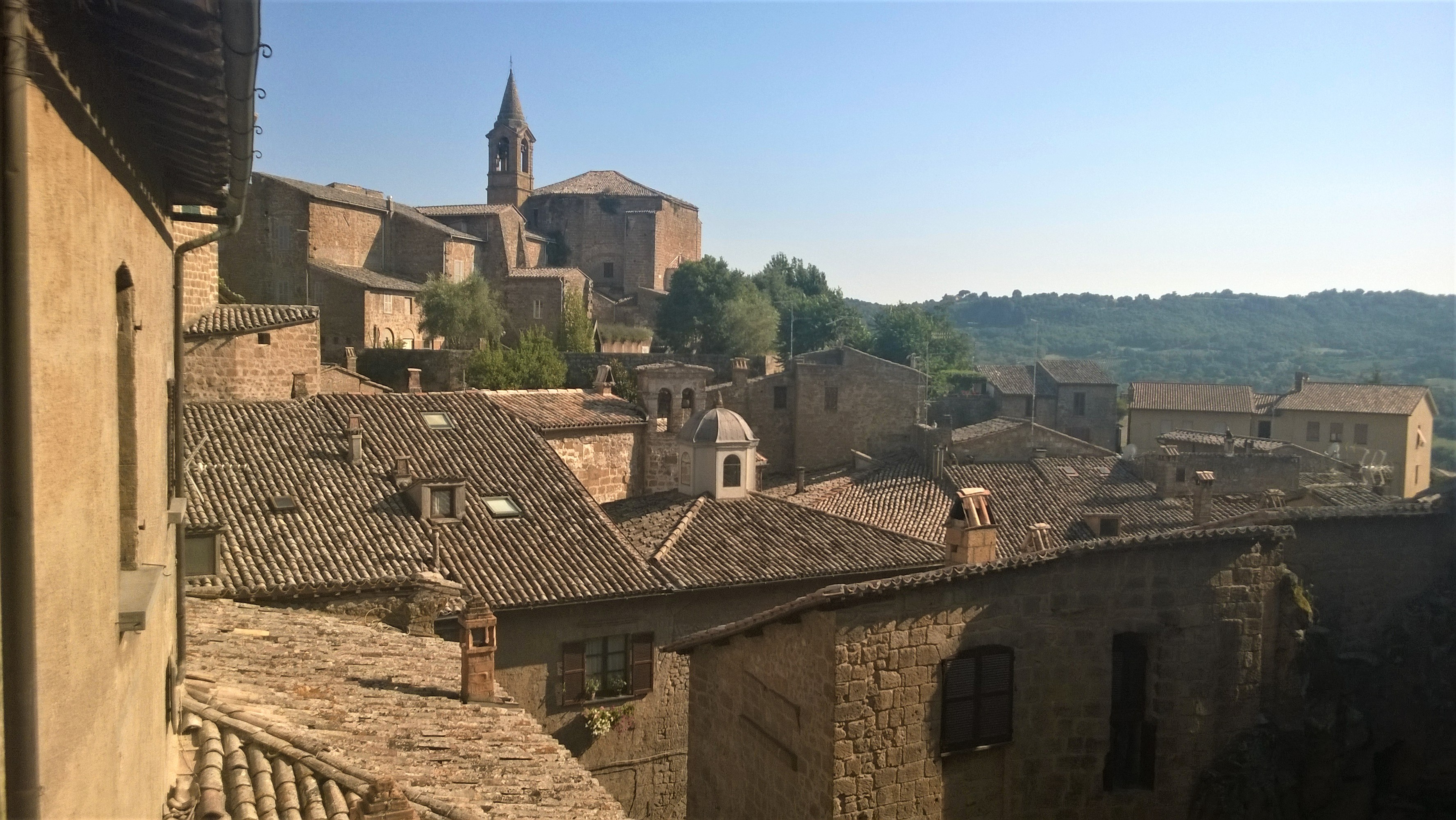
Yesterday afternoon, I had taken the Trento Regionale from Rome to Orvieto, an ancient walled town perched high on a rocky outcrop of volcanic tufa in Umbria. Riding the funicular up to the town center, I passed over remnants of Etruscan settlements from 800 B.C. These rocky cliffs were a natural fortification, and they are laced with caves, grottos, tunnels, cisterns, and passageways — a veritable underground city and archeological time capsule — forgotten since the Renaissance and uncovered only by chance in 1970.
Orvieto’s stone walls, anchored in the rock, completely encircle the town, broken only by massive gates built in different centuries: the Porta Maggiore from Roman times, the medieval Porta Rocca, and the Porta Romana constructed during the Napoleonic Empire in the 1800s. The view of the surrounding countryside from these ramparts is a lush green patchwork of cypress trees and olive groves and has not changed in hundreds of years.
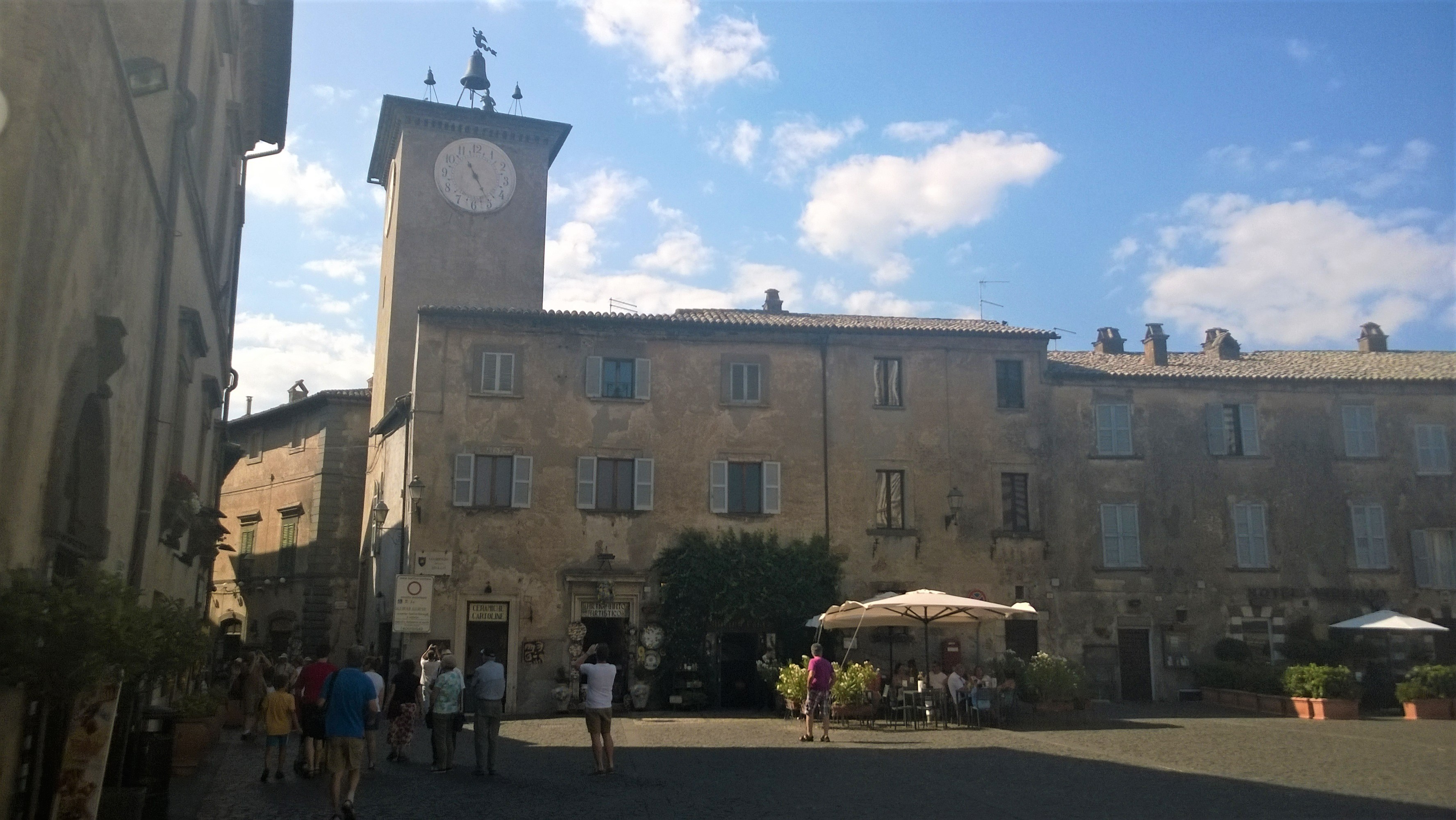
My hotel occupies a medieval building in the main piazza across from the famous cathedral or Duomo. The bronze statue atop the clock tower on the hotel holds two hammers: the large one strikes the hour on the big bell and the smaller hammer rings quarter hours on the small bells. I am immediately smitten by this ancient village with its many clock towers, stone buildings, and terra cotta roofs. No wonder the Popes sought refuge here during the city state wars in the 1500s.
Mimicking the Italians, I take my morning cappuccino standing up at the counter in a local panetteria. This costs one Euro versus three Euros were I to sit down at a table, a cost-saving practice Starbucks has yet to adopt when you take your cup to go. The people standing alongside me at the wooden counter are locals, not tourists, and judging by their banter with the owner at the cash register and the man deftly pulling shots of espresso, they are here every day.
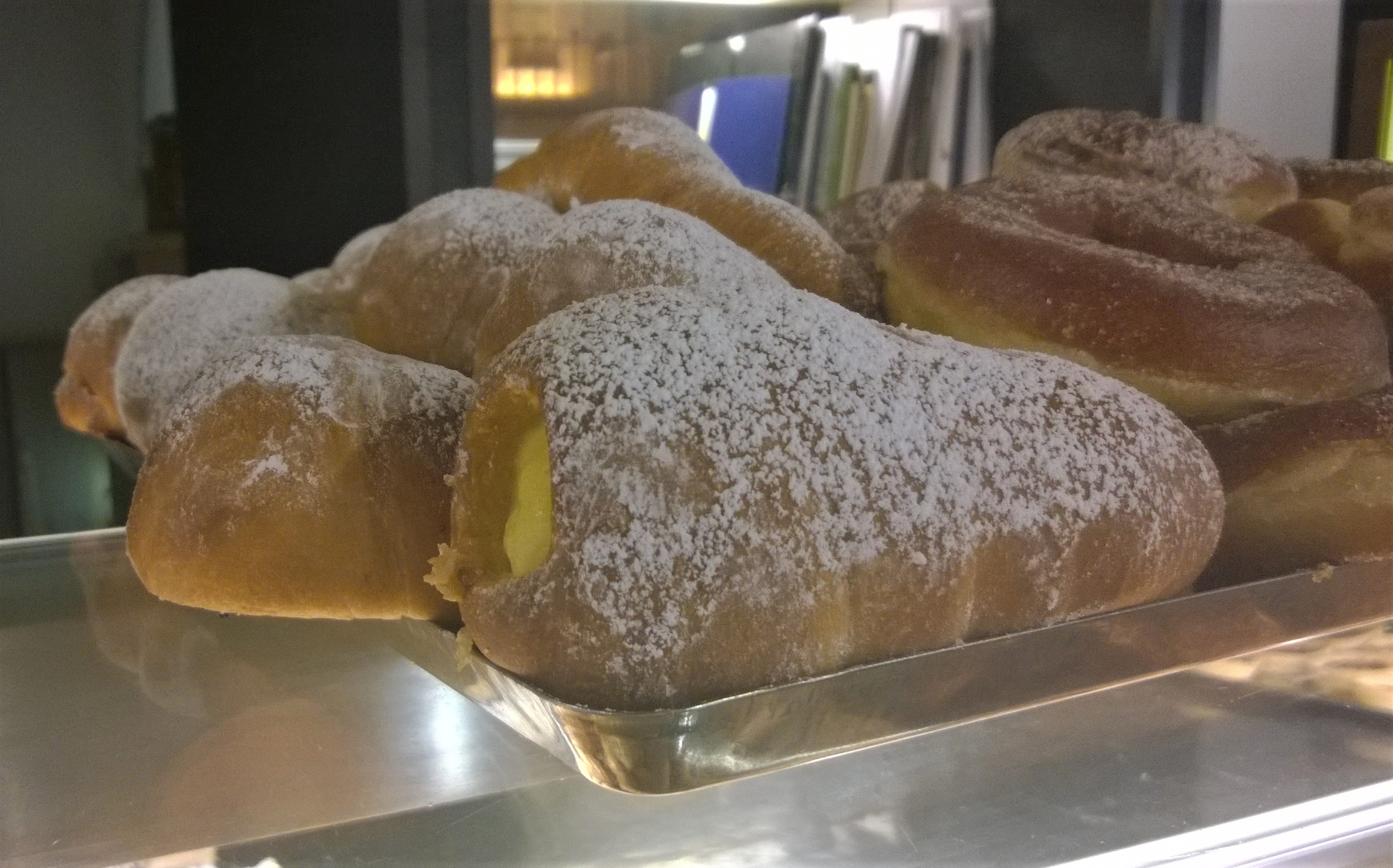
I am tempted by the cannoli dusted with powdered sugar and filled with custard. A sweet memory of those made by my Italian grandmother and which we called “lady locks.” Apparently, every region of Italy has their own unique way to make cannoli—in some areas they are hard shells filled with mascarpone cream, in Rome they are paper thin cones drizzled in chocolate. Here in Orvieto, they are overlapping layers of fluffy pastry that melt in my mouth.
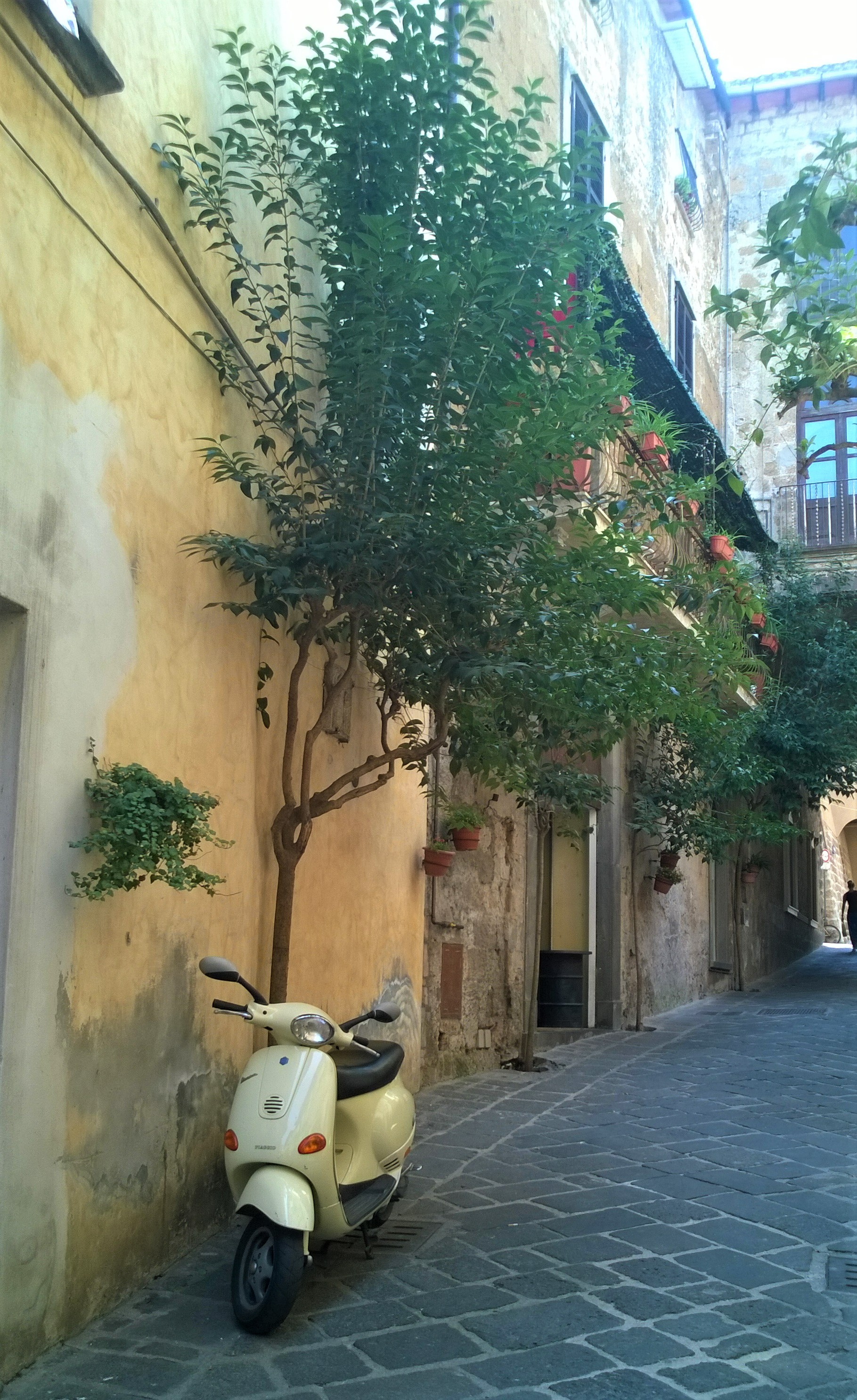
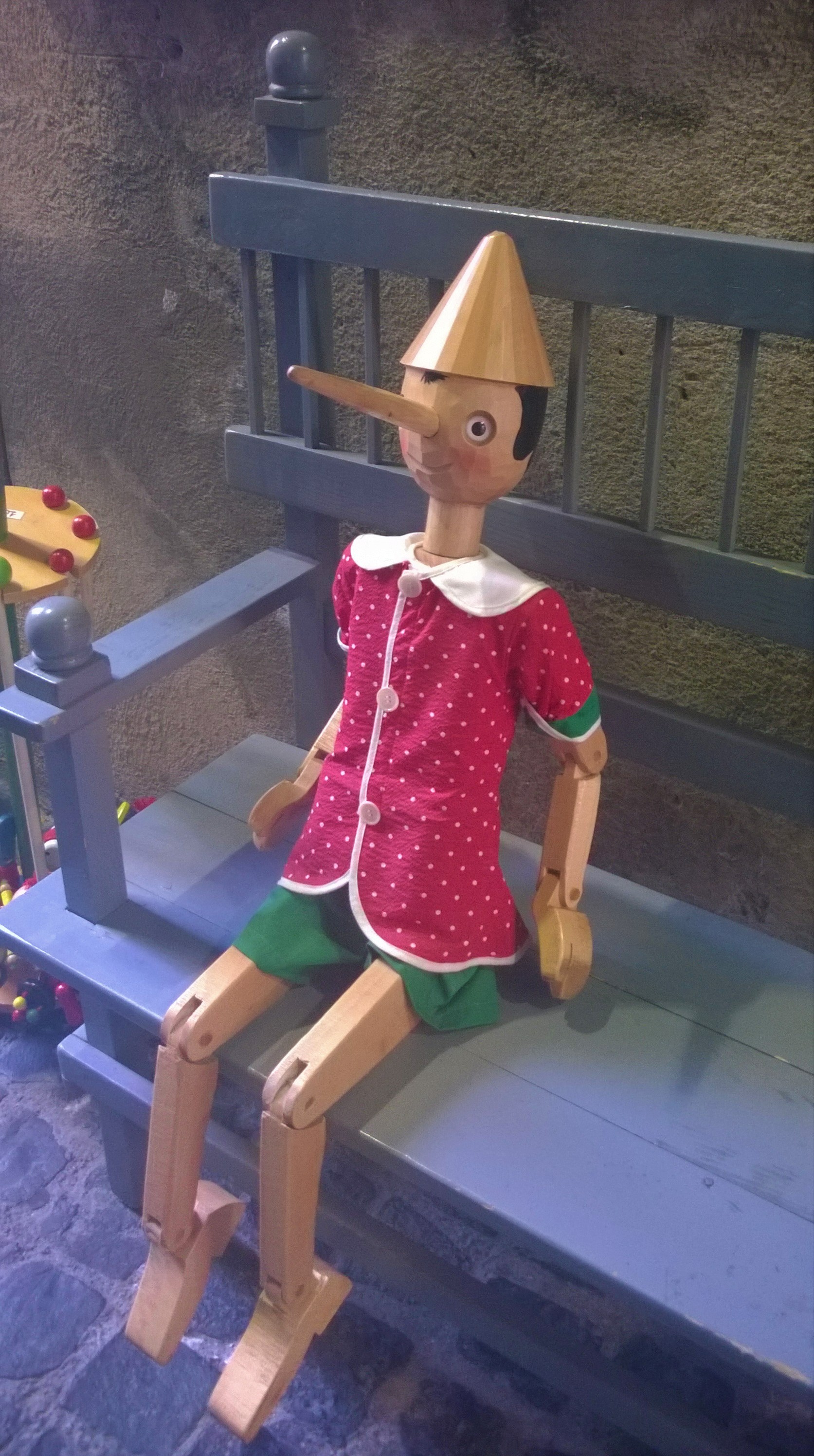
An early morning walk through the village reveals small surprises around every corner: a classic Vespa on a street too narrow for cars, a life-sized Pinocchio perched outside a wood carver’s workshop, a flea market in the piazza.
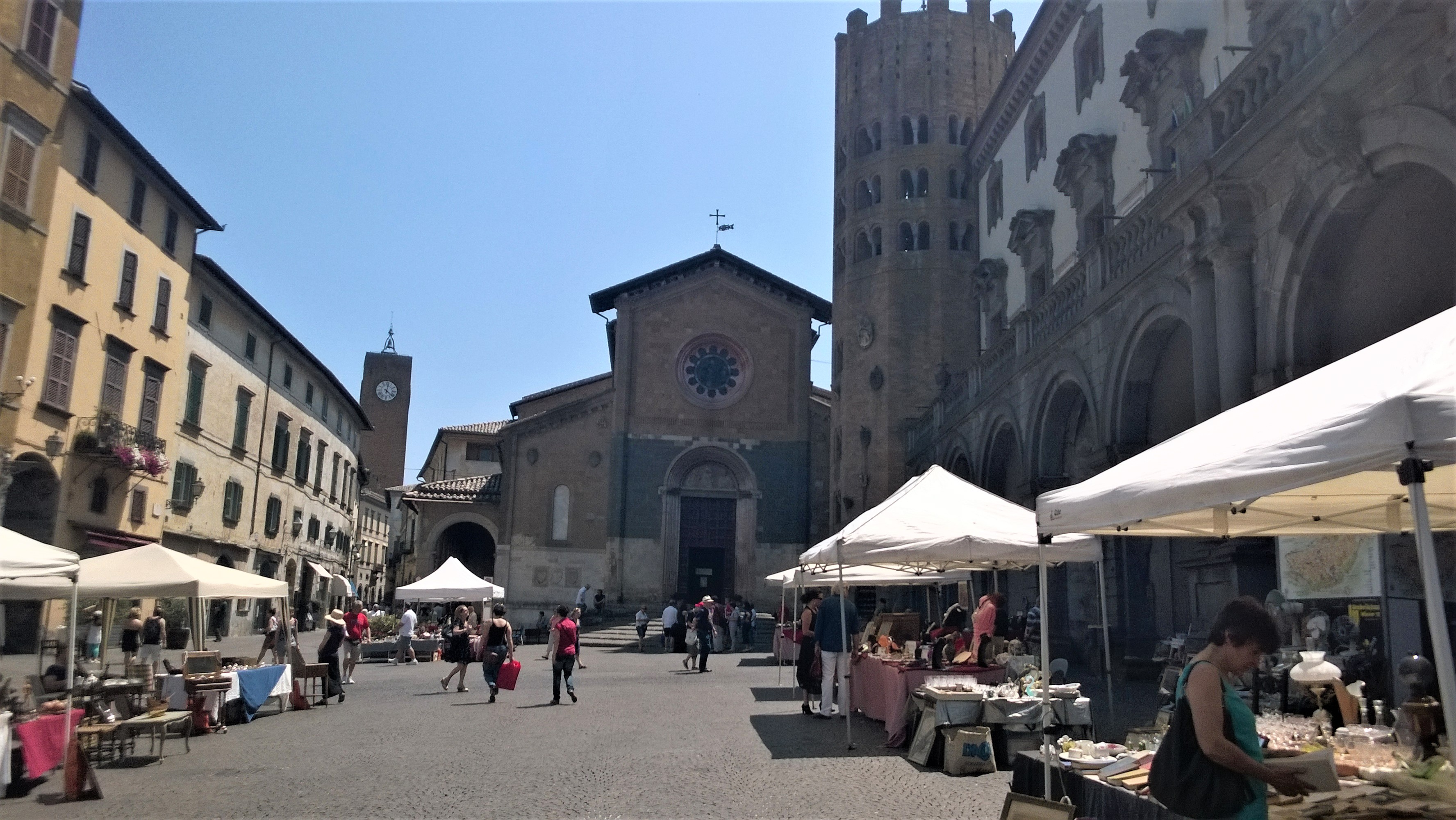
Later that evening, after a hearty dish of homemade ravioli at La Percola trattoria, I join the crowds in the Piazza Duomo for some pistachio gelato.
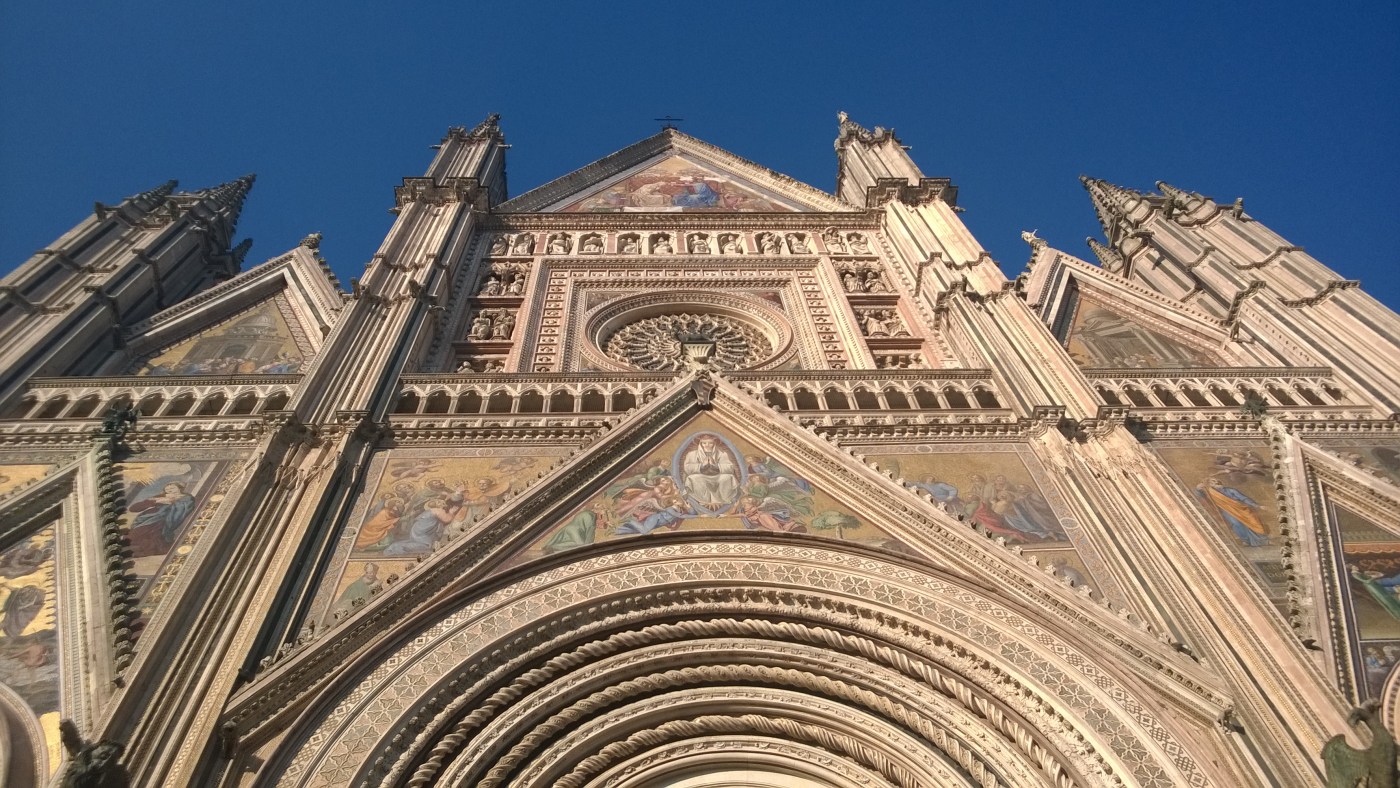
Considered one of the finest examples of Italian Gothic architecture, work began on the magnificent Orvieto Duomo in 1300 and continued nonstop for the next three centuries. Its white marble façade is covered with layers of bas-relief sculptures so lacy and delicate it seems more likely they were carved from Ivory soap than brittle marble.
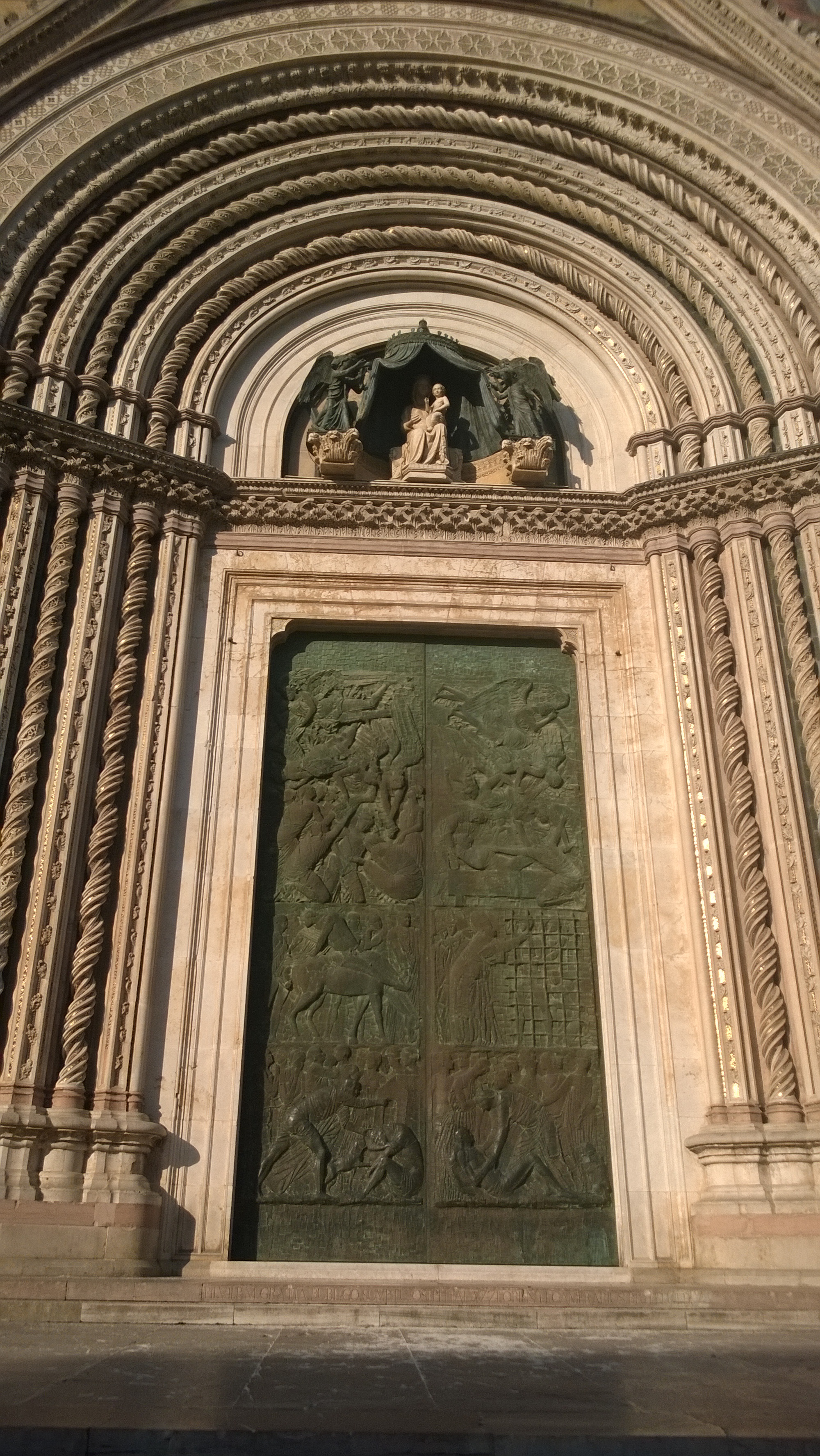
Interspersed between the marble carvings are enormous colorful mosaics depicting scenes from the Bible that glitter in the sunlight, even more striking when the façade is tinged pink at sunset.
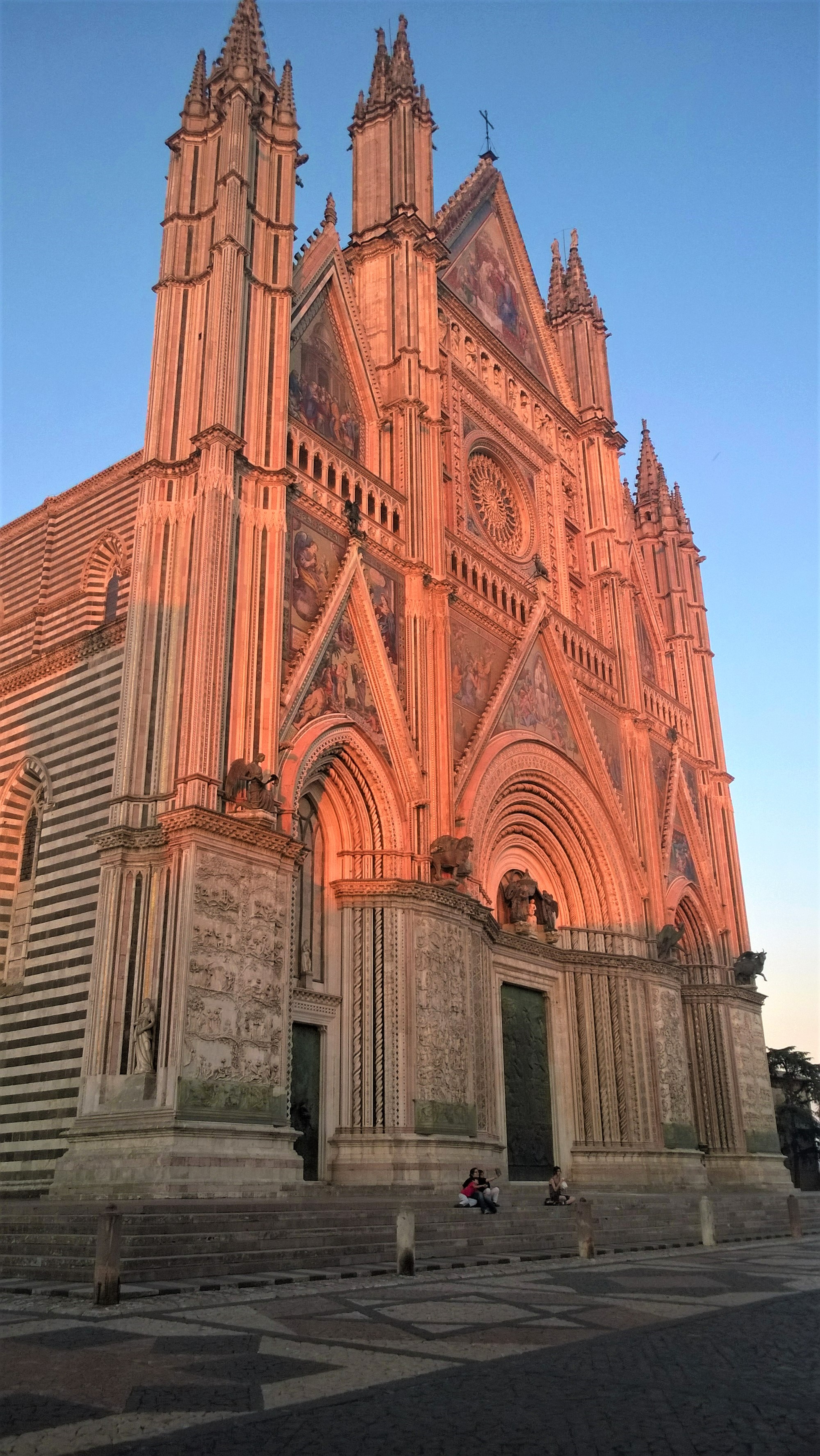
I sit on the wide, white marble steps in front of the Duomo, still warm from the record-breaking heat today, stretch out my bare legs and watch the waning crescent moon rise over rooftops that were here centuries before Lewis & Clark set out to map the Pacific Northwest. I am surprised to realize it has been 32 years since I watched the summer moon while curled up in my sleeping bag in the back of my little Toyota Celica hatchback.
I was driving by myself across the country from Seattle to Pittsburgh following the route of Lewis & Clark from the Columbia River in Washington State, through Idaho, Montana, and the Badlands of North Dakota. In that magical summer, I had no idea if I would ever marry, and it would be another five years before I met my husband. Nor would I have believed I would divorce him after twenty-three years together.
Perhaps this trip is merely a continuation of my voyage of the summer moon. I smile. While I would like to have a wonderful partner to share this journey, once again, I am traveling solo. A breath of summer wind assures me that he is out there somewhere, looking at the same moon and also yearning for a kindred spirit. Someday we will find each other.
© Copyright 2012-2026. Lisa Scattaregia. All rights reserved.


 Postcards from the road not taken
You must be logged in to post a comment.